
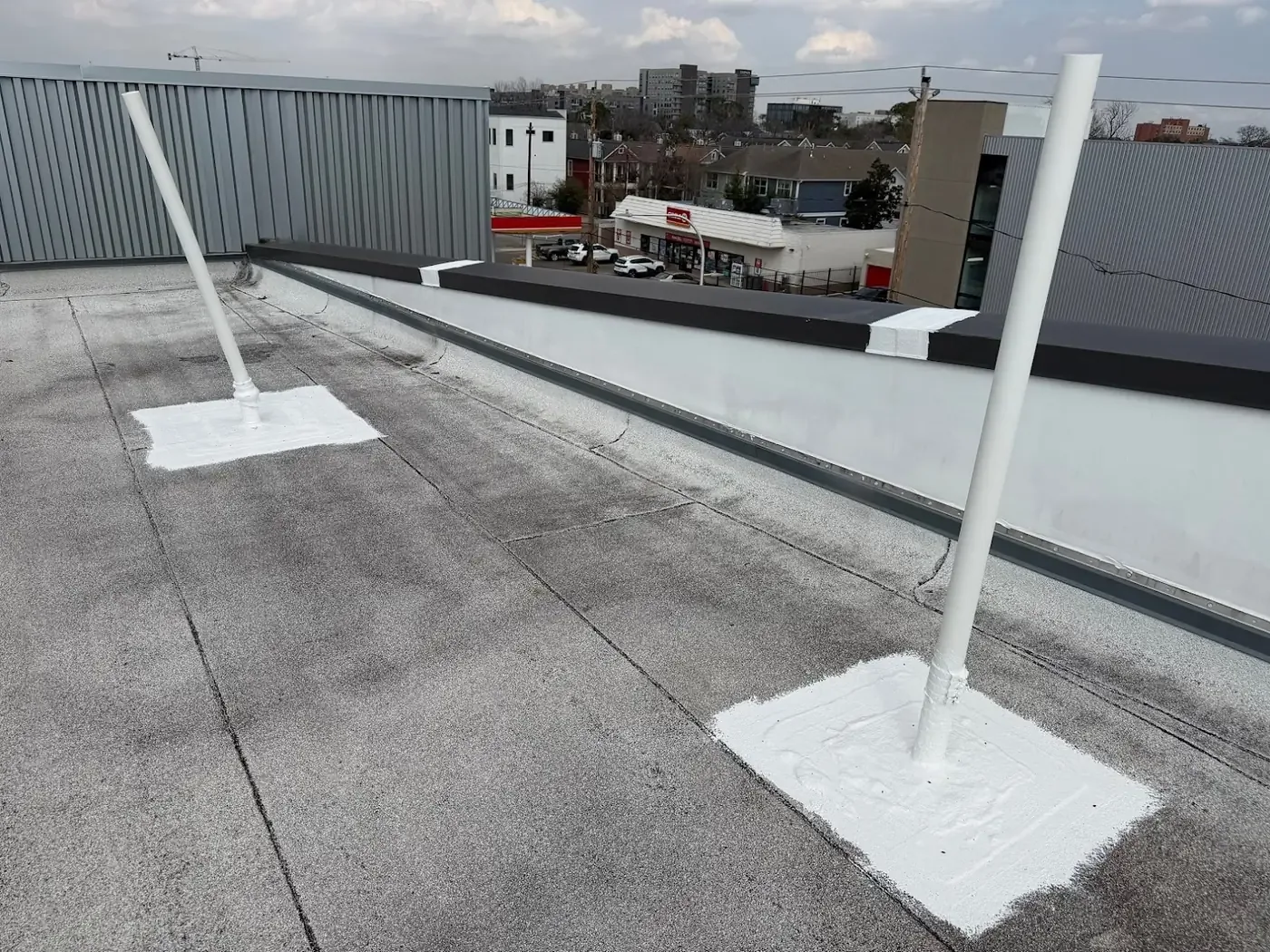
Storm Damage Roof Repair in Dearborn, MI
After a storm, a commercial roof can show obvious openings and less visible changes at edges, seams, drains, or rooftop equipment. We first protect the building from active water entry, then inspect the affected roof zones and separate storm-related conditions from older wear. The repair plan should match the actual damage and the assembly below it. A fallen branch, displaced metal edge, or punctured membrane calls for a different response than widespread moisture or a weakened deck.
Dearborn's local weather station records 30.8 inches of annual snowfall, while the National Weather Service has documented severe wind, hail, and tornado activity across Southeast Michigan. Its September 2026 account included an EF-0 tornado in Lincoln Park and an EF-2 in Detroit. After an event like that, we inspect the individual building before describing a loss. A commercial roof inspection can establish the roof's broader condition after immediate stabilization.
Separate the New Damage from Existing Wear
Storm response begins with a controlled walk of the roof only when conditions permit safe access. We photograph the general field, perimeter, penetrations, drains, and equipment supports, then map visible impacts and displaced components. We note standing water, debris, interior staining, and temporary protection so the owner can prioritize immediate needs.
Older sealant, open laps, corrosion, clogged outlets, and prior patches can resemble new damage. We record both without attributing every defect to the storm. Where the assembly is concealed or wet insulation is suspected, a moisture survey or test opening may clarify how far water has traveled. The goal is to identify the limits of known damage, not assume that a surface mark represents the full repair area.
We confirm that roof access, ladders, lifts, and fall protection can be used safely. If access is postponed, the report states what remains unchecked and what can be observed from inside. An inspection report can give the facility team a clear record for follow-up.
Stabilize Openings Before Permanent Work
For active entry, we limit temporary protection to a safe, defined area and document its limits. A tarp or sealant patch is not permanent and can hide movement or moisture. The owner should know who will monitor it and when permanent work can proceed.
Repair methods follow the roof system. Single-ply membrane, metal, built-up, and modified-bitumen roofs each need compatible materials and tie-ins. We identify the existing assembly before specifying work. If the membrane turns out to be TPO, repairs use heat-welded patches, and repair limits should reach sound material.
Storm damage at perimeter metal deserves special attention because the edge is exposed to uplift and directs water away from the wall. We check cleats, fasteners, laps, corners, and adjacent membrane termination. If the component has pulled loose, simply adding sealant may leave the attachment problem unresolved. A separate edge metal assessment can identify whether the repair needs a longer run or a coordinated wall-side detail.
Before mobilization, the scope should also identify debris handling, rooftop routes, and any material that must be protected from falling particles. If equipment needs to remain in service, the contact can mark critical units and confirm whether shutdowns are possible. These practical limits help the crew sequence work without assuming every roof area is open for staging.
Check the Water Path Through the Assembly
Interior staining may be offset from the roof opening because water can travel along deck flutes, insulation joints, or framing. We compare symptoms with nearby curbs, penetrations, and other possible entry points.
January brings about 14 inches of snow and February about 12.5, so after winter weather, when conditions permit, we check drain bowls, scuppers, and approach paths after winter weather, distinguishing blockage from a low area or slope issue. Clearing a drain cannot correct a settled deck.
Where water has entered insulation, drying and replacement decisions depend on the extent and assembly. We identify the evidence available, recommend testing where needed, and avoid covering uncertain wet areas with a new patch or coating. A commercial roof repair scope can address defined damage while recording remaining conditions that need monitoring. If deterioration is broad, the owner may need a separate replacement evaluation before work begins.
Coordinate the Response with the Site
Repairs may require a lift, blocked loading lane, interior protection, or limits near rooftop equipment. We coordinate timing, work zones, and the material route with the facility contact. At a manufacturing building, the plan should account for process areas, ventilation openings, and maintenance access. On a manufacturing roof, keeping those operating constraints visible prevents a small repair from disrupting a larger production sequence.
Manufacturing, education and health care, and professional services together supply over 70 percent of Dearborn jobs, so the sensitive rooms below a damaged roof range from production floors to classrooms. Along Warren Avenue, cafes, groceries, pharmacies, and medical offices make clear customer paths and debris handling important. We confirm each site’s sensitive rooms and hours with its contact.
For a building in West Downtown, storefront access and street-side staging may need coordination with neighboring operators. The city describes the district along Michigan Avenue as historic, with retail, restaurants, and coffee shops, and we plan access with that in mind while verifying roof conditions at the actual building.
Close the Repair with a Usable Record
At closeout, we photograph the repair and tie-ins, list materials, and note inaccessible areas or follow-up work. The manager receives a record of what changed and what needs another look, plus any applicable warranty care requirements.
We distinguish observed impact, suspected moisture, temporary measures, completed repairs, and remaining wear. Dated photographs make the roof history more useful and support follow-up inspection or maintenance decisions.
Dearborn's East and West Downtown, Warren Avenue, and Dix-Vernor districts have varied access patterns. The repair still follows roof findings. Our closeout record gives the facility contact a defined repair boundary and follow-up point.
Commercial Roofing Questions
What should a facility manager do first after roof storm damage?
Keep people away from unsafe areas, report active interior water entry, and protect equipment or inventory where practical. Avoid climbing onto a wet or wind-damaged roof. Share the building location of leaks and any visible debris with the roofing team so access and temporary protection can be planned safely.
Can every leak after a storm be attributed to the event?
No. We document fresh impacts and displaced materials separately from aging seams, corrosion, prior repairs, or drainage problems. The inspection may show more than one contributing condition. A clear record helps the owner understand what is observed and what still needs testing.
How quickly can a permanent repair be made?
Timing depends on safe access, weather, material compatibility, and whether the damage is limited or extends into the assembly. We first identify any immediate protection needed, then schedule permanent work when the surface and site conditions allow the specified repair to be completed.
Will you inspect the ceiling or interior after a roof leak?
We can document the interior symptoms reported by the facility team and compare them with roof conditions. Building finishes, electrical systems, and indoor air concerns may require other qualified trades. The roof assessment records suspected entry locations without making claims beyond the inspection scope.
What information should the repair report include?
It should show the inspected areas, photographs, observed damage, temporary measures, permanent repair limits, materials, access restrictions, and unresolved questions. If some areas were not safely accessible, the report should say so and identify a suitable follow-up check.
Document the Damage and Set the Repair Scope
Request a commercial roof assessment in Dearborn. We will identify observed storm damage, note access limits, and outline stabilization or permanent repair steps.