
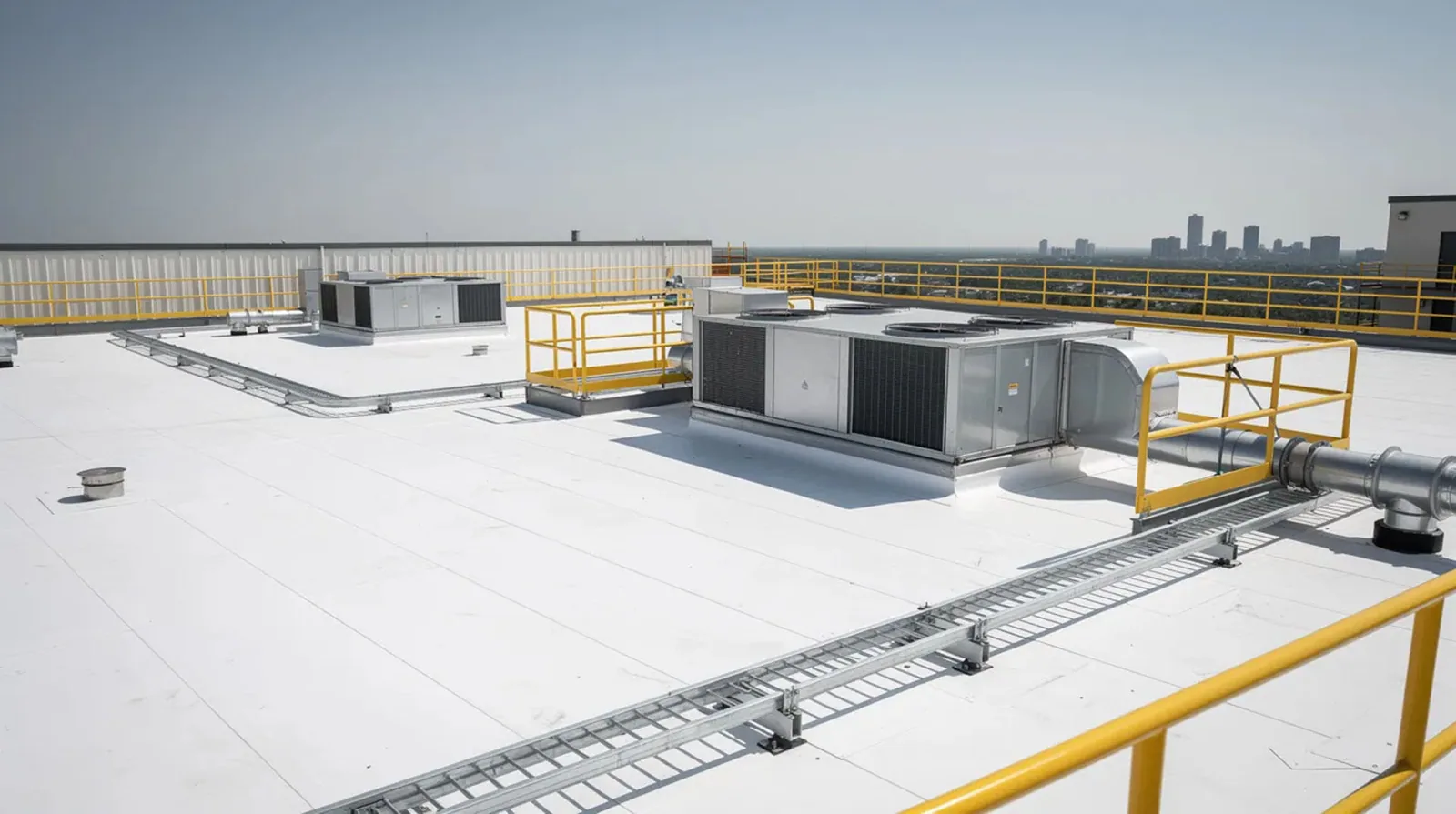
Commercial Roof Inspections in Dearborn, MI
A multi-tenant retail roof needs an inspection that connects the ceiling symptom to the roof condition. We walk accessible areas, check the membrane and transitions, and document conditions that affect water entry or future work. Our findings locate each concern and state whether the next step is repair, testing, or monitoring.
Dearborn, MI has a broad mix of retail, food service, professional, manufacturing, education, and health-care activity. West Downtown Dearborn combines historic architecture with retail and restaurants, while the Fairlane/Midtown area has office and mixed-use redevelopment activity. Those different building uses call for the same disciplined sequence on the roof, but distinct access planning and repair priorities. A roof condition report puts the findings into a record that can be used for budgeting and work orders.
Walk the Assembly in a Useful Sequence
We begin with safe access and a roof map, then check the membrane, seams, perimeter, penetrations, curbs, and drains. Water entry often starts where two materials meet or equipment interrupts the roof plane. We note loose flashing, surface damage, ponding, blocked outlets, and separated repairs. A defect by a drain has different consequences from one at an edge.
We check whether the surface is stable, look for soft areas or signs of wet insulation, and avoid disturbing brittle or poorly attached roofing. When a condition cannot be confirmed visually, we describe the uncertainty and recommend a test cut or moisture survey. The report separates observation from follow-up testing.
Where the building has active tenants or production, we coordinate the access window, roof hatches, escorts, and any areas with restricted access before the walk. The inspection may also include an interior review with the facility contact, especially where staining, odor, or repeated repairs suggest that water has moved from its entry point. If an active opening is found, emergency roof protection can address immediate exposure while the broader findings remain documented.
Separate a Defect From Its Consequence
A water stain, blister, or surface split is not yet a complete scope. We trace seams, curb flashing, drains, and penetrations to see whether water has moved below the membrane. The Dearborn weather station records 35.05 inches of mean annual precipitation and measurable precipitation in most months. Drainage and water-entry details merit year-round attention, especially where repeated moisture limits drying time.
For a roof with repeated service calls, we compare earlier repair locations with current conditions. A recurring leak may point to an incomplete repair boundary, movement at a transition, or wet insulation. Where the membrane around a failure is sound, a local patch can hold. Where moisture reaches farther, the report marks the testing or removal that follows.
The same logic applies after wind, hail, or a winter thaw. NWS Detroit's September 2026 regional report describes damaging winds, large hail, and tornadoes, including events in Lincoln Park and Detroit. We use local weather context to focus the inspection on exposed edges, metal, and penetrations, while the roof condition determines the actual repair. A hail-damage review can focus on the relevant surfaces and details when the building team reports a storm.
Read Findings Against the Building Use
Roof access and repair priority change with the space below. On a manufacturing plant, a leak near equipment or a process line may require a defined shutdown or protection window. On an office building, water entry around a perimeter, conference area, or electrical room can affect tenants and daily access. Our report gives each observation a location, photograph, and a practical priority so the manager can route work without treating every surface issue as an immediate replacement.
The University of Michigan-Dearborn map identifies engineering, manufacturing-systems, science, research, library, fieldhouse, and parking-structure buildings. A roof over a lab or fieldhouse protects different things than a roof over a library, so each detail in the report is tied to the space below it. On a college or university campus, access is arranged around classroom schedules, research areas, and maintenance routes.
Turn Observations Into a Repair Queue
Each finding should help the owner choose what happens next. We describe the condition, note whether it affects water shedding or membrane integrity, and recommend a repair, added testing, or a follow-up observation. We can group similar items by urgency and access needs, but we do not turn a visual inspection into an unsupported remaining-life estimate. If replacement is under consideration, the record can support a separate assembly review and scope discussion.
Dearborn averages 30.8 inches of snow a year, concentrated from November through April, so drainage, seams, edges, and rooftop equipment get a look before and after the snow season. A maintenance visit can revisit noted repair areas and confirm that drains, scuppers, and access paths remain serviceable.
When a roof scope changes to replacement or insulation work, Michigan's currently listed 2021 Building Code and 2021 Commercial Energy Code may affect project requirements depending on the scope. We flag that point for project coordination and confirm the applicable provisions with the local enforcing authority rather than treating an inspection note as code approval. For capital planning across several roofs, the observations can feed a roof capital plan with clear limits and next steps.
Give the Facilities Team a Clear Record
After the walk, we deliver written findings with photos tied to the inspected areas. The record identifies defects, suspected water entry, testing needs, and schedulable work. It also notes restricted or unsafe access, so a manager knows where the evidence ends. Consistent locations help compare bids, work orders, and follow-up visits.
The inspection closes with a choice: which repair comes first, what can wait for a planned access window, and what needs a moisture survey or opening. The Fairlane/Midtown district has office and retail redevelopment activity, while West Downtown includes retail and restaurants. The facilities team can turn the report into a work order that fits the roof and the use below it.
Commercial Roofing Questions
What does a hands-on commercial roof inspection cover?
We check accessible membrane areas, seams, flashings, roof edges, drains, penetrations, and equipment transitions. The scope also considers visible ponding, surface damage, previous repairs, and signs that moisture may be below the membrane. We document what we can observe and call out areas that need testing or could not be reached safely. The resulting report is organized to support repair decisions, not just describe the roof surface.
Will the inspection identify the exact source of every interior leak?
A roof walk can trace likely entry paths, but water can move through an assembly before it appears inside. We compare roof details with the interior location, inspect the surrounding area, and recommend testing when the path remains uncertain. If active water is entering, we can protect the area first and return to complete the investigation under safer conditions. The report states which conclusions are supported by the accessible evidence.
Can you inspect a roof while tenants or production remain active?
Yes, with an access plan that reflects the building's operating limits. We coordinate roof entry, restricted zones, escorts, and any area where the interior team needs notice. For manufacturing or research spaces, the facility contact can identify equipment or processes that should not be interrupted. If a roof area cannot be reached during the scheduled window, we mark that limitation and arrange the next suitable access step.
How do you prioritize the items in the inspection report?
We distinguish conditions that threaten water shedding or interior protection from maintenance items that can be scheduled later. Each finding includes a location and recommended next action, such as a patch, further moisture testing, or a scope review. The roof's condition and the consequences for the occupied space guide priority. We avoid assigning a remaining service life when the inspection does not support that conclusion.
When should we request another inspection after storm damage?
Arrange an inspection once roof access is safe and the building team can identify the affected areas. We check edges, metal, membrane transitions, and drainage details that may have shifted or been punctured. If a new leak is active, emergency protection takes priority. A subsequent visit can assess concealed moisture or confirm the permanent repair after the temporary work is removed.
Schedule a Roof Walk With Useful Findings
Arrange a hands-on inspection for your Dearborn facility. We will document the accessible roof areas, identify repair and testing priorities, and give your team a written record for work planning.