Roof Condition Reports in Dearborn, MI
A report on a pharmacy strip's roof and a report on a research building's roof should end the same way: with a decision the reader can make without climbing a ladder. The building differs, so the middle of the report differs. The strip report spends its pages on rooftop units, tenant changes, and drains. The research building report spends them on levels, penetrations, and the sensitivity of what sits below. Roof condition reports in Dearborn, MI are written to the building use first, and they name the condition that changes the decision.
Every report, whatever the building, follows the same spine: a plan with numbered sections, photographs from fixed positions, measured conditions, moisture findings, a rating for each section, and options with costs.
What a Reader Can Verify
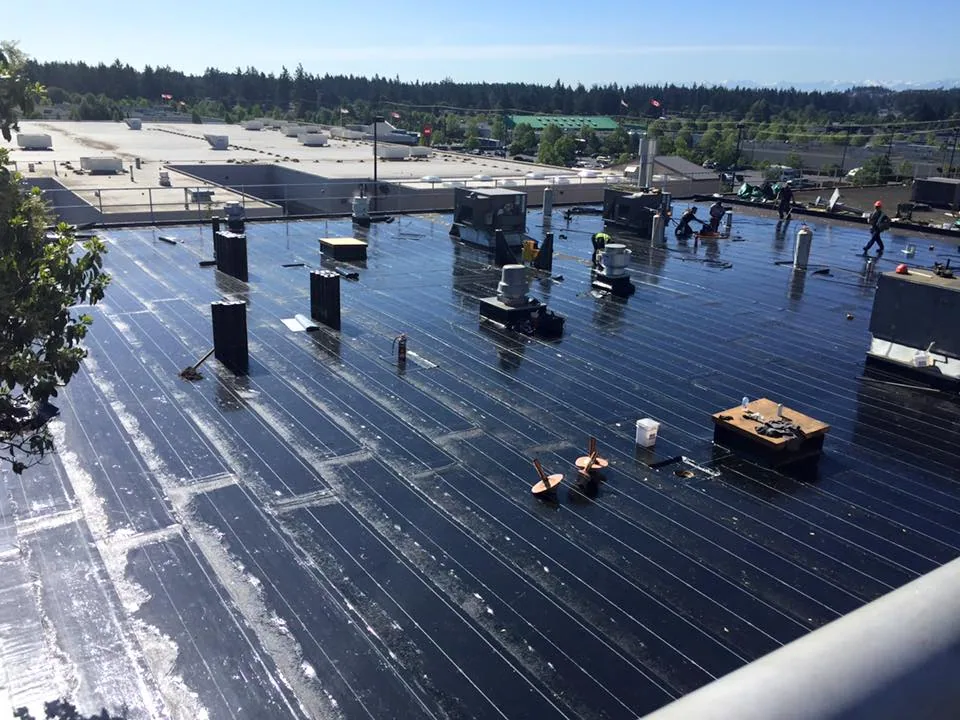
The report opens with a plan that divides the roof into sections and a key to the photographs. Each section entry gives the assembly as found, the number of layers, the attachment, the surface condition, the laps and flashings, the drain bowls, the penetrations, the equipment, and evidence of past repairs. Each finding is photographed wide, medium, and close, with its location marked. Measurements, such as ponded depth or open lap length, are given in numbers.
An entry ends with a rating and a consequence. A reader who never saw the roof can follow from plan to photograph to rating, and can tell which statements are observations and which are inferences. Anything not reached, such as an area under equipment or a section under snow, is listed as unverified with the reason and the step that would verify it. On a building near Dix-Vernor or in the West Downtown district, where the city points to historic architecture and a storefront mix, the list of unverified areas is often the most useful page for planning the next visit, because it tells the owner what access, lift, or test would close each gap.
Moisture Findings Before Conclusions
A visual walk cannot say whether insulation is wet. When the surface, interior stains, or age suggest trapped water, the report calls for a moisture scan, and where the scan shows a pattern it confirms with a core. The core shows the layers, the wetness, and the deck, and it is patched the same day. The wet and dry areas are drawn on the section plan and they set the tear-off boundary.
In cost terms the difference is large. A wet core means insulation replacement, which turns a recover into a replacement. A core that comes out dry beneath a tired sheet can keep a recover or a coating on the table. An infrared moisture survey covers a large roof efficiently, and a drone flight documents areas that cannot be walked safely.
Reading Findings Against the Climate Record
Weather data helps decide where to look and how often. Dearborn collects about 35 inches of precipitation in a year, with measurable amounts on nine to twelve days in most months, which makes drainage and water-entry checks a recurring concern. Snow is concentrated from November through April. The report uses those figures to set the inspection rhythm and the attention paid to drains, edges, and flashing.
Project snow loads still require code-specific site checks, and the report says so when snow load or deck deflection comes up. The roof itself gives the rating, with the climate record as context.
Options and Their Limits
Each section ends with the options its evidence supports. A repair is described by its scope and its repair boundary. A recover is described with the conditions that make it possible, such as dry insulation and adequate drain height, and the conditions that would rule it out. A replacement is described with its tear-off boundary and the unknowns that could expand it. Where quantities depend on an open test, the report gives ranges and lists the allowance with its trigger.
Those options feed the capital plan and, over time, the asset record. A report that stops at defects asks the owner to make that translation; ours makes it.
Fitting the Report to the Building and the Reader
The city's commercial stock includes pharmacy, grocery, and medical-office uses along Warren Avenue, retail and restaurant uses in the downtown districts, and a large higher-education and research presence. Each produces a different report. A strip on Warren Avenue gets a report with unit locations, walk routes, and the condition of each tenant's penetrations. A downtown storefront gets one with access and parapet detail. A campus building gets one with levels and the sensitivities of rooms below.
The audience shapes the summary. A lender wants condition and remaining service life. An insurer wants dated photographs of the pre-loss roof. A finance committee wants options and costs. A tenant wants to know whether leaks will recur. One body of evidence supports all four, each with its own front page. A report prepared for a hospital or clinic adds the rooms below each section and the intakes on the roof; a report for a school adds the summer access window; a report for a restaurant adds the exhaust discharge and the condition of the sheet beneath it.
Delivery Against the Decision Date
A report that arrives after the decision is a record, not a tool. We ask for the date the report will be used, whether a contingency deadline, a loan meeting, a budget submission, or an insurance renewal, and we schedule the walk, tests, and writing backward from it. If a test will take longer than the window allows, we say so at the start and propose an interim report that states findings to date and the allowance for what is open. A commercial roof inspection repeated each year updates the same report.
Photographs are named by section and position and delivered in a form that opens without special software, with the plan that locates each one, so a facility staff can forward one section's pages to a contractor for pricing. A report that travels well is one the reader can pass along without a phone call to explain it.
Commercial Roofing Questions
What makes a report usable by a lender or insurer?
Dated photographs from fixed positions, numbered sections, stated measurements, and a clear line between what was seen and what is inferred. A third party can follow the finding without visiting the roof.
Should every report include test cuts?
Not every one. Include them when the surface, stains, or roof age point to trapped moisture, or when a recover is under review. The report says when a cut is recommended and what the result would change.
How long does the written report take after the walk?
Roof size and the number of tests set the pace. We aim to return it ahead of the date you give us, so share the deadline on the first call and the work will be sequenced to meet it.
Can a drone replace a roof walk?
For documentation, a drone covers fragile or hard-to-reach areas. It does not probe laps or test attachment, so the walk stays for every section that can be reached safely.
How is an unreachable section handled?
It is listed as unverified with the reason, such as snow, equipment, or a fragile surface, and the report names what would be needed to verify it.
Does the report include prices?
It includes cost ranges for the options, with allowances where a test is open. For a firm bid, the owner can ask for a scope based on the report.
Send the access window and any earlier roof records
Send the building addresses, the access window, roof drawings or past reports, and the date the report must be in your hands. We will walk the roof, run the tests that apply, and return written findings with photographs, ratings, and options for repair, recover, and replacement.