Infrared Moisture Surveys in Dearborn, MI
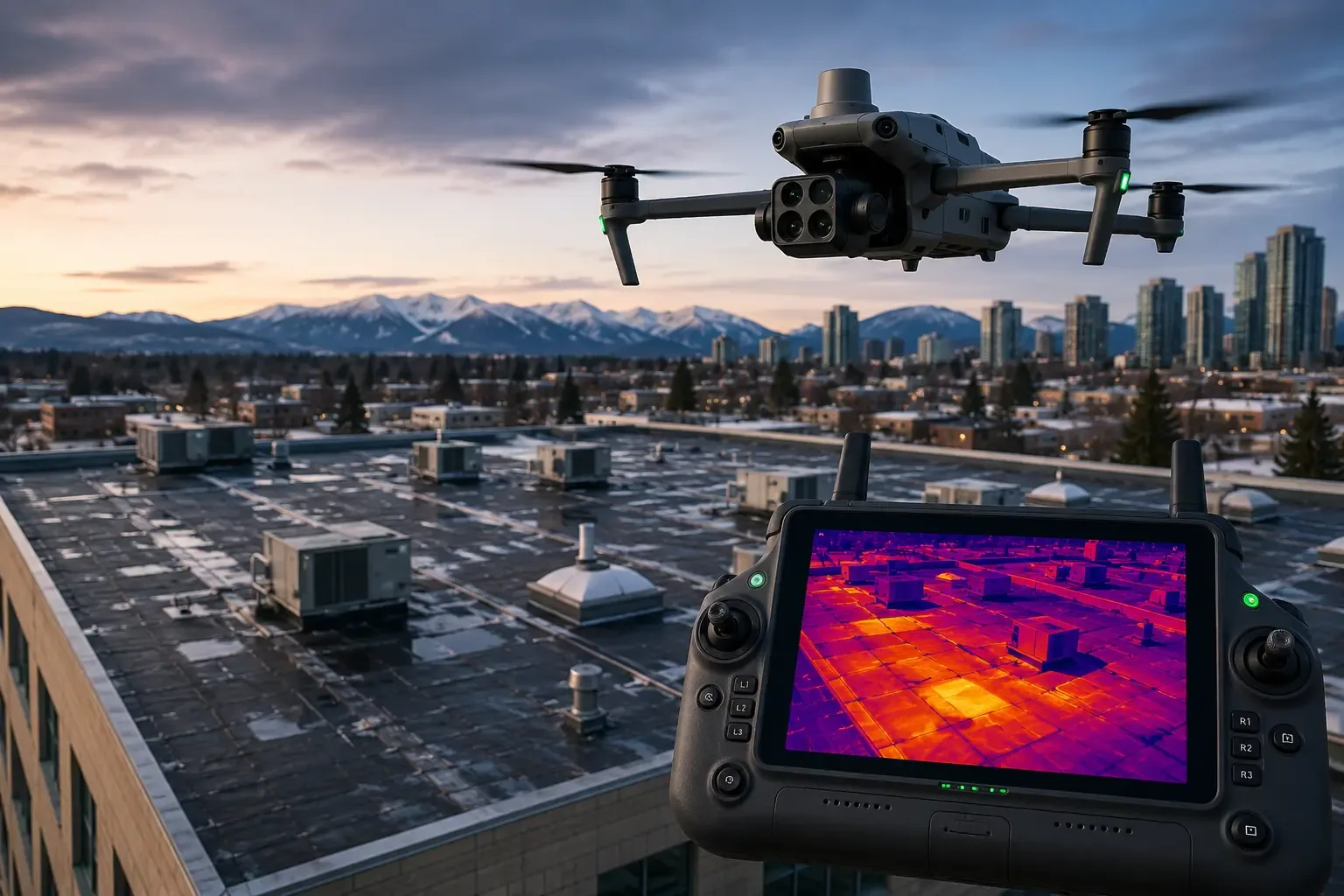
On a low-slope production roof, a moisture survey helps answer whether water has spread beyond the stain that prompted the call. We use infrared imaging to identify thermal patterns that may point to wet insulation, then verify selected areas with core cuts or another suitable test. The image is a map for investigation, not a moisture result by itself. That distinction matters before a repair, recover, or replacement scope closes material that may still be wet.
Dearborn, MI sees cold-season snow and precipitation through much of the year. In an average year Dearborn collects 30.8 inches of snow and 35.05 inches of total precipitation. A roof that has taken on water needs a check of the membrane, drainage, and insulation before the next layer is considered. We record survey conditions, map suspected areas, and explain which findings were confirmed. A roof recover evaluation can then use those verified boundaries to judge whether existing layers may remain.
Read Thermal Patterns as Leads
Infrared equipment measures surface-temperature differences. A damp area may hold heat differently from dry insulation when conditions create a useful contrast. Shading, equipment, insulation changes, and recent weather can also affect an image. We review the roof plan and visible details before labeling an anomaly as suspected moisture.
Timing depends on conditions. Weak temperature contrast, recent rain, shade, or equipment heat can complicate interpretation. We postpone or adjust capture when the data would not help the repair decision. The owner receives a map of suspected areas and the conditions under which it was prepared. We verify a color pattern before using it to set a repair recommendation.
Water can enter at a seam, curb, parapet, or drain, then travel before appearing indoors. We compare patterns with stains, repair history, and likely water paths. Dearborn station normals show measurable precipitation in most months, so recurring wetting can limit drying time. We look for the entry detail as well as suspected wet insulation. A leak investigation helps when the stain and suspected moisture field do not line up.
Confirm the Areas That Change the Scope
After imaging, we select test points in the suspected area and compare them with nearby material that appears dry. A core cut exposes the membrane, insulation, and deck. We close the opening with a compatible repair after examination. One cut cannot represent a broad area unless it tests the relevant pattern; a suspected boundary may need more points.
We mark confirmed wet insulation separately from untested areas, link results to the image map, and note nearby seam, curb, drain, or flashing concerns. The scope accounts for the layers exposed and deck condition. When evidence is mixed, additional tests may be needed before quantities are set. Removal boundaries follow observed material, not an unverified image.
Dearborn is home to the University of Michigan-Dearborn and Henry Ford College and describes itself as a regional center for healthcare services, so many of its roofs cover clinical or instructional space. At an active clinical or instructional building, we coordinate test-cut timing and interior protection with the facility contact before opening the assembly. A hands-on roof inspection checks surrounding seams, penetrations, and drainage alongside the moisture testing.
Use the Results to Set the Repair Boundary
If test cuts confirm isolated wet insulation and the surrounding roof is sound, we can define a localized repair area and restore the assembly. Where moisture extends farther, removal may need to continue until the remaining material is dry and stable. We document what controls that boundary and identify any deck damage that changes the scope. A surface patch over wet layers can leave the source and consequence in place, so we compare a targeted repair with broader removal when the evidence calls for it.
A recover is viable only when the existing assembly is suitable to remain. Consider moisture findings with attachment, drainage, deck condition, and project requirements. Michigan lists the 2021 Building Code and Commercial Energy Code as current editions; scope and local enforcement determine their application. A survey alone does not establish compliance. If replacement is warranted, the replacement scope can use confirmed wet-area boundaries and deck observations.
Cost and schedule depend on the test area count, access, roof assembly, weather, and need for phased work. Mixed results may call for more cuts; a limited question may need only selected tests. We explain which added evidence could change quantities. Over active production, the occupied-building plan can coordinate protection and operations.
Protect the Operation Below Each Test
Core cuts are small openings, but work below still needs planning. We check whether the test area sits above equipment, inventory, a ceiling that cannot be disturbed, or a production space with restricted access. The facility contact can help locate interior access and set a period for work. We protect the area, collect the removed material, and restore the opening as part of the test. If the roof includes several layers or a difficult deck, the opening may require additional repair time.
In the Dix-Vernor corridor in Dearborn's South End, a core cut over an occupied shop means setting interior protection around the tenant's hours. On a warehouse or manufacturing facility, tests must account for inventory and active work areas. A visit to a Dix-Vernor building follows the same building-specific plan.
Keep the Survey Record for Future Work
The written report states what the map showed and what test cuts confirmed. We include image conditions, a roof-area key, test locations, observations, and recommended repairs. We distinguish suspected moisture from confirmed wet insulation. Photos help match later work to the original test points.
NWS Detroit normals place first measurable snowfall around November 16 and last around April 7. Winter access and snow cover can limit useful survey timing. We choose a suitable window and note any area the conditions prevented us from assessing. A later condition record keeps the findings with future roof decisions.
Commercial Roofing Questions
Does an infrared image prove that insulation is wet?
No. Infrared identifies temperature patterns that may indicate moisture, but other conditions can create similar differences. We select test locations and verify the roof layers with core cuts or another suitable method. The report separates suspected areas from confirmed wet insulation so the repair scope reflects the evidence available.
How do you choose where to take a core cut?
We use the image map, roof details, visible leak history, and comparison areas to choose locations that answer the owner's question. A test should check a suspected condition and, where useful, compare it with an area that appears dry. The number of cuts depends on how consistent the pattern is and whether the result will change removal limits or repair quantities.
Will the core-cut openings be repaired the same day?
We close each test opening after inspecting the roof layers, using a compatible repair for the assembly and conditions. The patch size and preparation depend on the materials exposed and the weather at the time. We record the test location and the repair so a later crew can find it and understand why it was opened.
Can the survey tell us whether to recover or replace the roof?
Survey results inform that choice, but they do not decide it alone. We also review deck condition, attachment, drainage, roof layers, and the scope of wet material. A recover may remain possible when the assembly is suitable; broader moisture or deterioration can make removal more dependable. The written findings explain which conditions support each path.
What can delay an infrared moisture survey?
A weak temperature contrast, recent precipitation, snow cover, unsafe roof access, or active building operations can reduce useful coverage. We confirm whether conditions support the inspection question and identify areas that remain untested. If a leak is active, emergency protection can proceed while the survey is scheduled for a better window.
Verify Suspected Moisture Before Setting the Scope
Schedule an infrared moisture survey for your Dearborn facility. We will map suspected areas, verify selected points, and provide findings your team can use to set the repair boundary.