
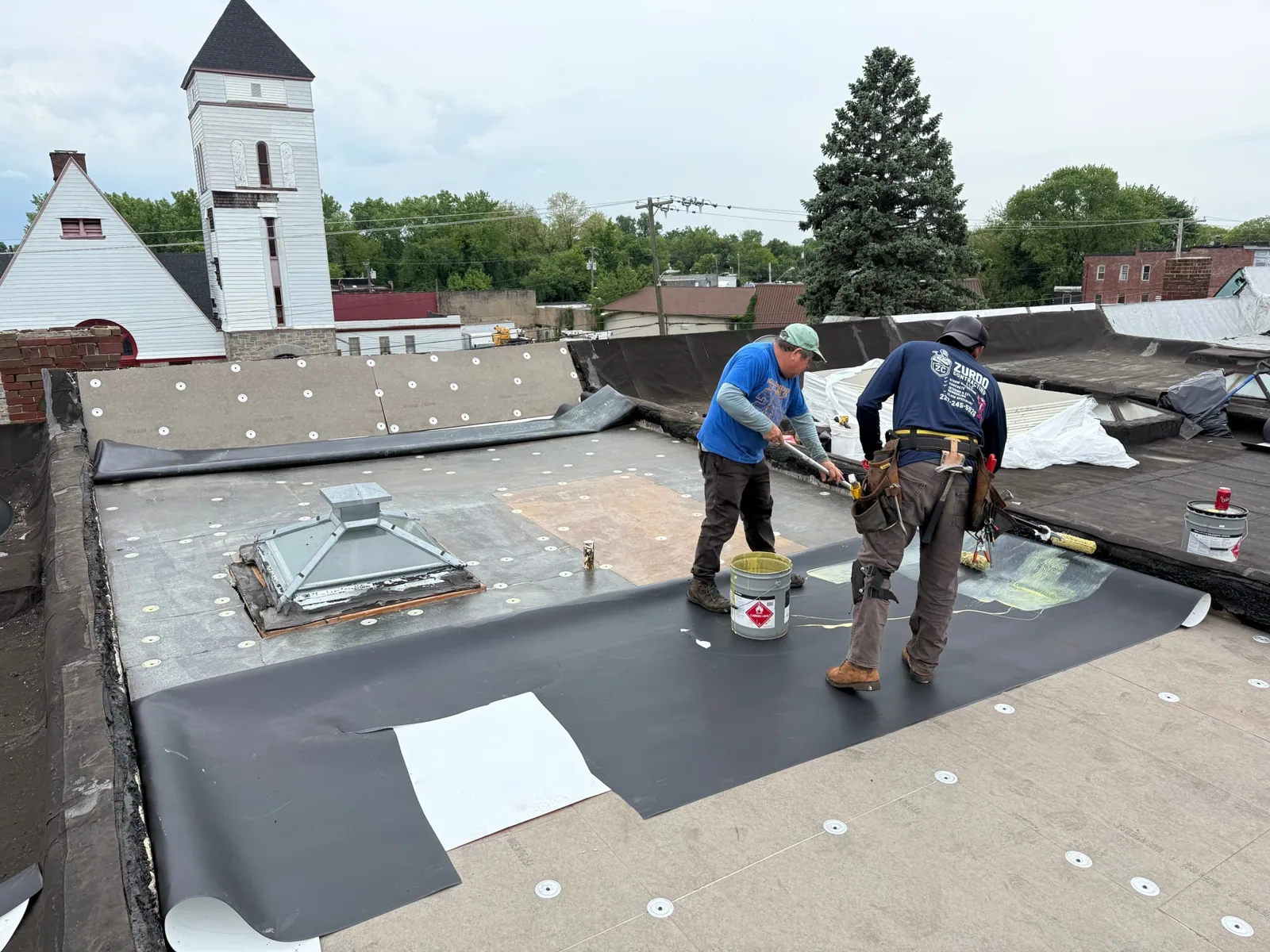
Commercial Roof Repair in Dearborn, MI
On a retail or office roof, a planned repair begins with the failed detail, not a bucket of sealant. We inspect the membrane field, seams, flashing, drains, and equipment curbs, then trace the route water takes across the roof. In Dearborn, seasonal rain and snow make drainage part of the repair decision. The goal is to find the repair boundary, explain what can be corrected locally, and document any condition that points to broader work.
A repair should connect the failed material to the sound roof around it. If the seam has separated, we find where it still bonds. If a curb or parapet leaks, we check the transition and the surfaces that meet it. We identify the system before selecting a compatible patch. For water that has entered the building, active leak repair adds tracing and interior coordination to the same investigation.
Find the Failure Before Closing It
Low-slope roofs collect stress at laps, corners, penetrations, edges, and places where different materials meet. A puncture can be isolated, while a split seam may continue beneath an adhered surface or repeat along a long run. We clean the repair area, check adhesion, inspect adjacent seams, and look for moisture or movement that could defeat a surface patch. The work method follows the material and the condition. A patch needs enough sound membrane around the defect to bond and remain watertight.
The National Weather Service documented damaging winds, large hail, and tornadoes across Southeast Michigan in September 2026, with tornadoes touching down in Lincoln Park and Detroit. After a storm like that, we inspect exposed edges, equipment attachments, flashing, and membrane for observable change. If the roof is safe to access, wind-damage repair can address lifted details, while hail marks require review of the actual membrane and underlying assembly.
Map Seams, Flashing, and Water Entry
A repair visit follows the water path from the interior symptom toward the roof detail. We compare stains or drips with seams, penetrations, drain bowls, scuppers, curbs, and perimeter walls. Water may travel under the membrane before it reaches the ceiling, so the wet area inside can be offset from the failed point above. We mark the inspected area and photograph the condition. When moisture may extend beyond the visible defect, testing can show whether insulation needs removal instead of a surface repair.
The Dearborn station normals record 35.05 inches of annual precipitation, with measurable rain or snow on many days across most months. That makes drain performance a routine part of water-entry diagnosis, not an afterthought. We look for debris, blocked outlets, damaged strainers, and low areas that keep water after a storm. A ponding-water assessment can separate an outlet problem from a broader slope or insulation issue. The findings show which repair will address the water path.
Set a Repair Boundary the Owner Can Track
Once we locate the defect, we describe the repair area and what lies beyond it. A seam repair may include opening loose material, drying the surface, restoring the bond, and sealing the termination. Flashing work may require removing failed material and rebuilding the transition rather than applying another bead over it. For a compatible membrane, an open-seam repair or flashing repair should follow the system detail. We record adjacent conditions that could affect the repair's service life.
Dearborn's city plan names Ford Motor Company as the city's major employer and describes its large research-and-development complex as undergoing reconstruction. In a market with active manufacturing and research, a repair scope needs to state the access window, the area below to protect, and the equipment or transitions near the failure. The roof condition sets the technical boundary; the facility contact helps coordinate the route and work period.
Coordinate Access and Weather Protection
Repair work can happen above a running business, but access, noise, staging, and interior protection need a plan. We confirm how the crew reaches the roof, where tools and materials can be set down, and which doors or work areas need protection. If a repair cannot be completed in one visit, we secure the temporary condition and define the next step. For an active opening or water intrusion that cannot wait for a scheduled slot, our emergency response can stabilize the affected area before permanent work.
Cold weather can change how a repair surface is prepared and which materials can be installed. We check conditions and product requirements before starting, then keep the exposed work area within what can be closed safely. If snow or ice prevents dependable access, we explain the limitation and arrange the next safe inspection. Dearborn's winter snowfall normals cover several months, so the plan includes a protected stop point each shift. A temporary repair is described as temporary when it does not restore the full system detail.
Match Repair to the Roof System
Different membranes need different preparation and repair materials. TPO and PVC use heat-welded seams, EPDM often relies on compatible tapes and primers, and modified bitumen repairs have their own surface and layer requirements. Metal roofs require attention to fasteners, panel laps, sealant joints, and movement. We identify the existing system before selecting the method; mixing incompatible materials can make a small repair fail sooner. The repair scope explains what was found, what was completed, and which nearby conditions remain for review.
Dearborn's employment base includes manufacturing, education and health care, and professional services. The actual building use helps us plan interior protection and access, while the roof inspection determines system and scope. For a roof that needs more than one isolated repair, a full condition inspection can map other defects and help distinguish maintenance from replacement. The written record can also support condition reporting across a property portfolio without treating a single finding as a citywide pattern.
Keep the Repair in the Roof Record
We leave a repair record with photos, location, material, and any follow-up item. That history helps the next inspection distinguish a new failure from a previous repair and lets the owner track recurring details. In Fairlane and Midtown, Dearborn reports office and retail redevelopment activity, and a repair record hands a new owner or property manager the history of the roof from day one. A Fairlane and Midtown roof review starts with the current assembly, not assumptions about a prior project.
After repair, the owner can schedule a maintenance check for drains, seams, and flashing before the next wet or cold period. We explain what was corrected and which conditions still need monitoring. If the repair boundary expands as the work opens up, we stop, document the new condition, and review the options with the facility contact. That keeps the decision tied to what the roof shows.
Commercial Roofing Questions
How do you decide whether a seam can be repaired?
We check the bond, the material beside the split, and whether moisture or movement continues past the visible opening. A repair is appropriate when sound material remains for a compatible tie-in. The written findings identify where the repair stops and what needs separate review.
Can you repair a roof while the business stays open?
We coordinate access, noise windows, staging, and interior protection with the facility contact. The sequence depends on the roof layout and the areas below the work zone. If the repair must pause, we secure the temporary condition before leaving.
Why is water showing inside far from the roof defect?
Water can move under a low-slope membrane before it reaches the deck opening or ceiling stain. We compare the interior location with seams, penetrations, drains, and transitions, then trace the water path rather than patching directly above the stain.
What does a repair report include?
The record includes photos, the repair location, material or detail addressed, and any adjacent condition needing follow-up. We explain whether the work corrected an isolated failure or uncovered a larger moisture or drainage concern.
Can a storm inspection confirm hail or wind damage?
We document visible changes to edges, seams, flashing, attachments, and membrane, and compare them with the roof condition. The storm report is the reason to look; the site inspection establishes what is present and what should be repaired.
Schedule a Commercial Roof Repair
Arrange an inspection for seams, flashing, membrane, and drainage. We will document the repair boundary and the next decision for your facility.