
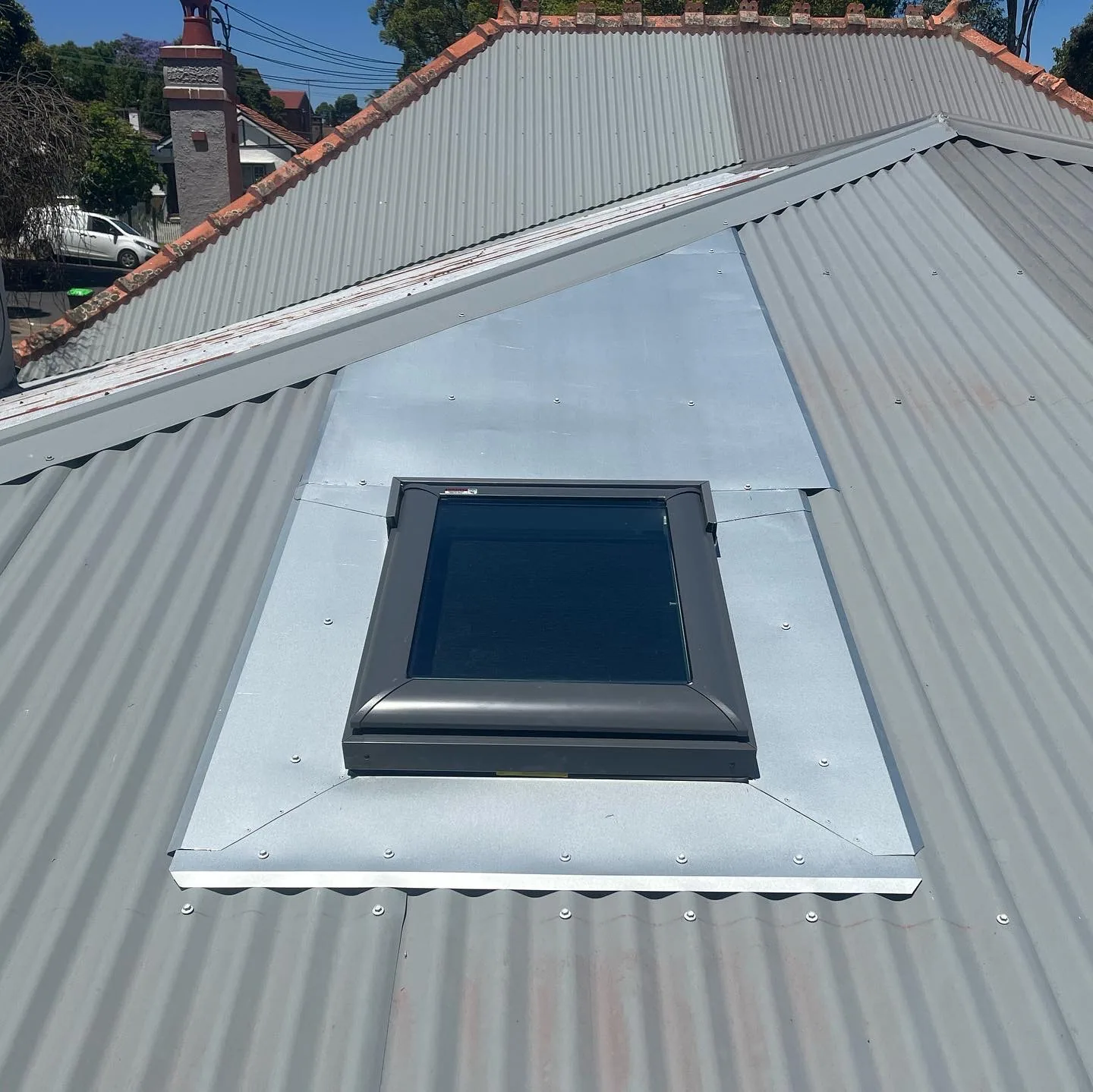
Commercial Skylight and Penetration Flashing in Dearborn, MI
A skylight or pipe penetration interrupts the roof membrane and creates a transition that must remain sealed as materials move and age. A leak can begin at the unit, the curb, the flashing, or the roof field nearby. We inspect those interfaces together before recommending a patch or reconstruction. Replacing sealant without identifying the failed layer can leave water entering at the same location.
Dearborn is a regional center for employment, healthcare services, and higher education, so skylights and penetrations turn up over classrooms, clinics and offices alike, each with its own roof system to document. A roof inspection can place the detail in context with surrounding seams and drainage.
Find the Failed Layer at the Opening
We inspect the skylight lens or glazing, frame, curb, fasteners, counterflashing, and membrane transition. For a pipe, conduit, or equipment penetration, we check the boot or field-fabricated flashing, clamp, sealant, and support stability. We look for cracking, corrosion, movement, incompatible repairs, and water beneath the flashing. Photos show the detail and visible limits.
Water may reach a ceiling well away from the roof opening, especially where a deck flute or structural member carries it laterally. We compare interior symptoms with roof locations and nearby drains or curbs. If wet insulation is possible, the condition should be tested before a repair closes the area. A moisture survey can help map suspect zones when the roof materials and conditions suit the method.
Multiple penetrations can crowd one roof area. Cables, vents, plumbing, and abandoned supports may have been added at different times, leaving overlapping patches. We inventory active and unused openings, then identify which ones can be removed, capped, or reflashed with owner approval. Where mechanical work is involved, larger equipment curbs and supports carry their own transitions.
Rebuild the Transition for the Roof Material
Flashing methods depend on whether the surrounding roof is single-ply, modified bitumen, built-up, or metal. A thermoplastic membrane may use welded field flashing with compatible prefabricated accessories; an EPDM assembly calls for appropriate adhered materials and seam treatment. Bituminous roofs need compatible plies and surfacing, while a metal roof requires closures and trim that accommodate panel movement. We identify the system before proposing a detail. On a TPO roof, the field flashing is welded to the sheet, which is why identifying the membrane comes first.
At a curb, the flashing needs secure height, sound corners, and a termination that will not peel away under movement or weather. At a pipe, a boot should fit the pipe and clamp securely without stretching beyond its intended range. Irregular openings or damaged accessories may need field-fabricated flashing. We define the repair limits and confirm sound adjoining material. A roof repair visit can include related membrane defects near the penetration.
Skylight replacement is a separate decision from flashing repair. We check whether the unit is cracked, fogged, loose, or otherwise unsuitable, and whether the curb can accept a replacement. The scope should state whether the glazing, frame, curb, or roof transition is being changed. If a larger roof project is planned, a replacement review can coordinate these openings within the new assembly so that old and new details are not left in conflict.
Address Movement, Condensation, and Water Travel
Not every skylight complaint comes from rain passing through the outer flashing. Condensation may form when interior humidity and surface temperatures combine, while a failed gasket or blocked weep detail can allow water into the frame. We note whether symptoms follow rain, temperature changes, or interior activity. Roof work should not mask an interior condensation problem.
Dearborn's weather station averages 35.05 inches of annual precipitation, and measurable precipitation occurs in most months. Repeated wetting places stress on sealant joints and membrane transitions. We check whether water can move away from the curb and whether the unit's drainage details remain clear. If a low spot surrounds the opening, the repair may need to address roof slope as well as flashing. A drainage review can evaluate water paths that converge near a skylight or penetration.
Thermal movement can loosen fasteners and pull on flashing, particularly where a pipe or unit is supported independently of the roof. We inspect the support and surrounding attachment rather than fastening the membrane to a moving pipe. Any active mechanical or electrical service should be coordinated with the responsible trade before relocation or removal. The roof scope identifies that interface and leaves equipment decisions with the appropriate system contractor.
Plan Work around Light, Access, and Occupancy
Skylights provide daylight, but temporarily covering or replacing a unit can affect interior work areas. We coordinate the sequence with the facility contact and explain whether interior protection or temporary light control is needed. A school, office, production floor, or healthcare space may have different access windows and requirements below the opening. On a college or university building, the same questions apply to classrooms and labs below the opening.
Henry Ford College's main campus includes its Athletic Memorial Building and other campus facilities. On a campus, maintenance work has to coordinate with scheduled building use, and the facility contact confirms access and service restrictions for the building being inspected.
Warren Avenue is a Dearborn business corridor that includes pharmacies, medical offices, groceries, cafes, and other neighborhood businesses. For an occupied storefront or clinic, we coordinate entrances, material routes, and any interior area affected by the repair. Along Michigan Avenue, West Downtown includes historic architecture and commercial storefronts, which can require careful coordination where roof work meets older exterior construction. In West Downtown, the scope stays specific to the inspected building.
Track Each Opening after Repair
At closeout, we record the location, flashing method, materials, photographs, and any remaining limitation at each repaired opening. A roof plan with unit numbers or consistent landmarks helps the owner match the repair to future service calls. If the unit itself was not replaced, note its condition and any signs that merit observation. That gives the next inspection a clear baseline rather than a generic roof-wide note.
When another trade adds a pipe, antenna, cable, or rooftop unit, the roof transition should be reviewed before the work is considered complete. Unused penetrations should be removed or sealed with a compatible detail rather than left under an improvised cover. We can document new openings and check nearby flashing after mechanical work. A dated roof record can retain the opening inventory and repair history.
Dearborn's districts include East and West Downtown, Warren Avenue, and Dix-Vernor. The mix of storefront, institutional, and industrial operations changes access planning, but each penetration still needs an assembly-specific detail. We leave the owner with a record of what was repaired, which openings remain, and where future monitoring is appropriate.
Commercial Roofing Questions
Can you stop a skylight leak by adding sealant?
Sealant may be part of a repair, but only after the failed interface is identified. The issue could involve the lens, frame, curb, flashing, or adjacent roof membrane. We inspect each layer and specify a compatible repair rather than cover the symptom alone.
How do you tell whether water comes through the skylight or roof around it?
We compare interior symptoms with the curb, frame, membrane tie-in, and nearby roof details. Timing with rainfall or temperature changes can help, but concealed paths may require testing. The report separates observed entry evidence from areas that remain uncertain.
Do all roof penetrations use the same flashing detail?
No. The material and shape of the opening, movement, roof system, and exposure all matter. A pipe boot, curb flashing, skylight frame, and metal-roof closure have different requirements. We identify the existing assembly before selecting a method.
Can unused pipes or supports be removed during roof work?
They can be removed when the owner confirms the service is no longer needed and the responsible trade disconnects it safely. We then close the opening with a detail compatible with the roof system and document its location.
What should be checked after another contractor installs equipment?
Confirm that the new opening has a complete flashing transition and that nearby membrane, support, and drainage details were not disturbed. Keep the equipment contractor's service information with the roof record and schedule a follow-up check if access was limited.
Repair the Opening and Protect the Roof Tie-In
Schedule a Dearborn assessment of skylights, curbs, and penetrations. We will identify the failed interface and document a repair suited to the roof system.