
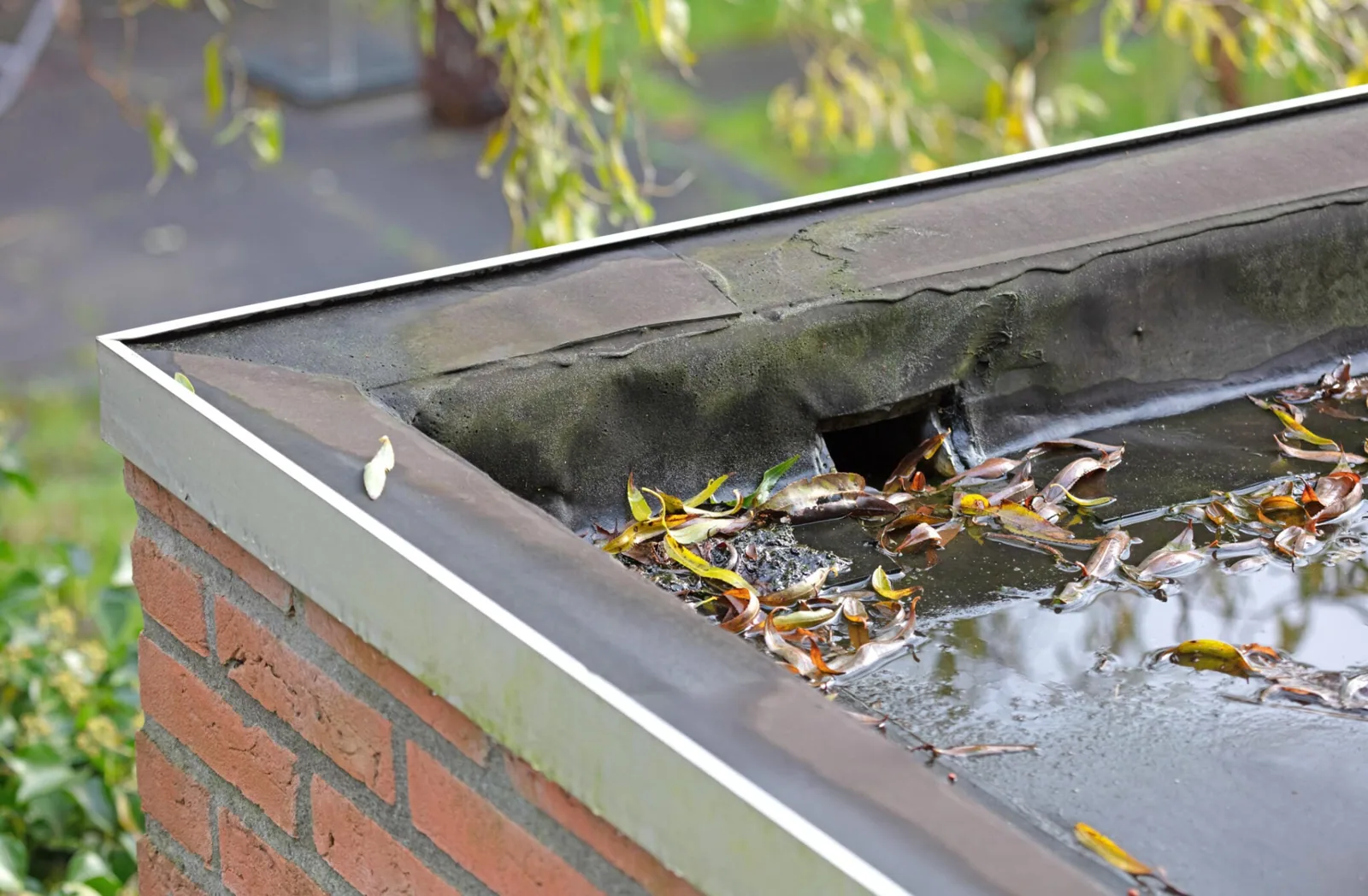
Commercial Roof Drains and Scuppers in Dearborn, MI
A roof drain is the end point of a water path that begins at the high areas of the roof. If the inlet is blocked, the bowl sits too high, or the deck has settled, water can remain where it should move toward an outlet. We inspect the full path, then determine whether the issue calls for cleaning, repair, or a change to the drainage assembly. Clearing debris may restore flow, but it cannot solve every ponding condition.
Dearborn's weather station records an annual precipitation normal of 35.05 inches, with measurable precipitation in most months. That pattern makes outlet maintenance a recurring building task, and the slope and capacity of each roof still get checked against its own layout and drain condition. A preventive maintenance visit can establish a repeatable inspection route for drains and scuppers.
Trace Water from the Field to the Outlet
We start by identifying the drainage layout: internal drains, perimeter scuppers, gutters, leaders, and any overflow outlets. Then we look for debris, loose strainers, obstructed bowls, corrosion, damaged piping connections, and signs that water has moved around the opening. Photographs should show the inlet and its surrounding surface, because the condition of the approach can be as important as the outlet itself.
Water patterns can reveal where a roof has lost slope or where insulation has compressed. We note the shape and extent of low areas and compare them with seams, curbs, and interior symptoms. A light residual film differs from persistent ponding over seams or drains. The report describes conditions observed during the visit. If the assembly beneath a low area may be wet, a moisture survey may help define areas for testing.
Added roof layers can raise the surface relative to an existing bowl or scupper. We inspect the termination, flashing, clamp ring, and surrounding insulation for a lip that traps water. If components are missing or incompatible, a roof inspection can document how the drainage detail fits into the broader assembly.
Choose between Cleaning and Rebuilding
When debris is the cause, cleaning and restoring a secure strainer may be enough. The maintenance record should state which drains were cleared and whether water could flow freely when the work was finished. Repeated clogging may call for better debris control or more frequent service.
If a bowl, clamping ring, leader, or scupper is damaged, repair must retain a watertight transition to the roof membrane. We identify the existing system and use compatible flashing methods. Scupper work includes the opening, sleeve, exterior face, and path where water discharges from the building. A gutter and edge review can help when the outlet connects to perimeter metal or a downspout system.
Where standing water comes from an elevation problem, cleaning alone will not help. The correction may require tapered insulation, a cricket, localized substrate repair, or changes to the outlet height. We check the effect on doors, curbs, equipment, and perimeter details before defining that work. A tapered package, set out in insulation and cover-board work, can redirect water while keeping a stable roof surface. No correction should be specified without understanding where the water will go next.
Account for Overflow and Ponding
A primary drain is not the only part of a roof's water-control plan. Overflow scuppers or secondary drains provide a path when the primary route is blocked, but only when their height, location, and discharge are appropriate. We check whether the secondary outlet is clear and whether water can leave the building without running behind cladding or collecting at the foundation. If no overflow route is visible, we flag it for design or code review.
Snow and ice can complicate drainage during Dearborn's cold season. Climate normals place the local average snowfall at 30.8 inches per year from November through April. Snow accumulation can hide a blocked outlet, while refreezing can restrict a drain or downspout. Unsafe access is not a substitute for a planned seasonal check. The facility team should know outlet access limits and how to clear debris without damaging the roof.
Long-standing ponding may stress seams, coating edges, and insulation. If the water disappears only after evaporation, the roof remains exposed to repeated wetting, and repairs should address the source. We can document the ponding boundary and compare it with the drain elevations. When broader renewal is under consideration, a replacement evaluation can compare drainage corrections with the limits of localized work.
Plan Drain Work around Occupied Areas
Drain work often requires access from both the roof and the building interior. A plumber or roofing crew may need to coordinate around ceiling systems, occupied rooms, kitchens, production spaces, or other services. We establish who can provide access and whether the drain piping is shared with other areas. On a manufacturing property, the drain crew also plans around production equipment and site access.
In East Downtown Dearborn, with its historic storefronts, shops and restaurants, a drain check on an occupied building means coordinating any lift or discharge test with the shop below, and the actual inlet, piping and roof slope get verified on site.
The city reports commercial redevelopment along Ford Road and improvements to Oakwood Boulevard. If other contractors are modifying a roof or facade, we coordinate the outlet detail and preserve a clear water path, whether the building sits on Ford Road or in the East Downtown stretch of Michigan Avenue.
Leave a Drainage Condition the Team Can Track
At the end of a visit, the owner should know which outlets were checked, which were cleared, and which need repair or additional evaluation. We include locations, photographs, observed water patterns, and limitations such as inaccessible piping or weather that prevented a full review. If a drain continues to back up, the note should say whether the cause appears to be debris, elevation, damaged components, or an unresolved condition.
A roof map can mark each outlet, service date, and change in ponding. After reroofing or insulation work, it can confirm that finished slopes reach the intended drains. A roof asset record can retain that history alongside repairs and system details.
Dearborn’s Dix-Vernor district lies in the South End, while Warren Avenue extends from Greenfield to Wyoming. A drainage crew should confirm street access and discharge points at the actual property before setting the work route.
Commercial Roofing Questions
Why does water remain around a roof drain after cleaning?
The outlet may be clear while the surrounding roof still slopes away from it or has settled. We check the bowl height, surface elevations, and water boundary to distinguish obstruction from a drainage geometry problem. A slope correction may be needed if cleaning does not restore flow.
Should a roof drain have a strainer?
Drain protection depends on the assembly and applicable design. We check whether the installed component is secure, compatible, and clear, then note missing or damaged parts for review. The owner should follow the system and code requirements applicable to the building.
Can roof drains freeze in Dearborn?
Cold weather can contribute to ice at exposed outlets or downspouts, and snow can hide an obstruction. We plan checks when access is safe and record any seasonal limitation. Do not chip ice with tools that could damage the membrane or flashing.
What is the difference between a drain and an overflow scupper?
A primary drain carries normal roof runoff into the building's drainage piping. An overflow outlet provides a secondary route if water rises above its intended level. Their placement and discharge path should be reviewed as part of the roof drainage design.
Does adding a larger drain fix ponding?
Not automatically. A larger opening will not help if the roof surface does not fall toward it, the piping is restricted, or the discharge path cannot handle flow. We inspect the full route and identify what part of the system needs evaluation.
Find Where Water Stops Moving
Schedule a commercial drainage inspection in Dearborn. We will check outlets, approach slopes, and overflow paths, then document the repair or maintenance need.