
Commercial Roof Maintenance in Dearborn, MI
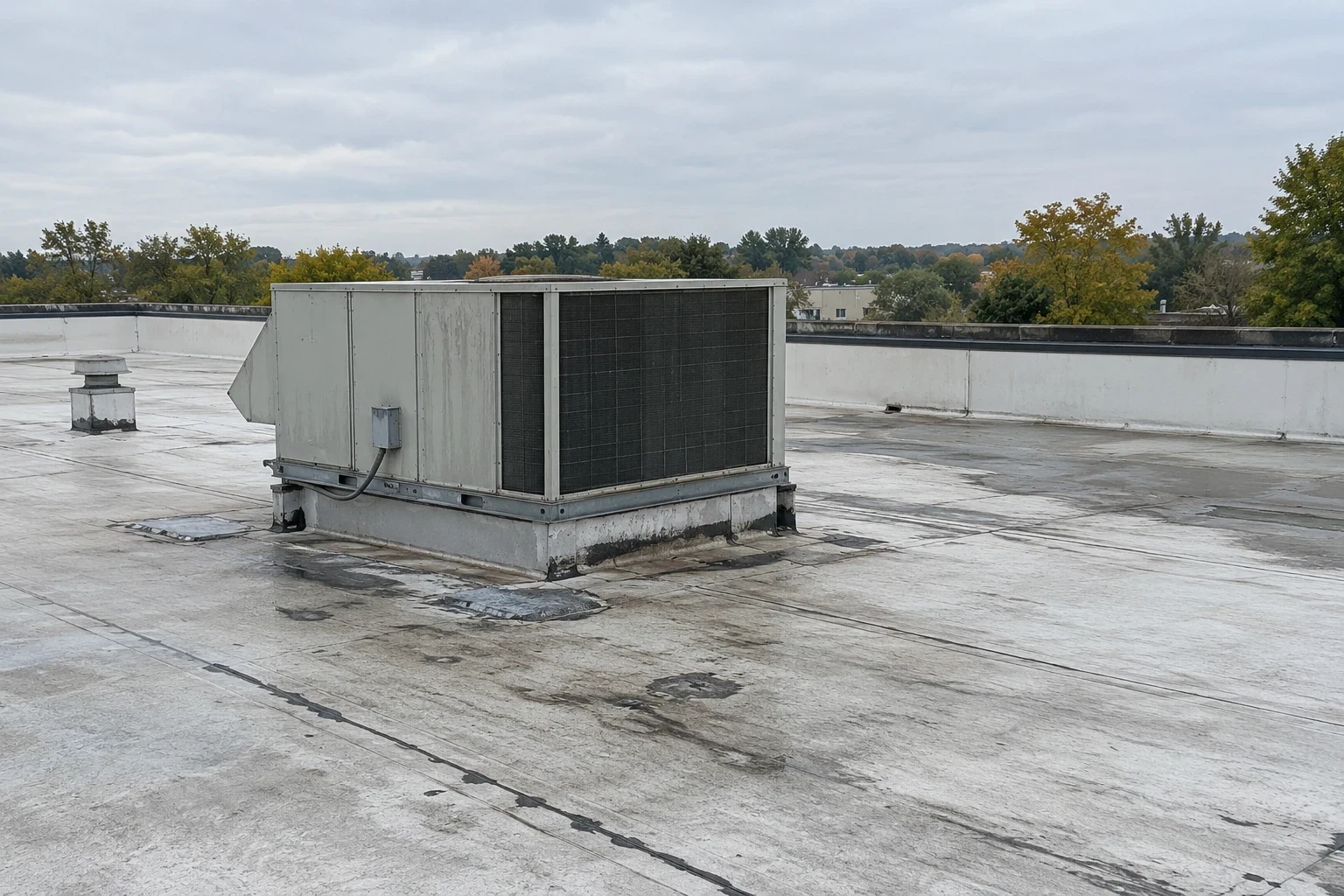
A warehouse roof with drains, curbs, and earlier repairs needs a maintenance schedule tied to its actual condition. We check the assembly in sequence, clear serviceable outlets, examine seams and flashing, and record details that deserve a repair before water reaches the space below. A visit is useful when it turns a walk into decisions: correct now, track for the next visit, or test before a scope is set.
In Dearborn, MI, weather exposure makes the timing meaningful. A mean annual temperature of 49.5 degrees and 4,027 heating degree days put exposed transitions under cold stress for a long season. We plan access for suitable weather and check those transitions on each visit. A hands-on roof inspection can establish a fuller condition baseline when the maintenance visit uncovers a concern beyond routine work.
Build a Visit Around the Roof Record
The first visit should establish what is on the building and what needs watching. We identify the roof system where visible, note repair history supplied by the owner, and map drains, scuppers, curbs, penetrations, edges, and rooftop equipment. Each observation gets a location and a next action. That lets the facility manager compare future visits with a useful baseline instead of relying on a vague note that the roof was checked.
At a scheduled visit, we look for open seams, loose flashing, damaged sealant, punctures, debris, ponding, movement at metal edges, and previous patches that are beginning to separate. We check drain bowls and nearby surfaces, since a clear grate does not prove that the water path is open below. If a condition needs testing, we state what the test would answer. A photo-linked condition record can keep those observations with work orders and capital planning.
A maintenance item is not automatically a repair emergency. We separate an active opening from a surface condition that can be scheduled, then explain what could change if the owner waits. That distinction is useful when a property has several buildings or a limited access window. The manager can group work by area, tenant impact, and weather without losing track of the detail that controls water entry.
Check the Details That Move Water
Water leaves a low-slope roof through drains and scuppers, so we check the membrane around each outlet as well as the opening itself. Debris can conceal a slow drain. A separated seam or raised patch beside the bowl can keep water from reaching the outlet. We remove ordinary debris where safe, identify damaged strainers or flashing, and note low areas that remain wet after the surrounding roof drains. If slope or insulation is contributing, a surface cleanout will not correct the cause.
Measurable precipitation falls on roughly nine to twelve days in most Dearborn months, so outlets and low points are worth tracking through the seasons, not just after one leak. A drainage review can measure the condition of drain bowls, scuppers, and crickets when water keeps returning to the same area. We document what was observed and which follow-up would show whether the water path improved.
Edge conditions also belong on the route. We inspect coping joints, perimeter metal, gutter connections, downspouts, and the membrane termination that meets them. A loose edge can admit wind-driven water; a failed gutter joint may wet the wall below even while the roof field remains intact. The perimeter metal and gutter review can define whether the issue is at the roof edge, the drainage fitting, or both.
Set Priorities for the Space Below
The same roof finding carries different urgency above different operations. A drip over stored stock may call for a local repair and interior protection; water near controls or production equipment may require a short access window and a coordinated work area. We ask the facility contact to identify sensitive rooms, tenant hours, roof access rules, and any equipment that cannot be disturbed. Then we place maintenance tasks in an order that preserves safe movement and keeps active operations informed.
Warren Avenue is lined with cafes, grocery stores, pharmacies and medical offices, so a maintenance visit there often has to work around customers and deliveries on the ground. In West Downtown Dearborn, along Michigan Avenue, the retail, restaurant and coffee-shop mix gives the manager tenants to notify before each visit. For a property management program, consistent labels make the next visit easier to coordinate across sites.
If maintenance identifies wet insulation or widespread deterioration, we set aside the routine checklist and review the broader assembly. A moisture survey can help select test locations when the surface does not show how far water has traveled. If an isolated leak is active, around-the-clock roof response protects the affected area while the permanent scope is arranged.
Schedule Around Seasonal Roof Conditions
A maintenance calendar should account for safe access and the condition that matters at each visit. Before winter exposure, the facility team may prioritize outlets, edges, known leak areas, and rooftop equipment transitions. After snow or thaw conditions, we can revisit drains and repairs once the roof is safe to reach. Measurable snow typically arrives around November 16 and lingers until about April 7, so the cold-weather access period can span several months.
Dearborn's 2025 audited report describes facade work and a planned major roadway reconstruction program for Warren Avenue. For a building in that corridor, a maintenance log can note any access or staging constraints the owner wants coordinated with nearby work. We use the facility's operating schedule and site access plan to set a practical visit window. A Warren Avenue service visit can be scheduled to match the building's own access requirements.
Each visit closes with a brief work list: completed cleaning or minor corrections, repair items with a proposed boundary, areas to watch, and tests that remain open. The owner can then set a repair work order or reserve a later inspection. If a condition changes after weather exposure, we update the record instead of carrying forward an old assumption.
Commercial Roofing Questions
What should a scheduled roof maintenance visit include?
We follow a route across the accessible roof, checking seams, flashings, drains, scuppers, curbs, edges, equipment transitions, and prior repairs. We remove serviceable debris where safe and note any condition that needs repair, testing, or later observation. The written findings identify locations and next steps so your team can turn the visit into work orders.
Can routine maintenance stop every leak?
No maintenance plan can remove every source of damage, but regular checks can catch open details, blocked drainage, and separating patches before they spread. We record what is visible and recommend a closer test when moisture may be concealed. If an active opening is found, we protect the area first and schedule permanent work based on the roof condition.
How do you decide which maintenance items come first?
Items that threaten water entry, drainage, or interior protection rise above cosmetic conditions. We also consider roof access, tenant activity, and whether the repair can be safely completed in the current weather window. The report groups urgent work separately from items that can be tracked, which helps managers plan without treating every note as an emergency.
What if a visit finds wet insulation?
We mark the suspected area and determine whether further testing is needed to define its boundary. A small surface patch cannot dry insulation that remains below the membrane. Depending on findings, we may recommend moisture testing, a test opening, or a repair scope that removes affected material and restores the assembly.
Can maintenance be coordinated across several Dearborn properties?
Yes. We can use consistent building names, roof-area labels, and visit records so each property manager can assign findings to the right site. We still inspect each roof on its own condition and access limits. A shared schedule helps coordinate visits, while the written findings keep repair decisions tied to each building.
Set a Maintenance Visit for Your Roof
Schedule a Dearborn roof walk. We will document the accessible areas, completed maintenance, and repair or testing priorities your facilities team should track next.
