Cool Roof Installation in Dearborn, MI
A single-story manufacturing or office building in Dearborn, MI, with a dark, aged membrane over an open production or open-plan floor raises a fair question in July: would a reflective roof lower the cooling load? With more than four thousand heating degree days a year at the local station, it also raises the opposite question for January. A cool roof is not a free upgrade here. It is a choice between a reflective surface, a membrane that is simply white or light by default, or a conventional dark roof, and the right answer depends on how the building is used.
We begin with the roof assembly that is already there, because the existing membrane, insulation and drainage control what a reflective system can do.
What a Cool Roof Is and Where It Comes From
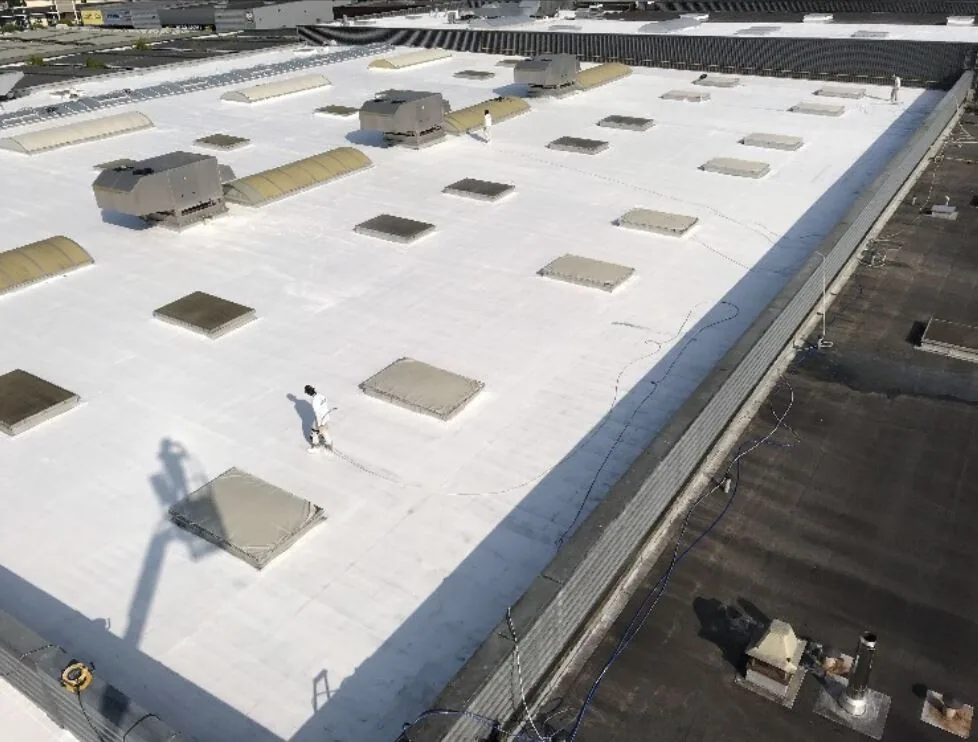
A cool roof has a highly reflective, light-colored surface that sends more sunlight back instead of absorbing it. That surface can come from a white single-ply membrane such as TPO or PVC, from a reflective coating applied over an existing roof, or from a light-colored cap sheet or metal panel. Each has a different life, a different cost and a different set of conditions it needs.
The surface is only half the system. A reflective top over wet insulation, a ponding low spot or a brittle membrane will fail early, so the first check is the layers underneath. We record the type of existing membrane, its attachment, the condition of seams and the moisture state of the insulation before a reflective option is priced.
Heating Load, Snow and the Michigan Calendar
The Dearborn station averages 30.8 inches of snow over a season that runs from November into April, and its mean annual temperature sits near 49.5 degrees. In that calendar, a reflective surface gives up some winter solar gain, and the question is whether summer cooling benefit outweighs it for a particular building. A warehouse with little air conditioning may gain little. An office or laboratory with strong cooling demand may gain more. We do not promise a number, and we ask for utility history when the owner has it.
Snow changes the picture again. A snow-covered roof of any color is reflective, and a reflective membrane that is covered for months does its cooling work only in the warmer part of the year. The practical question becomes how long the roof is bare and exposed to sun, and the owner can weigh that against insulation upgrades, which help in both seasons.
Energy Code and Insulation Requirements
The commercial energy code now current in Michigan is the 2021 edition, in effect since late April 2025, and depending on scope it can reach roof replacement and insulation work. A reflective membrane installed as part of a replacement has to be paired with insulation that meets the code in force when the permit is pulled, and the local enforcing authority confirms project-specific provisions.
We write the assembly with those requirements in mind: insulation thickness, cover board, membrane and any reflectivity or emissivity values the project requires. Where a coating is proposed over an existing membrane, the scope states whether the work counts as maintenance or as a replacement for code purposes, and we recommend confirming that with the building department before the schedule is fixed. Our insulation and cover board work is often the larger part of a cool roof project.
Which Buildings Benefit Most
Cool roofs earn their keep where cooling demand is high and the roof is large compared with the building's volume. Dearborn's mix includes manufacturing, health care and education, professional offices and the retail along Michigan Avenue and Warren Avenue. A low-rise office or clinic with rooftop units running much of the summer is a candidate. A cold-storage or data space may be too, and a building with minimal air conditioning rarely is.
The city's audited report describes major office and mixed-use redevelopment in West Dearborn and the Fairlane and Midtown area, and a new roof on that kind of project is a natural place to weigh a reflective membrane at the design stage. We review the cooling equipment, the roof area and the drainage plan before suggesting a surface, and we present a conventional alternative in the same document.
Coating, New Membrane or Leave It Dark
A reflective coating restoration can extend an existing roof and add reflectivity, if the base is dry and sound. A new reflective single-ply membrane, installed as a recover or full replacement, resets the service life and allows insulation to be corrected. Leaving a roof dark is a legitimate choice when the building rarely needs cooling or when the existing membrane has years left.
The findings sheet shows each path, its likely service life, its maintenance needs and what it leaves unresolved. Reflective surfaces collect dirt and may need cleaning, and a coating may need recoating after a set period. Those costs belong in the decision, not after it.
Cleaning, Recoating and Warranty Records After Installation
A reflective surface is a working surface, and it needs a maintenance plan. Dust, pollen, soot and standing water leave films that reduce reflectivity, and a roof near a busy road or an exhaust discharge picks up residue faster. Washing is simple on some membranes and unsuitable on others, so we write the cleaning method and the interval into the closeout record for the specific product installed.
Coatings carry a different calendar. Most are expected to be inspected annually and recoated after a set period, and the written findings state what to look for: thin spots at seams, wear along walk routes, and blistering where moisture is trapped. If a manufacturer warranty applies, the paperwork lists its cleaning and inspection conditions, and we keep a copy with the roof plan so the facility director can find it years later. A spring check after the first winter confirms that snow, ice and freeze-thaw movement have not opened any edge or seam, and the photographs from that visit become the baseline for later comparison.
Access Window and Installation Conditions
Reflective coatings and adhesives have temperature and moisture limits, and in Michigan the usable window runs from late spring through early fall. Work in East Downtown, along Dix-Vernor or in Allen Park is planned around that window, with a dry surface and a forecast that allows curing. We record the plan for access, staging and tenant notice, and we document the finished surface with photographs.
Commercial Roofing Questions
Is a cool roof a good choice in a cold climate like Dearborn's?
It can be, when the building has strong summer cooling demand and the roof is bare for much of the warm season. A building with little air conditioning gains little and gives up some winter solar gain. We compare both and present a conventional alternative.
Can a reflective coating go over my existing roof?
Only if the base is dry and sound. We test for wet insulation, check seams and flashing, and repair details first. A coating over wet insulation or a failing membrane will not last.
Does a cool roof affect energy code compliance?
Possibly. Michigan's current commercial energy code may affect roof replacement and insulation work depending on scope. We write the assembly to the edition in force and confirm project-specific provisions with the enforcing authority.
How long does a reflective surface stay reflective?
Dirt and weathering reduce reflectivity over time. Some surfaces can be washed, and coatings may need recoating. We put expected maintenance on the findings sheet next to the cost of installation.
When is the best season for installation?
The warm, dry stretch between late spring and early fall, when adhesives and coatings can cure on clean surfaces. Winter work is limited to repairs and temporary protection.
Schedule a cool roof evaluation
We will inspect the existing assembly, document its condition with photographs and written findings, and lay out the reflective and conventional options that record supports.