Commercial Roof Coating Restoration in Dearborn, MI
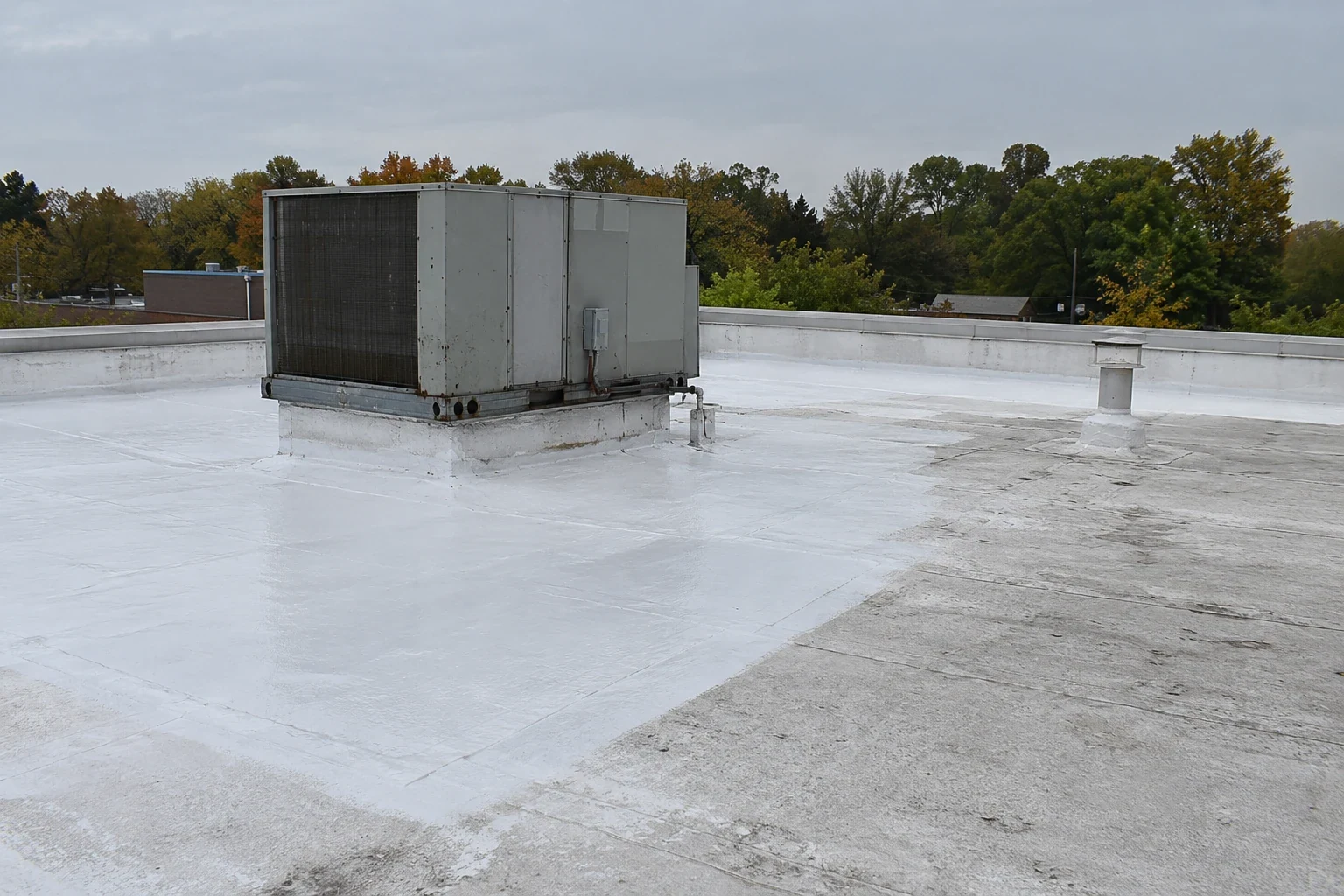
On a manufacturing roof with a weathered membrane, a coating may renew the exposed surface only if the assembly below remains suitable. We check adhesion, seams, flashings, moisture, and drainage before recommending a system. A coating can add a continuous protective layer over a prepared roof, but it cannot dry wet insulation or correct a failing deck. The inspection determines whether restoration is a practical alternative to replacement.
Dearborn, MI receives precipitation through much of the year, and climate normals record 30.8 inches of annual snowfall at the local station. That means the surface must continue shedding water through seasonal changes after application. We document the existing assembly and define preparation, repair, and coating limits. If the substrate is not ready, a replacement review can be compared with restoration before material is selected.
Confirm the Surface Can Hold a Coating
Coating work starts with the condition of the existing roof, not a product label. We identify the membrane or metal surface, check whether it is firmly attached, and test representative areas for adhesion. Dirt, chalking, loose coating, incompatible sealant, or a slick surface can prevent the new layer from bonding. We also locate blisters, open seams, punctures, and previous repairs that need correction before the field receives a finish coat.
Moisture changes the decision. Water beneath the membrane can remain trapped when a coating closes the surface, so suspected wet areas need testing before they are covered. We compare interior symptoms with roof details and can recommend a moisture survey or test opening where visual review is inconclusive. The report separates confirmed conditions from items needing more investigation.
Edges, drains, penetrations, and curbs need the same attention as the field. Coating cannot correct a high drain bowl or failing curb transition. We inspect those details and plan repairs. A hands-on inspection records broader conditions for a system-level decision.
Choose a System for the Existing Assembly
Silicone and acrylic coatings have different strengths and exposure limits. We review the roof surface, drainage pattern, expected maintenance access, and product requirements before recommending either type. The specified system includes surface preparation, repair details, primer where required, reinforcing fabric where needed, and the coating layers. We follow the product application requirements and confirm that the selected materials work together. A silicone roof coating and an acrylic roof coating are not interchangeable labels for one universal application.
Coating thickness and coverage have to match the system specification and the roof condition. We identify planned passes, reinforced details, and areas outside the coated field. The proposal makes that boundary visible. Loose membrane or widespread moisture may call for repair or removal instead. A repair visit can address isolated details before restoration is evaluated.
Dearborn sees measurable precipitation on about nine to twelve days in most months, so we inspect each outlet route and correct defects that could hold runoff. Coating cannot create slope where the deck has settled.
Repair the Details Before Closing the Field
The coating depends on a prepared surface. We remove loose material, clean the substrate, and repair seams, punctures, and transitions with compatible methods. Curb, parapet, and perimeter terminations need sound flashing and must accommodate movement. We complete these repairs before applying the field layer.
Coating may be a poor fit when the membrane has widespread delamination, insulation is wet, the deck has deteriorated, or the existing surface cannot hold a bond. In those conditions, a larger repair or removal may be needed to restore the roof assembly. A test patch can help evaluate adhesion, but it does not replace inspection for trapped moisture or structural concerns. We explain what the test shows and what additional check would change the recommendation.
Application depends on surface temperature, moisture, wind, and curing conditions. We stage work to close exposed areas within product requirements and define a stop point if weather changes. The facility contact receives the access period and temporary equipment or foot-traffic limits.
Plan Application Around Building Activity
Coating is applied across open roof areas, so staging, ventilation, odor sensitivity, and access to rooftop equipment can affect the building below. We review which entrances or loading paths are near the work zone and coordinate protection with the facility manager. At a manufacturing facility, the access plan may need to account for process equipment and maintenance windows.
Dearborn's Warren Avenue corridor includes cafes, groceries, pharmacies, and medical offices. For a building along that mixed commercial route, the facility contact can identify customer entrances, deliveries, or interior rooms that need advance notice. We verify the surface before selecting a coating. The work plan names the roof areas, material staging points, and time needed before normal service access resumes. A phased project can put temporary routes or tenant schedules in flux, so the contact should identify current activity before materials arrive.
For recurring leaks, the assessment records test results, repairs, access limits, and unchanged areas so the owner can compare restoration with removal. A capital planning review can put the coating path beside repair and replacement options.
Keep the Restored Surface in the Record
We document completed areas, repairs, exclusion zones, and conditions for the next maintenance visit. Drains still need to stay clear, and flashings and penetrations still need inspection. A coating also changes how the roof is walked: foot traffic on a freshly cured surface can scuff it, so the closeout record marks the approved paths and the first-year recheck looks at those paths before anything else. If another trade cuts through the surface for equipment work, the opening should be repaired with compatible materials and recorded so future inspections can track the change.
A building in West Downtown Dearborn, along Michigan Avenue, may have tenant or construction access constraints, so we record the work zones and return route along with the roof findings.
Commercial Roofing Questions
How do you determine whether a roof can be coated?
We identify the existing surface, check attachment and adhesion, inspect seams and flashings, and look for moisture or deck concerns. Suspected wet insulation needs testing before it is covered. If the assembly is stable and compatible with the proposed product, we define preparation and repair work. If not, we compare a localized repair or replacement path.
Will a coating correct ponding water?
A coating can renew a prepared surface, but it does not change the roof slope. We inspect drain elevations and low areas, clear serviceable outlets, and identify whether tapered insulation or another correction is needed. The scope should correct the water path before coating rather than leave a persistent pool beneath the new finish.
Can you coat over an existing leak repair?
A previous repair can remain when it is sound, compatible, and bonded to the surrounding roof. We check its edge and nearby material, then include any loose or failed area in the preparation scope. If the patch conceals moisture or has separated, we open or test it before coating across the location.
How does application affect tenants and equipment?
We plan staging, roof access, and work zones with the facility contact. Product requirements and the building layout determine which areas can be coated in one sequence and when rooftop equipment access can resume. We identify areas that need protection or temporary limits and coordinate updates before work reaches them.
What should the coating proposal specify?
The scope should name the surface, preparation, repairs, primer if required, coating type, coverage, reinforced details, exclusions, access needs, weather limits, and closeout records. Those boundaries help compare restoration with removal.
Evaluate the Roof Before Choosing Restoration
Schedule a Dearborn roof assessment. We will document the existing surface, test uncertain areas, and define whether coating, repair, or replacement best fits the assembly.