
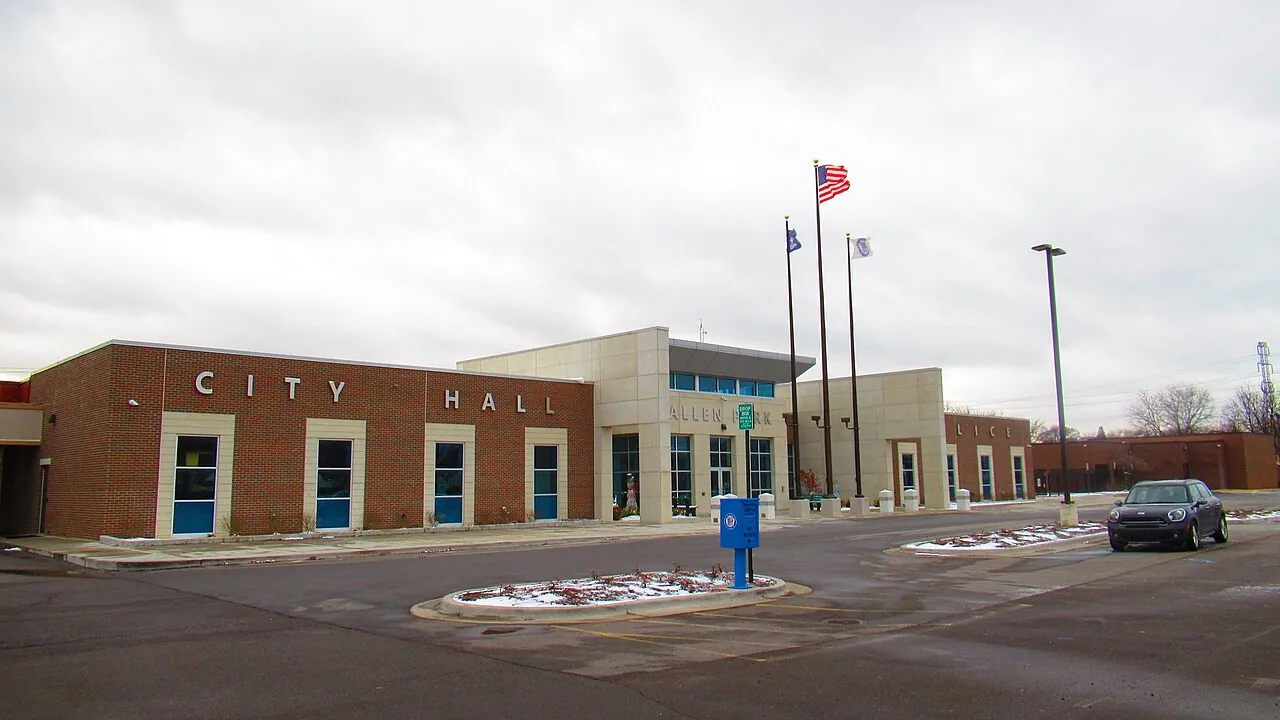
Commercial Roofing in Allen Park, MI
A low-slope roof over a retail unit, a medical suite or an industrial bay in Allen Park, MI comes down to one condition: how long snow and meltwater stay on the membrane. The weather station in neighboring Dearborn records 30.8 inches of snowfall in a normal year and 35.05 inches of total precipitation, so a roof here spends months either loaded or wet. The owner's first decision is rarely about material. It is about whether the drainage, the seams and the flashing will hold through the next cold season.
We begin each visit by mapping the water path from the interior stain back to its source, then check the roof in sequence: drains, field membrane, seams, curbs and edges. The written findings separate what needs repair now from what can be watched, and they give the remaining service life of the assembly so the budget can be planned.
Snow Load and Meltwater
NWS Detroit normals average 14 inches of snow in January and 12.5 inches in February, and measurable snow starts near mid-November and ends near early April. That window runs close to five months, and a roof can leak at any point in it. Snow sits against parapets and rooftop units, then thaws toward the nearest drain. If the drain bowl is partly blocked, water stands on the membrane and finds any weak seam. A building's actual snow load is a design question tied to the site, and the code requires it to be checked for each project.
On a first visit we look at where drifts form, how meltwater travels and whether the slope carries it to an outlet. We photograph each drain, scupper and overflow before the first snow of the season and again after the first thaw. A drain and scupper that is clear in October may be iced over in January, and the second photograph shows what changed. Ponding that remains forty-eight hours after a thaw gets its own line in the report.
Retail, Medical and Industrial Roofs
Each building use puts a different load on the roof. A retail unit has signs, rooftop air handlers and a parapet that holds water against the wall. A medical suite has stricter interior needs, so a leak is also a patient-care problem and the repair plan starts with protecting what is below. An industrial bay carries exhaust fans, makeup air and often a heavier traffic path for maintenance crews. We tailor the inspection list to the use, not the other way around.
Rooftop equipment is the common thread. Every curb is a seam in the membrane, and in a climate with 4,027 heating degree days at the Dearborn station, equipment runs hard through winter and condensation forms where warm exhaust meets cold curb metal. We check the curbs and supports, the sealant at each penetration and the walkway that crews use to reach them. A worn walk pad is a puncture waiting to happen, and replacing it costs far less than patching what it protects.
How a Winter Leak Starts
Most winter leaks begin as a small defect in the fall. A lifted lap, a split corner or a loose termination bar lets in a little water each day. Freezing turns that water into ice that widens the opening, and a thaw sends more water in. By the time a stain shows in a ceiling tile, the insulation under the membrane may be wet across a wider area than the stain suggests.
That is why we confirm the extent before choosing a repair. A moisture survey maps wet insulation without cutting the roof, and a few core samples confirm the reading. A patch is enough when the field sheet is sound and the failure is isolated. When wet insulation reaches across several sections, a patch only hides the next weak point, and the report recommends either a section replacement or a full recover-or-replace comparison. Either path begins with the same photographs and the same measured boundary.
After Severe Weather
In September 2026 the National Weather Service recorded damaging winds, large hail and tornadoes across Southeast Michigan. A roof in the region deserves a look after storms like these, leak or no leak. We look for lifted edge metal, displaced coping, cracked flashing, dents in metal panels and fractures in the membrane surface. Hail bruises can be hard to see from the ground, and a bruised membrane may fail months later.
The record we leave is meant to support a decision, which might be an insurance claim, a repair or a monitoring plan. Each finding has a photograph, a location on the roof plan and a note about whether it affects water entry. For storm work, the storm damage repair scope keeps first-day protection apart from permanent work, so the invoice shows what was done at once and what is still open.
Code, Energy and Planning
Michigan's 2021 building code took effect on April 9, 2025 and its 2021 commercial energy code on April 22, 2025. On a replacement, insulation thickness may follow from the energy code, so the local enforcing office is consulted before a price is quoted. Moisture readings, layer count and remaining service life choose between repair, recover and replacement, and a guess at price never does.
Owners with buildings in several nearby communities can use a ranked program. A capital plan lists each roof, its condition and the year it is likely to need work, which helps with budgeting. Owners in Melvindale, Lincoln Park and Dearborn Heights get reports laid out the same way, so properties can be compared side by side.
Commercial Roofing Questions
How can I tell whether a ceiling stain means a roof leak or a condensation problem?
A roof leak usually grows after rain or a thaw and tracks toward a drain, curb or seam. Condensation appears in cold weather without precipitation and often forms near ducts or unit penetrations. We check both: a moisture reading under the roof and a look at the interior air path. If the insulation is dry and the stain follows humidity, the fix is ventilation, not membrane work.
Is it worth coating a roof that has several old patches?
Only if the insulation is dry and the membrane still has strength. A coating adds service life to a sound membrane, but it cannot dry wet insulation or hold a failed seam. We test first, repair the seams and penetrations, then price the coating against recover and replacement using remaining service life.
What hours do you prefer for roof work on an occupied medical suite?
The hours the practice names. We plan noisy steps for quieter periods, protect the interior below the work area and set the lift where it will not block patient access. The plan lists each day's work area, so the office manager can brief staff in advance.
How soon after a hailstorm should a roof be inspected?
Within a few weeks, before another freeze-thaw cycle works on any damage. Hail can bruise a membrane and loosen granules from a cap sheet, and the damage shows up later as leaks. A prompt inspection also gives a clean record for an insurance claim.
Does the energy code affect a small repair?
Usually not, because a repair that does not replace the roof assembly rarely triggers insulation requirements. A replacement or a major scope can, so we confirm the local rule before writing a replacement price.
Schedule an inspection or report an active leak
Tell us the building use, where water is showing and when the space below is busiest. We will document the roof with photographs and a roof plan, and the record will support your decision on repair, recover or replacement.