Commercial Roof Recover in Dearborn, MI
A recover keeps the existing roof in place and adds a new assembly above it, but that shortcut only works when the layers underneath are suitable. In Dearborn, MI, seasonal snow and precipitation make drainage and moisture checks especially important before covering a membrane. We inspect seams, drains, curbs, and the existing attachment, then test questionable areas for wet insulation. A recover should leave the building with a sound base and a clear path for water to leave the roof.
We compare recover with repair and full removal instead of treating it as the default. Existing layers, deck condition, trapped moisture, and project requirements all affect the decision. The findings show what can remain and what must be removed. If tear-off is more dependable, we explain why before ordering material. A full replacement review can be priced beside the recover option so the trade-off is visible.
What Must Be Sound Beneath the New Layer
Moisture is the first concern because a new membrane can conceal wet insulation without drying it. We map suspect areas, review interior signs, and use moisture testing or core cuts where the surface cannot resolve the question. The test locations and results go into the written record. If wet material is isolated, removal and replacement may preserve the rest of the roof. If moisture extends through broad areas or separates the existing membrane from its base, a recover may leave too much of the original problem in place.
We also check for loose seams, blisters, punctures, failed flashing, and repairs that do not hold. A new layer needs an existing surface that can accept and support it. Loose material may need removal, while raised edges and unstable details can telegraph through or interfere with attachment. A moisture survey can help map the scope, and a condition report gives the facility director locations, photos, and next-step options.
The Detail That Controls the Recover
Roof height and drainage details can decide whether an added layer fits. New insulation and membrane change the finished elevation at drains, scuppers, parapets, doors, equipment curbs, and adjoining walls. We measure those transitions and determine whether they can be raised or rebuilt without creating a new water-entry point. The existing deck and attachment also have to support the added system. We review structural information when needed rather than assuming that another layer is acceptable because the old one remains in place.
Dearborn has recognized retail, food-service, and professional uses in East Downtown, West Downtown, Warren Avenue, and Dix-Vernor. A recover at an occupied storefront must preserve drainage and coordinate work access with the building schedule. Roof capacity comes from the deck and attachment that the inspection records, not from the use below. We document curb heights, drain bowls, perimeter edges, and the proposed connection between old and new layers before recommending the recover. Where water already ponds, we assess drainage repair options as part of the scope.
Choose a Compatible Roof System
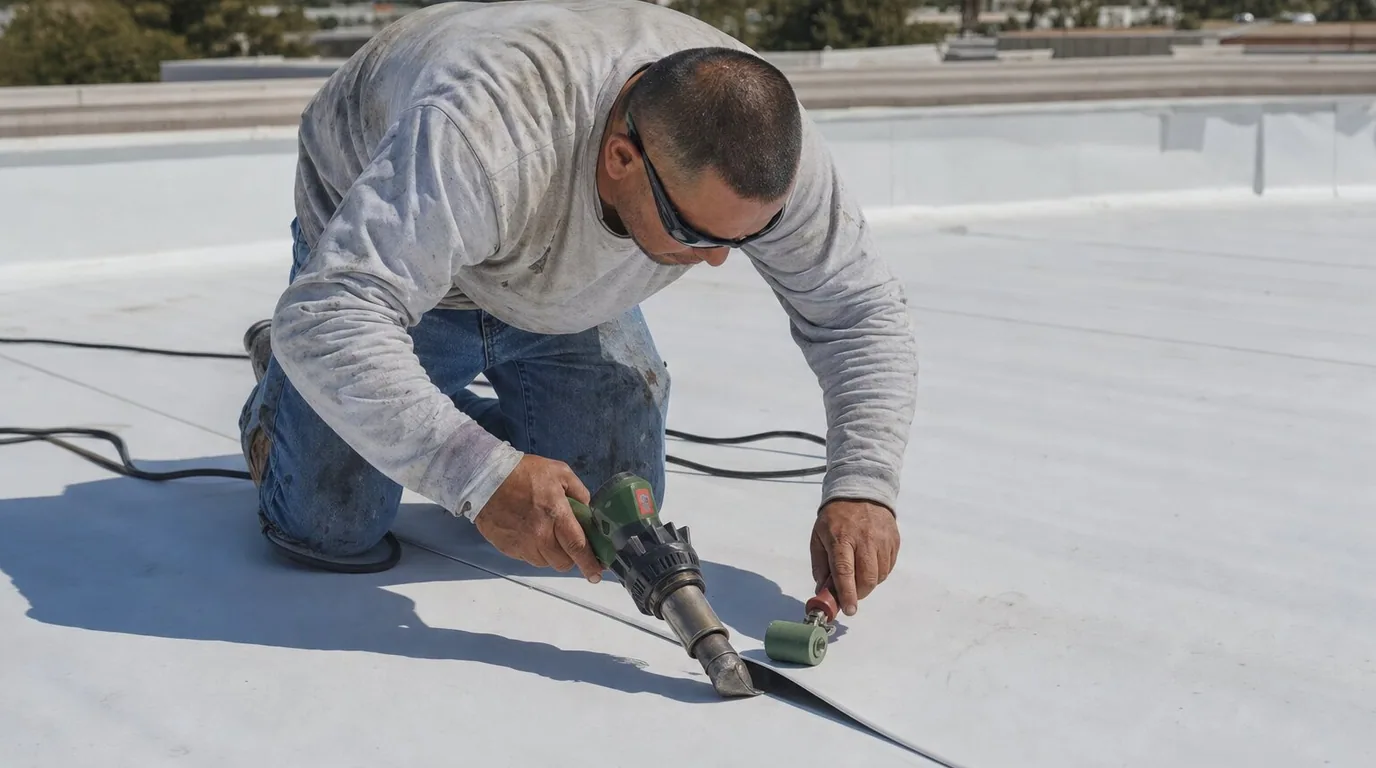
The new membrane has to be compatible with the existing surface and the attachment method. TPO, PVC, EPDM, modified bitumen, and other systems have different requirements for preparation, adhesion, fastening, and flashing. We identify the current membrane before recommending an overlay and avoid assuming that a generic separator will solve compatibility. The design also has to address wind forces, edges, penetrations, insulation, and walk paths for service work. Material selection follows the existing assembly and the building's actual operating needs.
For an EPDM recover option or modified-bitumen roof, we explain the proposed attachment and transition details before work begins. Dearborn's Fairlane and Midtown area includes office and retail redevelopment activity, which makes phasing and access worth reviewing with the property contact. A recover can reduce tear-off activity, but it still requires safe staging, protection of entries, and a daily watertight closeout. The scope should say what stays, what is removed, and how every transition is finished.
Plan the Work Above an Occupied Building
Leaving the old roof in place does not eliminate disruption. Crews still need to move material, prepare the existing surface, tie in edges, and protect drains and rooftop equipment. We mark the work area and agree on loading, access routes, parking, noise windows, and protections for air intakes. If tenants or production groups need uninterrupted use, the sequence should limit work over sensitive areas and keep temporary tie-ins secure. The facility contact receives the planned work boundary and expected closeout point for each shift.
With 35.05 inches of precipitation in an average Dearborn year, water handling is a daily task during a recover. We keep outlets clear as work progresses and check temporary transitions before leaving the roof. Weather, surface condition, and adhesive requirements can affect how much area is prepared in one shift. The inspection findings inform staging, while emergency roof service remains available if an unexpected opening or active leak needs immediate attention.
Confirm Code and Project Scope
An overlay changes the roof assembly rather than merely covering its surface. We list each existing layer, insulation addition, membrane attachment, edge height, and drainage change, then take the full scope through local review. Michigan’s currently listed 2021 editions cover building and commercial-energy requirements; when insulation or assembly details change, the reviewer needs those specifics to determine which provisions apply. A recover proposal should not be evaluated as a tear-off shortcut until the assembly and approval path are clear.
The proposal should identify preparation, wet-area removal, new insulation or cover board, membrane attachment, flashing, edge work, debris handling, and testing. It should also identify any conditions that need a decision after work begins. Our capital planning review compares repair, recover, and replacement costs and timing at a planning level. For an occupied property in West Downtown Dearborn, the same written scope helps coordinate property management, tenants, and building operations.
Keep the New Assembly Inspectable
After installation, the owner should know where transitions, drains, and service paths sit beneath the roof plan. We provide photographs and written closeout notes so future maintenance does not begin from memory. The team should keep new penetrations, dropped fasteners, and service traffic from damaging the membrane. A scheduled maintenance program can check seams, flashing, and drainage before small defects spread. That routine does not substitute for a repair when a detail has failed; it helps find the change while access and repair boundaries remain clear.
A recover is successful only when the existing layers, new assembly, and edge conditions work together. Our recommendation identifies the evidence, the limits, and the next decision. If removal is needed, the owner can compare it with the recover while the scope is still open. If the roof qualifies, the work plan states how the old surface will be prepared and how water will move across the finished system. That is the practical difference between covering a roof and building a sound recover.
Commercial Roofing Questions
How do you know the existing roof is dry enough to cover?
We map suspect areas, compare them with interior conditions, and test where surface review cannot show the insulation. Wet areas are marked for removal or further review. The recover scope identifies test locations and the material that can remain, so hidden moisture is not treated as a guess.
Can you put a new membrane over any commercial roof?
No. The existing assembly must be stable, dry enough, compatible with the new system, and suitable for the added load and height. We inspect attachment, deck, drainage, and edges, then compare code and project requirements before recommending a recover.
Will a recover affect roof drains and parapets?
The added layers change finished elevations. We measure the drain bowls, scuppers, parapets, curbs, and wall transitions, then detail adjustments needed to keep water moving off the roof. If those connections cannot be corrected, removal may be the better scope.
Does a recover avoid disruption inside the building?
It can reduce tear-off and debris, but crews still work above the occupied space. We coordinate loading, access, noise windows, air intakes, and work limits with the facility contact. Daily tie-ins and closeout remain part of the protection plan.
What should be in the recover estimate?
The estimate should state preparation, removal of wet areas, insulation, attachment, membrane, flashing, edge work, and drain adjustments. It should also name concealed conditions that need approval if uncovered.
Check Whether the Roof Can Be Recovered
Schedule an inspection and receive written findings on moisture, attachment, drainage, and transitions. Use the record to compare recover with repair or full replacement.