
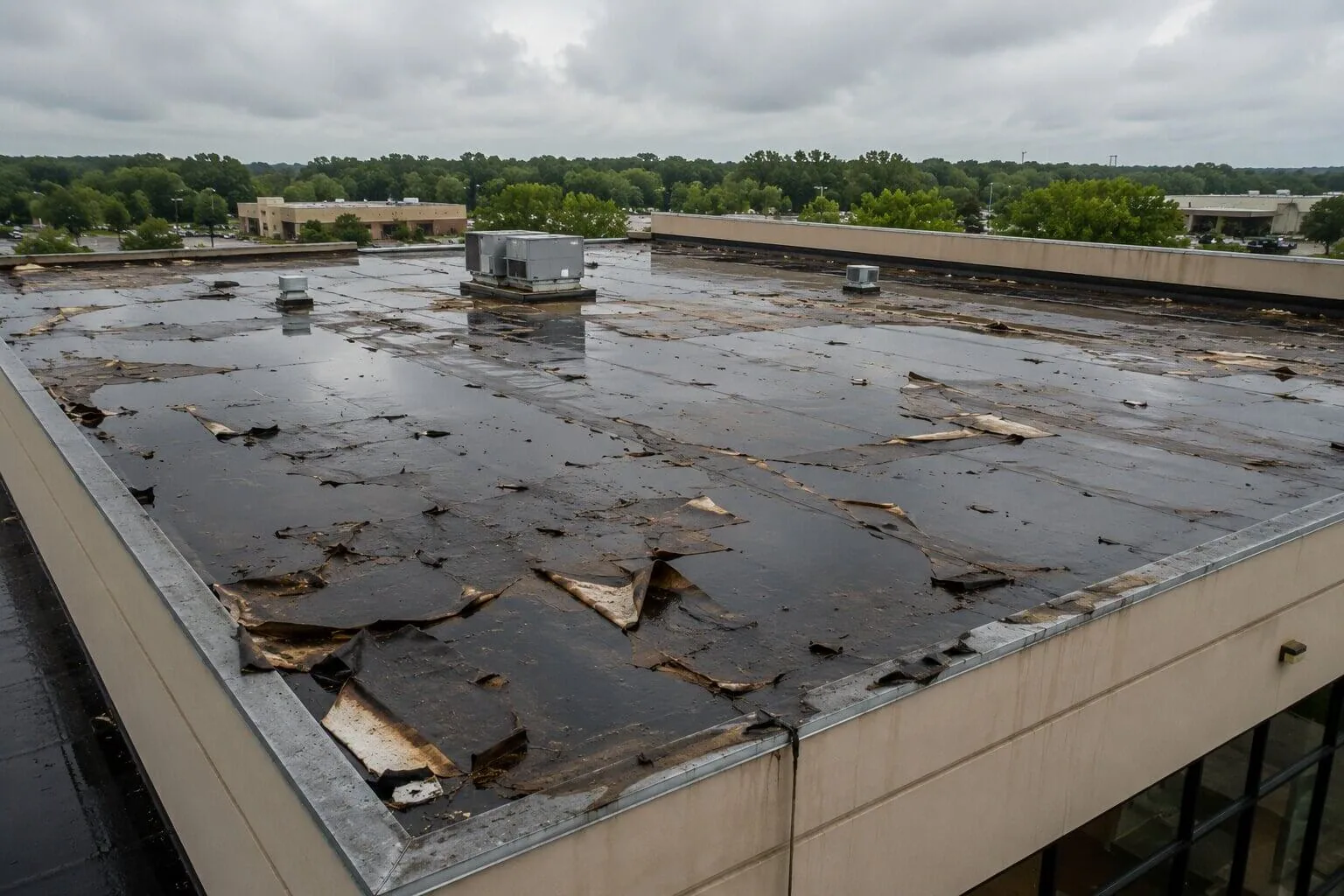
Emergency Commercial Roof Repair in Dearborn, MI
During an active roof opening, the first decision is how to protect the work area before the next band of weather reaches it. Our emergency crews respond around the clock, including nights, weekends, and holidays, to control entry points and limit further interior exposure. We begin with a safe access plan, a look at the affected roof assembly, and a clear account of what the building needs right now. The permanent scope follows once the area is stable enough to inspect.
In Dearborn, MI, cold-season snow and precipitation make temporary protection a working repair decision. Water can move beneath a membrane or insulation before it appears on a ceiling. A commercial leak investigation traces that route while we protect the interior. The West Downtown Dearborn district includes retail, restaurants, and professional uses, where a wet entry, stock area, or tenant space may call for different containment and access steps.
Control the Opening and the Water Path
An emergency call can involve a puncture, lifted edge, failed curb flashing, separated seam, or backed-up drain. The interior symptom rarely maps the full defect, so we check the surrounding membrane, attachment, and transitions before placing a temporary cover. A tarp on an unstable edge or across drainage can add risk. We secure it against sound material and direct runoff away from the building.
Snow, ice, wind, or debris may limit roof access. Safety and roof condition determine whether we can cover the area immediately or need a controlled approach. We place temporary material, seal an exposed opening where conditions permit, and protect vulnerable contents. We tell the facility contact what remains exposed and what change calls for another response.
Temporary Dry-In With a Defined Limit
A dry-in is an interim measure with a boundary, not a substitute for diagnosing the roof. We document where the cover begins and ends, how it is secured, what roof details remain vulnerable, and whether water is still entering the assembly. On a low-slope membrane, that can mean isolating a puncture or failed transition while keeping water moving toward a working drain. The cover must not block drainage or conceal an unsafe condition that needs a different repair.
We coordinate the protected zone with the people managing production, retail, office, or storage operations. The facility contact directs the building-side response for exposed equipment while we focus on the roof and water path. On a Warren Avenue pharmacy or medical office, for example, we confirm which rooms need access control and when a permanent repair can proceed.
For a wider membrane failure, a temporary patch only buys time to inspect the repair boundary. We can then compare a compatible permanent roof repair with more extensive work, based on the field sheet, seams, insulation, and deck condition. If there is damage to the roof system from severe wind or hail, wind-damage assessment helps separate the immediate opening from other affected details.
Keep the Building Functioning During Response
Emergency work still needs a practical route from the loading area or service entrance to the roof. We confirm where the crew can stage material, how access will be controlled, and which tenant or department needs notice before movement begins. A crowded roof with HVAC equipment, piping, or several curbs may need a narrower work area so temporary material does not interfere with service access. For a manufacturing building, the production schedule and protected equipment zone influence the access window; for a warehouse, dock and inventory exposure can change the order of interior protection.
Our first update states where water is entering, what is covered, and what needs a follow-up decision. If weather prevents a permanent fix, the record identifies the temporary boundary and conditions that should trigger another call. Once access is safe, we inspect below the cover rather than assume the interim layer settled the defect.
Inspect More Than the Visible Damage
The permanent repair scope depends on whether the membrane field remains sound around the opening. We check seams and laps, edge metal, penetrations, parapet transitions, curb flashing, drains, and the attachment at the repair boundary. Water may have spread through insulation beyond the visible ceiling stain. Where the condition is uncertain, we mark test areas or recommend a moisture survey before specifying replacement materials. That avoids closing wet material into a repair that cannot dry.
With 30.8 inches of snow in an average Dearborn year, falling between November and April, the check after a storm or thaw covers drainage, flashing, seams, and insulation for water entry. We use the building's visible condition to set the permanent scope and mark any area that needs testing before the temporary cover comes off.
When the owner needs a broader condition record after stabilization, our written roof condition findings can distinguish emergency work from deferred repairs. We include photographs and the area inspected, so a facilities team can compare the permanent scope with the temporary protection and plan any access that remains.
Hand Off a Permanent Repair Plan
Before removing a cover, we agree on how the permanent work will be reached and whether the building needs an additional protection period. We identify any wet insulation or damaged deck that may change quantities after opening, explain the material match, and record items that still need testing. Code requirements can matter when a repair grows into replacement or insulation work. Michigan lists the 2021 Building Code and 2021 Commercial Energy Code as current editions; the enforcing authority and project scope determine what provisions apply.
The repair record helps the next shift without reconstructing the call. We note the symptom, roof condition, temporary protection, inspection limits, and recommended next step. If operations can continue, we schedule permanent work around access and interior protection. In the East Downtown Dearborn district, with its storefronts, restaurants, and specialty retail, the permanent work is scheduled around the shop below the affected area.
Commercial Roofing Questions
Can you come out after business hours if water is entering the building?
Yes. Emergency response is available at all hours, including weekends and holidays. We first confirm safe access, identify the active opening, and protect the affected area. The initial visit may end with a temporary dry-in if weather or roof conditions do not permit a permanent repair. We document that limit and set the next inspection step so the building team knows what is still exposed.
What should my staff move before the roof crew arrives?
Move people and portable contents out of the affected interior zone when it is safe to do so, then keep that area clear for the building response. Do not send staff onto the roof or beneath an unstable ceiling. Tell us which rooms contain sensitive equipment, active work, or tenant operations. That lets us choose a roof access route and temporary protection area that address the immediate exposure without disrupting more of the building than necessary.
How long will a tarp or temporary dry-in protect the building?
The protection period depends on the roof surface, attachment points, wind and precipitation exposure, and the extent of the opening. We record the temporary cover's limits and whether drainage remains clear, then recommend when it should be checked or replaced by a permanent repair. A temporary cover should not be treated as a warranty period or as proof that concealed insulation is dry.
Can a permanent repair happen on the same visit?
A same-visit repair is possible when the roof is safe to access, the failure is visible, compatible materials are available, and the surrounding assembly is sound. If water has spread beyond the opening or the membrane is unstable, closing one point may leave the cause in place. We explain what can be completed during the emergency visit and what additional testing, drying, or material preparation is needed.
What will the emergency report tell our facilities team?
The report records the affected area, observed entry point, nearby roof details checked, temporary work completed, and conditions that remain unresolved. Photos show the repair boundary and protection placement. We also identify the next decision, such as scheduling a permanent patch, testing insulation, or expanding the inspection after a storm. That record gives the next shift a clear handoff.
Protect the Building and Define the Next Repair
Call for emergency roof response at any hour. We will record the opening, temporary dry-in, and remaining exposure so your team can coordinate the permanent repair and the next safe access window.
