Silicone Roof Coatings in Dearborn, MI
A flat roof that holds water for a day or two after rain or a thaw is the building condition that sends a facility director toward silicone, and the moisture under the surface decides whether a coating can go on. A silicone coating is a liquid-applied silicone-polymer layer that cures into a flexible membrane, and it tolerates standing water far better than most coatings. That makes it a common candidate for low-slope roofs where water lingers and tear-off is not yet justified. It does not replace drainage, and it does not fix a roof that is already wet underneath. It can go over several existing surfaces, among them metal panels, single-ply membranes and modified bitumen, each with its own preparation.
A roof in Dearborn, MI is wet often, with measurable precipitation on about nine to twelve days in most months. We begin with the inspection and the moisture test, then tell the owner how much life a silicone system can add, what preparation it needs and what it costs.
What a Silicone System Is
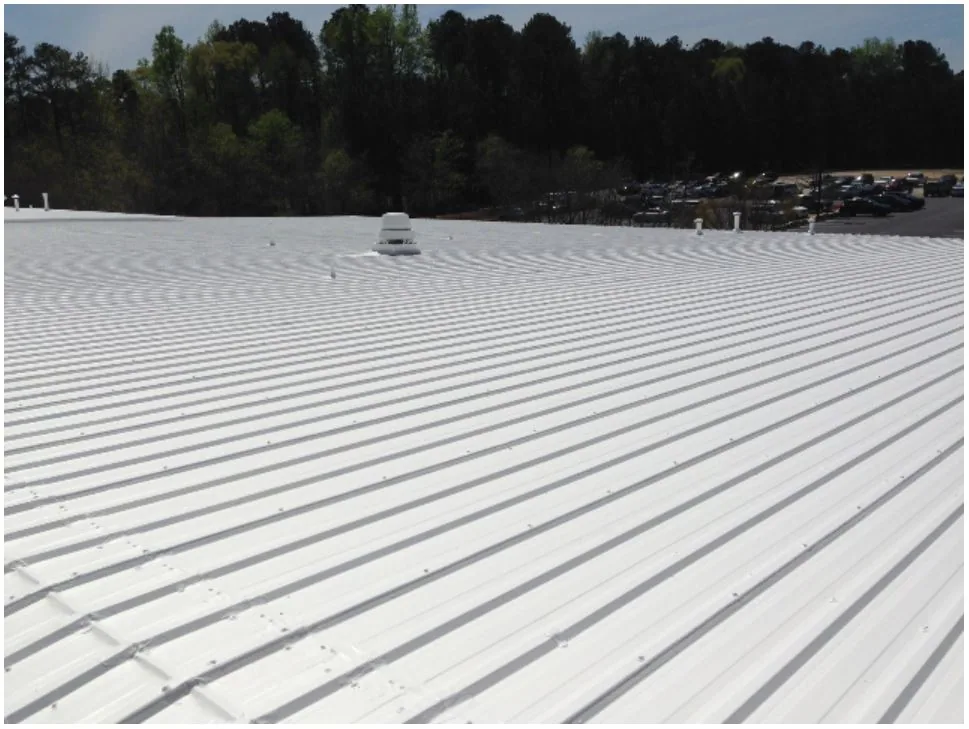
Silicone coating is applied by spray or roller over a prepared surface, in one or more coats, to a specified thickness measured in mils. It cures by reacting with moisture in the air, forming a rubber-like film that stays flexible in cold weather and resists ultraviolet light. It is usually white or light gray and reflects sunlight, lowering surface temperature in summer.
Silicone does not become brittle with sun, and it bridges small cracks. It also collects dirt more readily than some other coatings, which dulls reflectance over time. A cleaning plan matters, and so does a realistic expectation of how the surface will look after a few seasons, since a white roof that has collected two winters of grime still reflects well but no longer looks new. Reflectance is measured by the product's data sheet, and the figure after weathering is lower than the figure on installation day. Low-pressure washing in spring restores most of the reflectance. Cost follows area, coat thickness, preparation and access. A roof that needs little repair and drains well is the lowest cost, and a roof with many penetrations, heavy rust or a lot of seam work costs more, so the scope separates preparation from material.
Standing Water and Why Silicone Handles It
Most roof coatings soften or degrade when water sits on them for days. Silicone does not, as long as the surface under it is sound. That is the reason it appears on roofs with shallow ponding that cannot be fixed economically. Ponding still has consequences: it adds weight, collects dirt and algae, and exposes seams and flashing to prolonged wetness. Drainage correction remains the better fix.
After a rain or thaw we measure how deep the ponds are and how long they last, and note where they sit. Where depth is large, drains and scuppers or tapered insulation come first. Water that stands through a freeze lifts coating edges and seams, so shallow ponding that a silicone system tolerates in summer can still do harm in January. The first measurable snow arrives near November 16 in the NWS Detroit record, and we revisit ponded areas after the first thaw.
Preparation and Adhesion
Preparation takes more time than application. Preparation covers washing, removing loose material, repairing seams and flashing, cutting and patching blisters, treating rust and securing fasteners. A primer is applied where the substrate or the maker requires it. Silicone sticks well to many surfaces, and adhesion tests on a small area confirm it before the full job proceeds.
Contaminants are the usual enemy, and exhaust residue, tree sap and old patching compounds are the usual culprits. Oils, dirt and old coatings that are not compatible prevent bonding. We identify what is on the roof, test it and choose a primer. Seams get particular attention: open seams on single-ply roofs are re-welded or covered with reinforcing fabric, laps and fasteners on metal roofs are sealed, and splits on built-up and modified bitumen roofs are filled and stripped in.
Moisture Under the Coating
A coating seals the surface, including against the escape of vapor from below. If insulation is wet, the coating can trap it, and the roof stays damp. For that reason an infrared moisture survey and core cuts precede any coating proposal. Wet areas are removed and replaced, and the coating goes over a dry roof.
The survey also maps blisters and soft spots, which are repaired before the coating goes on. The map and readings go into the roof record with the date and the roof section they belong to, and the boundary is drawn on the roof plan. Once coated, the roof gets another look following the first heavy rain and the first thaw, and any blister, pinhole or lifted edge is repaired promptly with compatible products. Remaining service life of the coating goes into the written findings.
Recoat Limits and Compatibility
Silicone has one practical limit owners should know early: other coatings and sealants do not stick to cured silicone well. If the roof will later need a different coating system or a new membrane, the surface needs special preparation, and in many cases the silicone must be removed from the area. Repairs later in the roof's life also use compatible silicone products.
A silicone coating can itself be recoated with more silicone after cleaning. Planning the recoat before the first coat goes on prevents a surprise later. Thickness readings from inspections show when the coating is thinning, and the closeout file records the product, the mils applied per coat and the weather on the day of each coat.
Cure Time and the Michigan Calendar
Silicone needs a dry surface at application and time to cure before it sees rain. The working season runs through the warmer months, because winter here is long. Cool, humid mornings slow cure, and a forecast shower can cancel a day. The schedule carries weather holds and a date for the next update.
If a permit applies, the 2021 Michigan Building Code and 2021 Commercial Energy Code (effective April 9 and April 22, 2025) govern, and the energy side may shape reflectance and insulation requirements. Set against a replacement, a coating delays a big expense, and the file shows how many years of delay it should buy.
Where Silicone Fits Around Dearborn
Silicone suits sound low-slope roofs with some ponding, including metal and single-ply roofs in commercial and industrial areas such as the Warren Avenue corridor and the Dix-Vernor corridor. Compared with acrylic coatings, it costs more per coat and tolerates water better. On the Warren Avenue corridor and in East Downtown Dearborn the inspection comes first, and the same order holds in Detroit and Allen Park.
Commercial Roofing Questions
Does silicone fix ponding?
No. It tolerates standing water, but drainage correction is still the better fix, and the scope names the cause of each pond.
Can silicone go over any roof?
Only a clean, sound, dry roof with an adhesion test passed. Moisture testing comes first, and wet areas are replaced before coating.
Why does silicone pick up dirt?
Its surface holds particles. A cleaning schedule keeps reflectance up, and spring washing after the thaw does most of the work.
Can another coating go on top later?
Other coatings adhere poorly to cured silicone. Plan on silicone recoats or special preparation, and ask for the product data in the closeout file.
How thick is the coating?
Thickness is set in mils by the product and the roof, and readings are taken and recorded during and after application.
Schedule a moisture test and ponding survey
Send the roof type and where water stands. We will inspect, test and document the roof, so you can decide whether silicone, a repair or a replacement fits.