
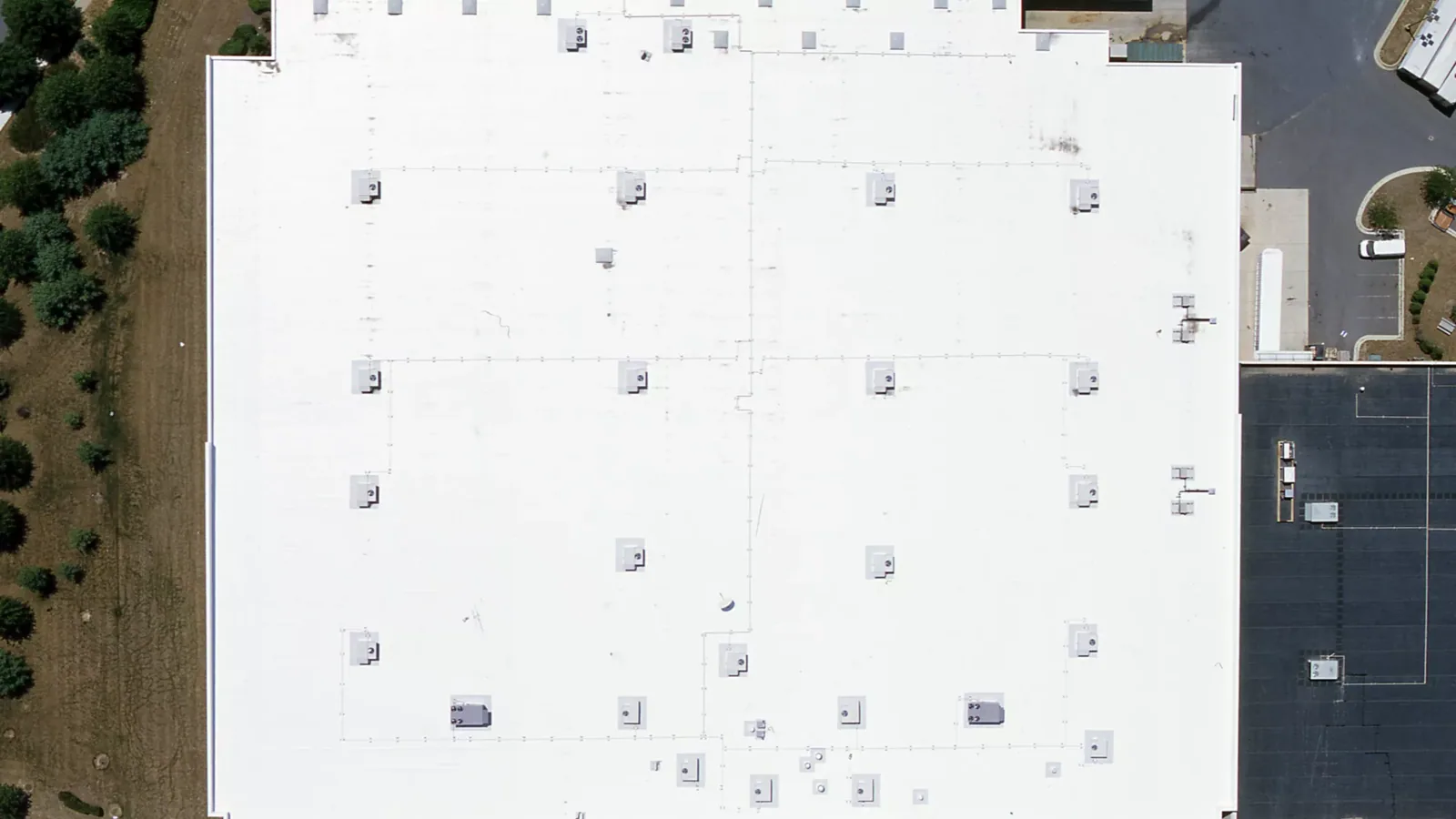
Sika Sarnafil Roofing Systems in Dearborn, MI
Kitchen exhaust is the first thing to learn about a restaurant roof, because what lands on the membrane decides how long the membrane lasts. Dearborn's city-recognized business corridors list food service, cafes, grocery stores, bakeries and pharmacies among their uses, and Warren Avenue, from Greenfield Road to Wyoming Avenue, is described with food, retail, pharmacy and medical-office uses. Each of those buildings has roof penetrations that discharge something, and each discharge has a path across the roof.
Sika Sarnafil is known for heat-welded thermoplastic membranes, a family chosen where chemical exposure, welded seams and a continuous surface matter. In Dearborn, MI, that family gets read from the exhaust outward. The detail that controls the repair is the relationship between the exhaust outlet and the weld, so the written findings begin by mapping the discharge before they assess the sheet.
Welded Thermoplastic Sheets
A PVC roof is made of reinforced sheets joined by hot-air welds, with prefabricated corners and boots at penetrations. A good weld is clean and continuous; a weak weld is one made over dirt, at the wrong temperature or with too little pressure. The weld cannot be judged by eye alone, so we run a blunt probe along each seam edge and mark every spot where it enters.
The probe results, a photograph of each opening and the section number go into the written findings. A repair re-welds the area after cleaning and is tested again after cooling. The findings state how many seams were tested, which were found open and which could not be reached. The probe photographs are filed by section, so the next visit starts from the last one.
Prefabricated corners and pipe boots are checked for shrinkage and cracking, since a boot that has pulled from the pipe lets water run down the pipe into the ceiling. A replacement boot is welded to the field sheet, and the flange is probed along its edge.
Exhaust, Grease and Chemical Exposure
Fats and oils from kitchen exhaust coat the membrane downwind of a fan. Cleaning chemicals from a building's own maintenance can do the same. Thermoplastic sheets resist many such exposures, but resistance is not immunity, and a membrane under a steady discharge shows staining, softening or dirt buildup where grease holds dust.
The walk marks every exhaust fan on the plan, notes the grease trap or containment, and photographs the stain pattern beneath and downwind. A fan with no trap is flagged, a trap that is full is flagged, and a surface that has softened is tested by pressing. Splash pads, curb extensions and regular cleaning are priced as prevention, and the owner can see the cost beside the repair cost. For a restaurant roof, these items come first.
Rooftop kitchen exhaust is not the only discharge. Refrigeration condensers drip, and water-cooled equipment can leave mineral deposits. Each source is traced and its effect on the surface noted. A steady drip on one spot thins most membranes, so the repair includes redirecting the water, not only patching the sheet.
Compatibility With Existing Layers
Thermoplastic sheets and asphalt-based materials can react, so a recover over an older built-up or modified bitumen roof needs a separation layer. Without it, the new membrane may soften at the contact line and lose strength months after the work. The same caution applies to some sealants and mastics used in past repairs.
Before specifying a recover, we cut a core to identify the layers and test the insulation. The findings state what is there, whether it is dry and what separation or cover board is needed. If the insulation is wet, the recover is ruled out for that section, and the scope shows the replacement boundary around the wet area.
Sealants and mastics from earlier repairs are tested before a weld is made near them. A weld made over incompatible sealant fails without warning, so the repair cuts back to clean sheet and welds past the old material.
Groceries, Pharmacies and Medical Offices
Buildings that sell food, dispense medicine or treat patients keep operating during a roof repair, so the work is planned around them. A grocery has refrigeration condensers and cold cases that must stay running. A pharmacy needs a stable interior. A medical office has patients below and may have air intakes near the work. The plan for each lists the protections to place before the roof is opened.
Along Warren Avenue, where the city also reports facade improvements and planned roadway reconstruction, scheduling work around street closures and customer traffic becomes part of the access window. The work area plan records which hours are quiet, where material can be staged and who must be notified.
Medical and pharmacy uses add one more check: air intakes. Fumes from adhesives and hot work can enter a building through a nearby intake, so intakes within reach of the work area are covered or shut down with the facility's approval, and the time is written into the work order.
Cold, Snow and Welded Seams
Dearborn gets 30.8 inches of snow a year and 4,027 heating degree days, and thermoplastic sheets stiffen in cold weather, and a seam at a drain sump sees repeated ice and thaw. The autumn walk checks that sumps are clear, strainers are in place and welds at low points are tight. The spring walk records what the winter moved.
Welding needs clean, dry surfaces and workable temperatures. In deep cold, we stop water with a temporary seal and schedule the permanent weld for a suitable day. The findings label which repair is temporary so a stopgap is never mistaken for a finished repair.
Records and Related Systems
If the roof carries a Sika Sarnafil warranty, its terms are whatever the issued document says, and the maintenance visits it calls for are logged. The closeout file holds probe results, exhaust maps, core photographs and finished photographs, and it supports a comparison with Duro-Last or Holcim Elevate systems because the assembly is documented independently of the brand.
Owners with buildings in Detroit, Melvindale or Lincoln Park can request the same exhaust map and probe schedule, so food-service roofs in different cities are compared on the same terms.
Commercial Roofing Questions
How do I protect a membrane under a kitchen exhaust fan?
Install a grease trap or containment, keep it cleaned on a schedule and add a splash pad or curb extension under the discharge point. Record the cleaning dates so you can show the maintenance if the membrane is questioned.
What does a probe test show that the eye cannot?
It shows weak or open welds that look closed. A blunt probe run along the seam edge enters wherever the weld failed. Mark each spot and require a re-test after the repair.
Can a thermoplastic sheet go over an old asphalt roof?
Only over a separation layer, and only when the insulation tests dry. Ask for the core cut photograph and the layer description in the scope.
How should work be scheduled over a grocery or pharmacy?
Agree on quiet hours, staging areas and the protection of refrigeration and interior stock before the crew arrives. Open the roof in sections and make it watertight at the end of each shift.
What happens to welds in a Dearborn winter?
They stiffen and move, especially at low points. Check sumps and welds before the first freeze and after the first thaw, and use a temporary seal if a weld opens in deep cold.
Schedule an inspection and send the exhaust locations
Send the roof plan, the locations of exhaust fans and vents, and any repair history. We will probe the welds, map the discharge and document each section in written findings that state which repair or replacement the record supports.