
Carlisle SynTec Roofing Systems in Dearborn, MI
An institutional building with a mechanical penthouse, many roof-mounted units and a ring of drains is read from the equipment outward. Every curb is a place where two materials meet, every pipe is a boot, and the membrane between them is only as sound as the details that interrupt it. Carlisle SynTec makes single-ply membranes in the EPDM, TPO and PVC families, with insulation and accessories, and a building that carries one of them can be walked in the same order whichever family it is.
In Dearborn, MI, the city describes a higher-education and research building mix alongside manufacturing, health care and retail. Single-ply roofs of all three families are read the same way. The detail that controls the repair is usually the curb transition, so the findings begin there and move out to the membrane field.
Membrane Families and Their Seams
EPDM is a rubber sheet seamed with tape or adhesive, flexible in cold weather and prone to shrinkage at terminations as it ages. TPO is thermoplastic, with hot-air welded seams and a reflective surface. PVC is also welded and resists many chemicals. A seam on one family is repaired by a method that would damage another.
We identify the family on each section before we touch a seam. Welded seams are probed along the edge; taped seams are lifted gently and tested for adhesion. A gap is marked, photographed and entered against the section number, with the repair method named in the findings.
Aging shows differently on each family. EPDM can chalk and shrink at the edges, TPO can lose seam strength where the original weld was cool or dirty, and PVC can stiffen as it ages. We record the surface condition by feel and by flex, and we photograph a representative stretch in each section so the next reader sees the aging pattern, not only a description.
Curbs, Penthouses and Equipment Transitions
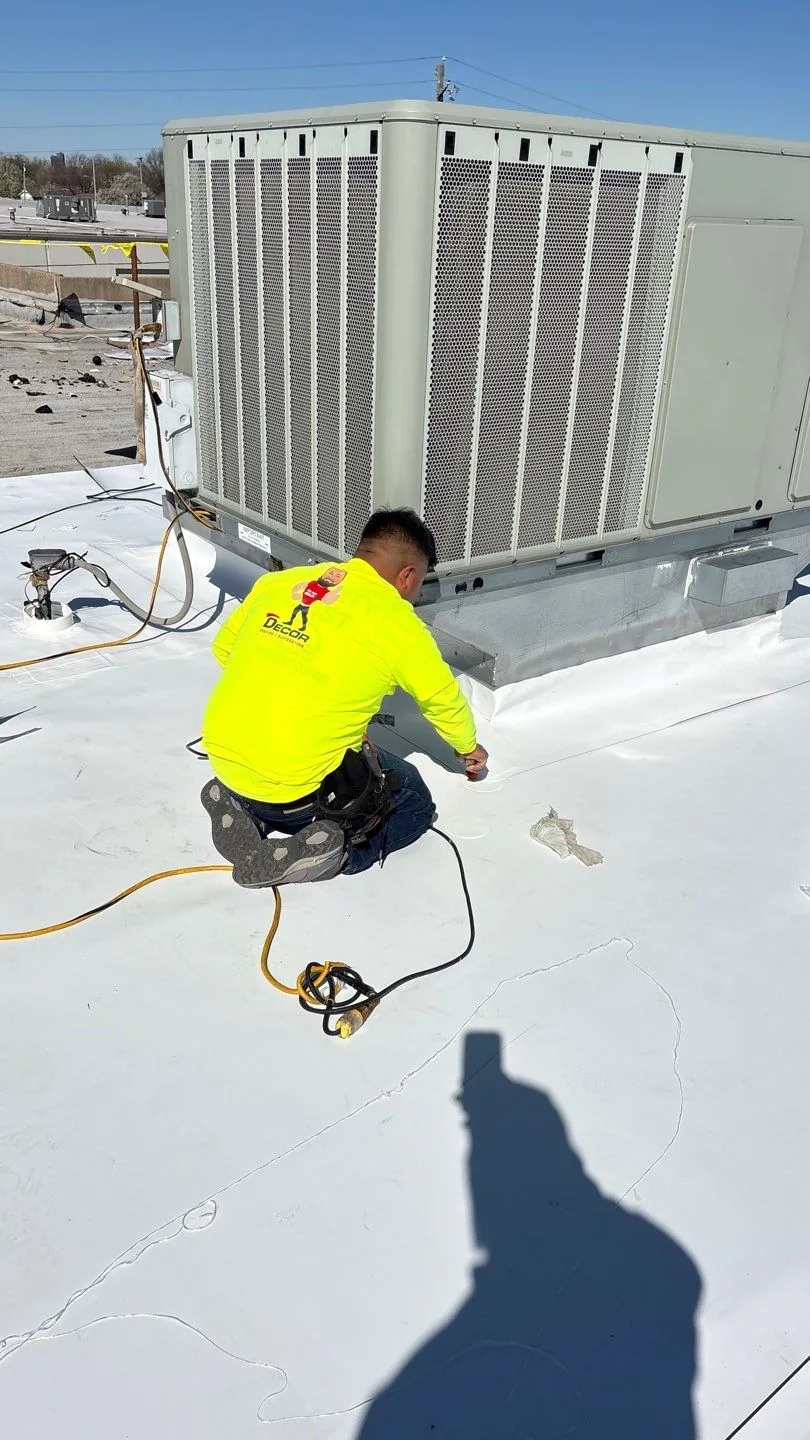
Rooftop units sit on curbs, and each curb carries a base flashing that must stay bonded through heat, cold and vibration. Where a unit was replaced, the new unit may rest on an old curb, or the curb may have been extended without reflashing. We check the height of the flashing above the roof surface, the condition of its top edge, the corners and the fasteners, and we look for staining that shows water has passed.
Service traffic creates punctures along the path from hatch to unit. The walk marks worn routes and recommends walkway pads where the membrane shows scuffing. Condensate and exhaust that discharge onto the surface are traced, because a steady drip thins most membranes over time. These items are cheap to fix compared with a section of wet insulation, which is why they come first in the written findings.
Pipe boots receive the same scrutiny. A split boot admits water around the pipe, and the stain inside the building often appears at a different spot, since water follows ducts and framing before it drops. We trace the stain upward and test the roof section above it.
Snow Drifts and Thaw Water
Dearborn's 30.8 inches of annual snow fall between November and April, with January averaging 14 inches and February 12.5. Wind drives that snow against penthouses and parapets, where drifts load the roof unevenly and meltwater collects at the base of the wall, and the structural question of snow load belongs to an engineer. The roofer's part is to see where the water goes.
At the base of a taller wall, a single-ply membrane is flashed up the wall and terminated at a bar or reglet. We check the termination for gaps, the sealant for cracks and the field sheet near the wall for lifted laps. The drain closest to a drift zone is checked for debris. A blocked drain there can pond water against the flashing through a thaw.
Ice at a scupper is a second concern. Meltwater that refreezes at an outlet backs water onto the roof, so scuppers and gutters are cleared before the first freeze and checked after the first thaw.
Insulation, Attachment and Energy Code
Beneath the membrane, insulation boards and sometimes a cover board sit on the deck. The sheet is held by fasteners, adhesive or ballast. Wet insulation changes the options, so we use a meter pass, an infrared survey where access allows, and a test cut to show where water sits and what the insulation is.
Insulation rules may have changed since the roof was built, so before a replacement or recover is priced the current Michigan commercial energy code is checked against the scope, in a place that logs 4,027 heating degree days a year. The insulation and cover board detail goes into the scope before the figure is fixed, with the energy code noted as a project-specific item.
Mechanically attached sheets add a check for fastener plates that have backed out, which show as ridges along the fastener line. Adhered sheets add a check for edges that have let go. Each condition is marked on the roof plan and entered in the repair queue.
Access Windows in Occupied Buildings
A campus-style institution, an office building in the Fairlane and Midtown area or a clinic runs on schedules, and roof work must fit them. The questions that matter are which hours are quiet, where material can be staged and which air intakes need protection. Work areas get fenced, and each section is made watertight before the crew leaves.
For college and university buildings and schools, the access window can follow the academic calendar. The findings list which roof sections can be repaired in term and which wait for a break, and the dates go into the repair queue so the facility team can plan.
Records and Comparison
A Carlisle warranty, if the roof has one, is whatever the issued document says, so the file keeps that document beside the installation evidence and the maintenance visits it calls for. When an owner compares a replacement, the same findings show what the existing assembly is made of and which parts can stay, whether the alternative is Versico or Holcim Elevate.
Commercial Roofing Questions
Which part of a rooftop unit installation causes most leaks?
The curb flashing, most often at corners and at the top edge. Check the height, the fasteners and the sealant. If a unit has been swapped, confirm that the curb was reflashed and not only extended.
How should drifted snow be handled around penthouses?
Clear the water path, not the whole roof. Keep drains open, check wall terminations after each thaw and have a structural engineer review the building if the drift is deep or the building shows stress.
Can an EPDM seam be repaired in cold weather?
Tapes and adhesives need clean, dry surfaces and workable temperatures. In deep cold, use a temporary seal and schedule the permanent repair for a suitable day. Record which repair is temporary.
When does a replacement trigger the energy code?
When the scope changes insulation or the roof assembly, the current Michigan Commercial Energy Code and the local authority's rules apply. Confirm the requirements before the figure is fixed, since insulation thickness can change cost.
What does a walkway pad cost compared with repeated patching?
Pads are a small item against the cost of patches and wet insulation. Place them along worn routes and at access points, and approve them with the repair so the problem does not return.
Schedule an inspection and send the equipment list
Send the roof plan, the equipment list and any past reports. We will document each curb, seam and drain, and state which repairs, coatings or replacements the written findings support.