
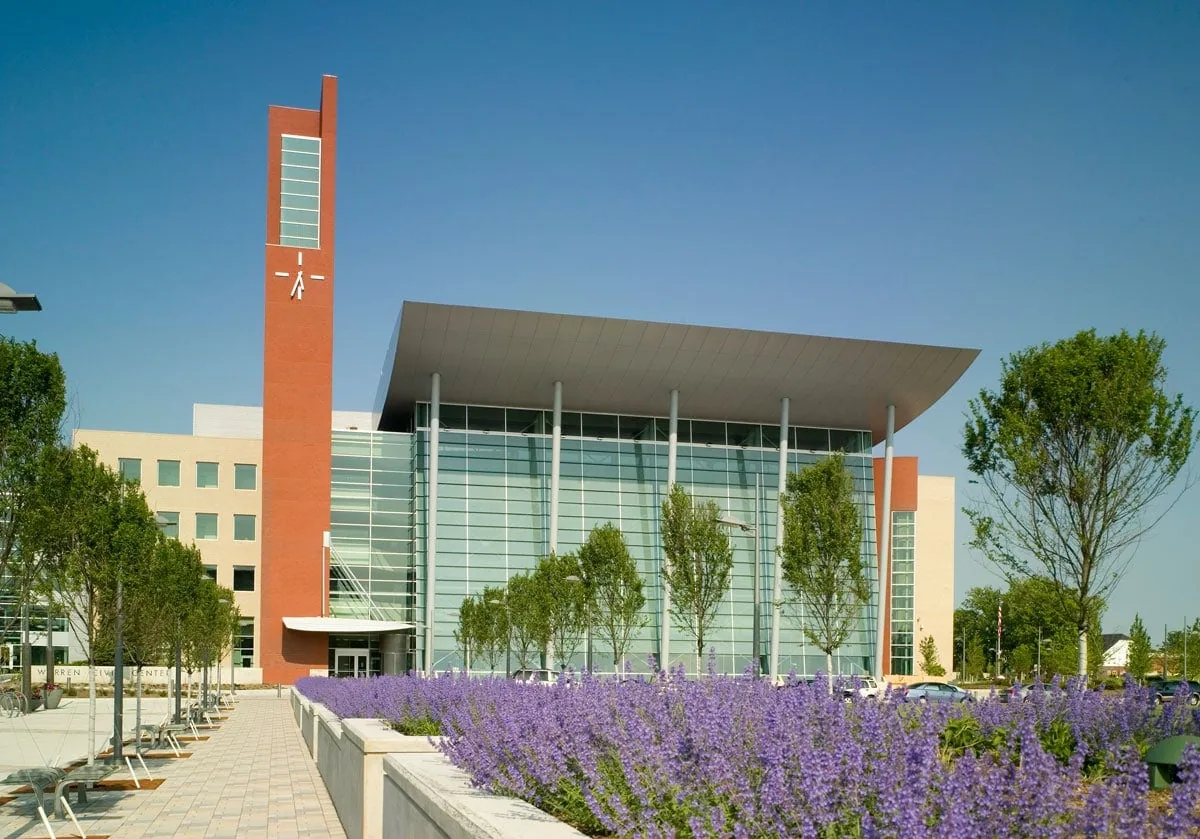
Commercial Roofing in Warren, MI
A manufacturing building in Warren, MI carries more on its roof than weather. The city's economic profile describes a base of industry, automotive suppliers and technology-oriented firms, and its list of headquartered employers includes metal-treatment shops, tooling and engineering companies, food distributors and construction businesses. Those uses put exhaust fans, makeup air units, process vents and gas lines through the roof assembly, and every one of those openings is a place where the water path can change. We start with the penetrations, then work back toward the membrane field.
Warren owners can call us for inspection, repair, recovery or replacement of low-slope and metal roofs, and we plan the work around production shifts, truck traffic and the equipment that cannot stop. Each visit ends in written findings that separate what needs action now from what can be watched, so a plant manager or an owner's representative can decide with a record in hand.
Process Buildings and Rooftop Penetrations
A plant that heat-treats metal or runs a tooling floor tends to push heat, moisture and fumes upward. The first walk is a matter of observation: we look at the membrane around each fan curb for discoloration, at flashing tops for chemical staining or softened sealant, and at the field sheet near vents for blistering that points to something hotter or wetter than the system was chosen for.
Membrane type matters here. A PVC roof resists many oils and fats, which is why it is often specified over kitchens and food handling, while a plain TPO or EPDM sheet can degrade near a heavy exhaust plume. When a roof is failing near a discharge, replacing a patch with the same sheet repeats the problem. The repair boundary should follow the cause, not just the stain on the ceiling tile.
What a First Walk Records
On a plant roof, the sequence runs from the edges inward. We check perimeter metal and coping first because wind and thaw work on edges before anything else. Then we trace each drain bowl and scupper, look at the lap seams and corners across the membrane field, and finish with the curb transitions where mechanical equipment meets the roof. Interior ceilings are compared against what we found above, since water in a long-span building often travels along a purlin or deck flute before it drips.
Where the history of leaks is unclear, an infrared moisture survey separates wet insulation from dry, so the repair boundary is drawn from data instead of guesswork. The written findings list each item as a patch, a repair, or a candidate for planning, with photographs and a price range.
Aging Plants and Planned Renovation
Warren offers industrial-facility incentives for qualifying renovation and expansion of aging plants, new industrial buildings and research-and-development laboratories. The practical consequence for a roof is timing. An owner weighing a plant renovation has a reason to settle the roof question before the interior work starts, because new ceilings, new process lines and new equipment curbs are all affected by what sits overhead. Whether a given project qualifies is for the city and the owner's advisers to decide. Our part is the roof record.
We document remaining service life, wet insulation, deck condition and drainage, then lay out a repair path and a replacement path with the cost drivers for each. A recover over sound insulation costs differently from a tear-off, and the choice depends on moisture, code requirements and the weight the structure can carry. Our capital planning work puts those choices on a calendar.
Detroit Arsenal and Government Work in Warren
Detroit Arsenal in Warren covers 181 acres and holds 74 buildings, with engineering, maintenance, master-planning and operations functions spread across its administrative and support buildings. Roofing on an installation generally runs this way: escorted access, badging lead time, work areas fenced away from mission traffic, and specifications that follow the Unified Facilities Criteria for roofing.
On installation roofing and Army installation buildings, the schedule bends around gate procedures and security checks. For a commercial owner, the discipline carries over: a clearly marked work area, a named supervisor and a daily record make an access window easier to hold.
Winter Loads on Warren Roofs
Warren sits in the same winter pattern as the rest of the metro area. Snowfall at the Dearborn weather station totals 30.8 inches in a year, concentrated from November into April, beside 35.05 inches of all precipitation spread over about nine to twelve days in a typical month. Southeast Michigan's average first measurable snow falls around November 16 and the last around April 7, so a roof is exposed to freezing cycles for the better part of five months. Snow load on a particular building is a design question for that site's engineer.
For a flat roof with few drains, that pattern means ice dams at scuppers, thaw water ponding behind parapets, and seams that open when frozen ponds expand. We recommend a drain check before the first snow and another after the first real thaw. An ice and snow damage repair after January is cheaper when the drain was cleared in November.
Neighboring Cities and Shared Corridors
Warren borders Detroit and sits close to Hamtramck, and many owners hold buildings in more than one of them. A property group with a plant in Warren and a distribution building elsewhere in the county can put its roofs on one inspection calendar through a multi-site roof program, with the same report layout for each building.
For plants, a maintenance visit twice a year is a practical rhythm: one before winter to clear drains and reseal exposed details, and one in spring to look for thaw damage while repairs are still small. A manufacturing plant roof that has been logged this way gives its owner a record to use when the time comes to replace.
Commercial Roofing Questions
Will exhaust from a heat-treating or metal-finishing line shorten a membrane's life?
It can, which is why we look at the sheet around each discharge before anything else. Discoloration, a chalky surface, softened flashing sealant or blisters near a vent point to exposure the membrane was not chosen for. The fix may be a different sheet near the plume, a taller curb, or a stack extension, rather than another patch of the same material.
Can a roof be repaired in sections while the production line keeps running?
Most plant roofs are worked in bays. We agree on the work area with the plant manager, keep each opened section dried in at day's end, and schedule noisy tear-off away from quality checks or shipping peaks. Rooftop units and gas lines are marked in advance so that no one disturbs a connection that the line depends on.
How do we decide between a recover and a full tear-off on an older plant roof?
Moisture decides first. If an infrared survey and core cuts show dry insulation and a sound deck, a recover can save the cost and the disruption of removal. Wet insulation in a wide area, a sagging deck, or too many existing layers argues for tear-off. Energy-code insulation rules under Michigan's 2021 commercial energy code can also change the scope.
What does an industrial-facility incentive have to do with the roof?
Renovation of an aging plant often opens ceilings, adds equipment or changes loads on the structure. Settling the roof's condition before that work begins avoids leaks onto new finishes and lets the owner add the roof to the project budget. We provide the written record of condition, remaining service life and options.
After a severe storm in the metro area, how soon should a Warren roof be checked?
Soon after the storm and again after the first thaw. Storms in September 2026 put damaging wind, big hail and tornadoes across Southeast Michigan, with the Weather Service confirming a Detroit tornado rated EF-2 and a smaller Lincoln Park one rated EF-0. Loose edge metal, bruised membrane and displaced curbs are visible quickly, and an early record helps with any insurance claim.
Schedule a Warren roof inspection
Tell us the building's use, the equipment on the roof and where water has shown up. We will record the penetrations, drains and membrane condition in writing with photographs, and that record will support your choice between repair, recover and replacement. Emergency response is available at any hour.
