
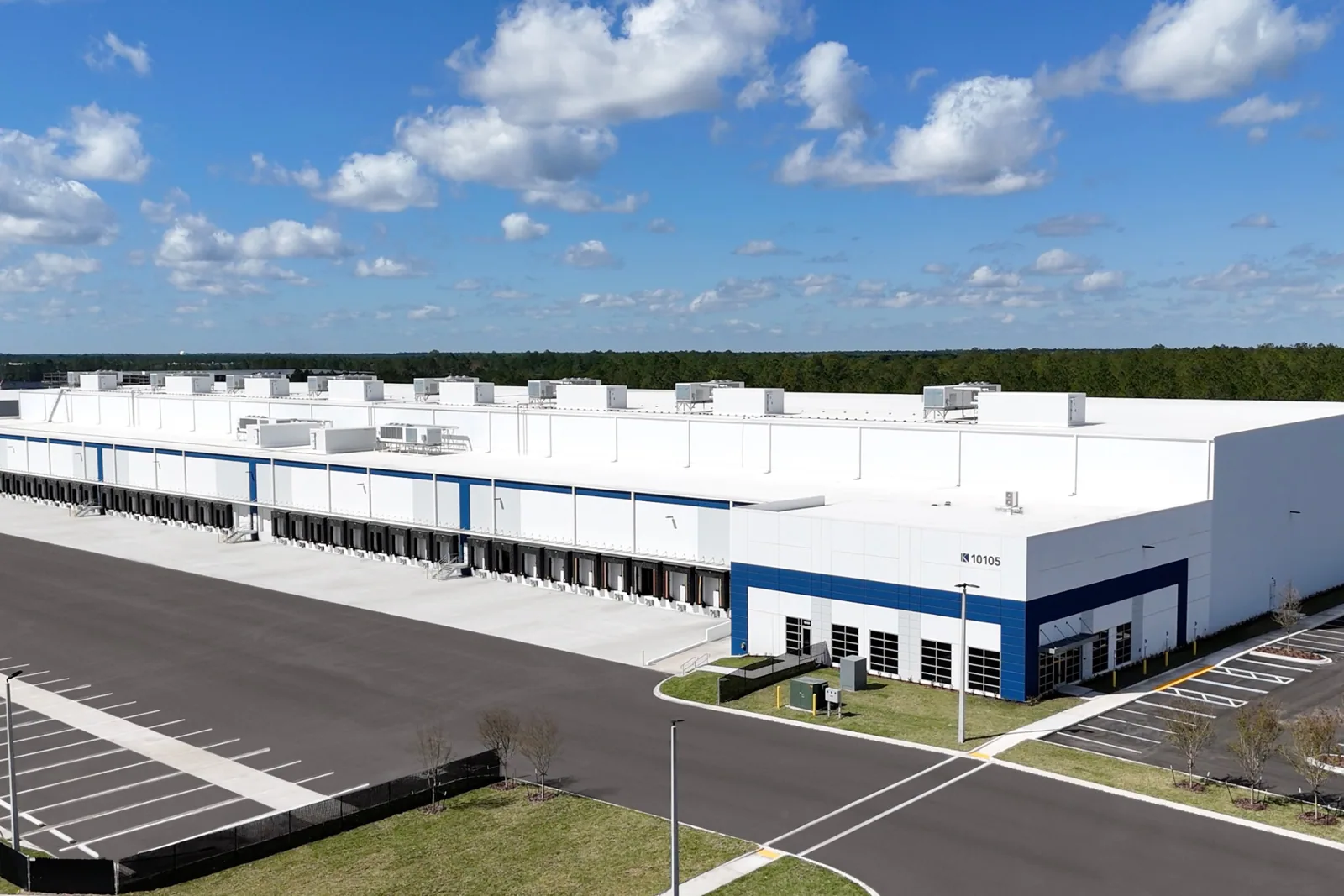
Cold Storage Roofing in Dearborn, MI
A freezer or cooler building turns the usual roof logic upside down: the inside is colder than the outside for much of the year, so the vapor that normally drives from a warm interior to a cold roof can drive the other way. The building use is what changes the decision. In Dearborn, MI, a refrigerated building is a roofing category with its own rules, and a roof that works over an office can fail over a freezer.
We start with the assembly: deck, vapor retarder, insulation, cover board, membrane and the penetrations that pierce all of them. Then we test for moisture and read the interior side where we can, because cold storage failures often show up first as frost, ice or condensation inside the building.
Vapor Drive in a Refrigerated Building
In a conventional building, warm interior air pushes moisture up toward the cold roof in winter. Over a freezer, the colder surface is inside, and in summer the warm, humid outdoor air pushes moisture down toward the cold interior. If that vapor reaches the insulation and condenses or freezes there, the insulation loses value and the deck can corrode or heave.
The defense is a continuous vapor retarder on the warm side of the insulation, which in a freezer is the exterior side, and tight sealing at every penetration and edge. A gap in the retarder, a sealed-over pipe that was never properly boot-flashed or a cut made during equipment service lets humid air in. We look for those gaps on the roof, and inside we look for frost patches that line up with them.
Thick Insulation and Slope
Cold storage roofs carry much more insulation than ordinary roofs, often in multiple layers with staggered joints. Thickness raises the roof surface, so parapets, curbs, drains and edge metal sit lower relative to the roof than they were designed to, and each detail may need to be raised. Taper for drainage adds to the thickness in places.
Michigan's 2021 Building Code (effective April 9, 2025) governs the permit, and the 2021 Commercial Energy Code (effective April 22, 2025) may change what insulation a reroof needs. We confirm with the local enforcing authority which requirements apply to a refrigerated building before we set a thickness.
Testing for Moisture Over a Cold Interior
Infrared scanning relies on temperature differences, and a refrigerated interior changes the picture. The roof surface may show cold areas that are not wet, so we run scans with attention to timing and conditions and confirm every suspect area with core cuts and meter readings. An infrared moisture survey is useful but is read cautiously over a cold space.
Core cuts need care, too. Each cut penetrates the vapor retarder, so it is patched immediately and sealed to the retarder, not just to the membrane. The cut locations go onto the roof plan, and the repair is photographed.
Inside the building, the signs of a roof problem differ from an office. Frost forming on the underside of the deck, ice on the ceiling or a patch of snow on the floor under a penetration all point to air or water getting through. We ask the facility director to tell us where those have appeared and when, and we match them to the roof plan before we go up.
Penetrations: Where the Retarder Breaks
Refrigeration lines, conduits, exhaust stacks and structural supports pass through the roof, and each is a place where air can leak. Condenser lines and defrost drains often run across the roof, and the supports that carry them are point loads on the membrane. We check each penetration for a sealed collar, a vapor-tight boot and a membrane flashing that overlaps the retarder, and we count them, because on a refrigerated roof the number of penetrations is the number of places the vapor seal can fail.
When equipment is replaced, the opening is rebuilt and the retarder is lapped and sealed before the new insulation goes in. A penetration flashing detail that works on an office roof may not be tight enough for a freezer, and the scope calls out the difference.
Michigan Weather on a Cold Roof
Dearborn's 35.05 inches of annual precipitation include 30.8 inches of snow, and the snow season runs from roughly November 16 to April 7. Snow on a well-insulated freezer roof does not melt from below, so it sits until the sun and air temperature remove it, and ice forms at drains and scuppers that stay cold. We check drains after each heavy snow because a frozen outlet backs water against the retarder and flashing.
In summer, the humid air outside meets a cold surface, and any condensation shows quickly. Damaging winds, large hail and tornadoes hit Southeast Michigan in September 2026 per the NWS, so after severe weather we walk the roof and check the seals at penetrations.
Repair, Recover or Replace
Because insulation is thick and the vapor retarder is critical, a recover is rarely the easy choice it is on other roofs. If moisture testing shows wet insulation, the scope usually moves to section replacement or a full replacement that rebuilds the retarder, insulation and membrane. Isolated membrane damage over dry insulation can be repaired with a commercial roof repair, followed by a check for vapor leaks.
Cost follows insulation thickness, penetration count, retarder work, access and the operations below, and each gets its own line in the scope so any price change has a visible cause. The remaining service life of the membrane, judged from seams and surface condition, goes into the written findings with the moisture results. The building often cannot shut down, so work is sequenced by section and the interior is monitored for temperature and humidity changes. Open sections are kept small, because an open roof over a freezer pulls warm, wet air in at once. Because the retarder is hidden once the roof closes, each lap is photographed before the insulation covers it. Each section is opened, repaired, resealed to the retarder and closed in a single day, with the closeout file recording the retarder lap, the insulation layers and the seal tests.
Where Refrigerated Buildings Are
Refrigerated buildings usually sit among other industrial and commercial uses. Dearborn borders Detroit to the east, and the industrial and commercial areas of Melvindale, Taylor and Romulus are within reach. A distribution building for ambient-temperature freight lacks the vapor seal question, and a manufacturing plant adds process lines below. The roof on any specific building is judged from its own walk.
Commercial Roofing Questions
Why is a vapor retarder so important on a freezer roof?
It keeps humid air from reaching the cold insulation, where it would condense or freeze. A gap or a poor seal at a penetration defeats it.
Can infrared scanning be trusted over a cold space?
It can be used with care. Cold areas may not be wet, so every suspect area is confirmed with core cuts and meter readings.
What happens to a core cut in the roof?
It is patched at once, sealed to the vapor retarder and the membrane, photographed and logged on the roof plan.
Is a recover an option on a cold storage roof?
Seldom. Thick insulation and a critical retarder usually push the scope to section or full replacement when moisture is present.
Why do drains ice up on a freezer roof?
A heavily insulated roof stays cold and snow does not melt from below. Meltwater from sun or warm days refreezes at drains.
Schedule a roof walk and moisture test
Tell us the interior temperature zones, the penetrations you know about and the roof access. We will document the roof by section and report what the tests support.