
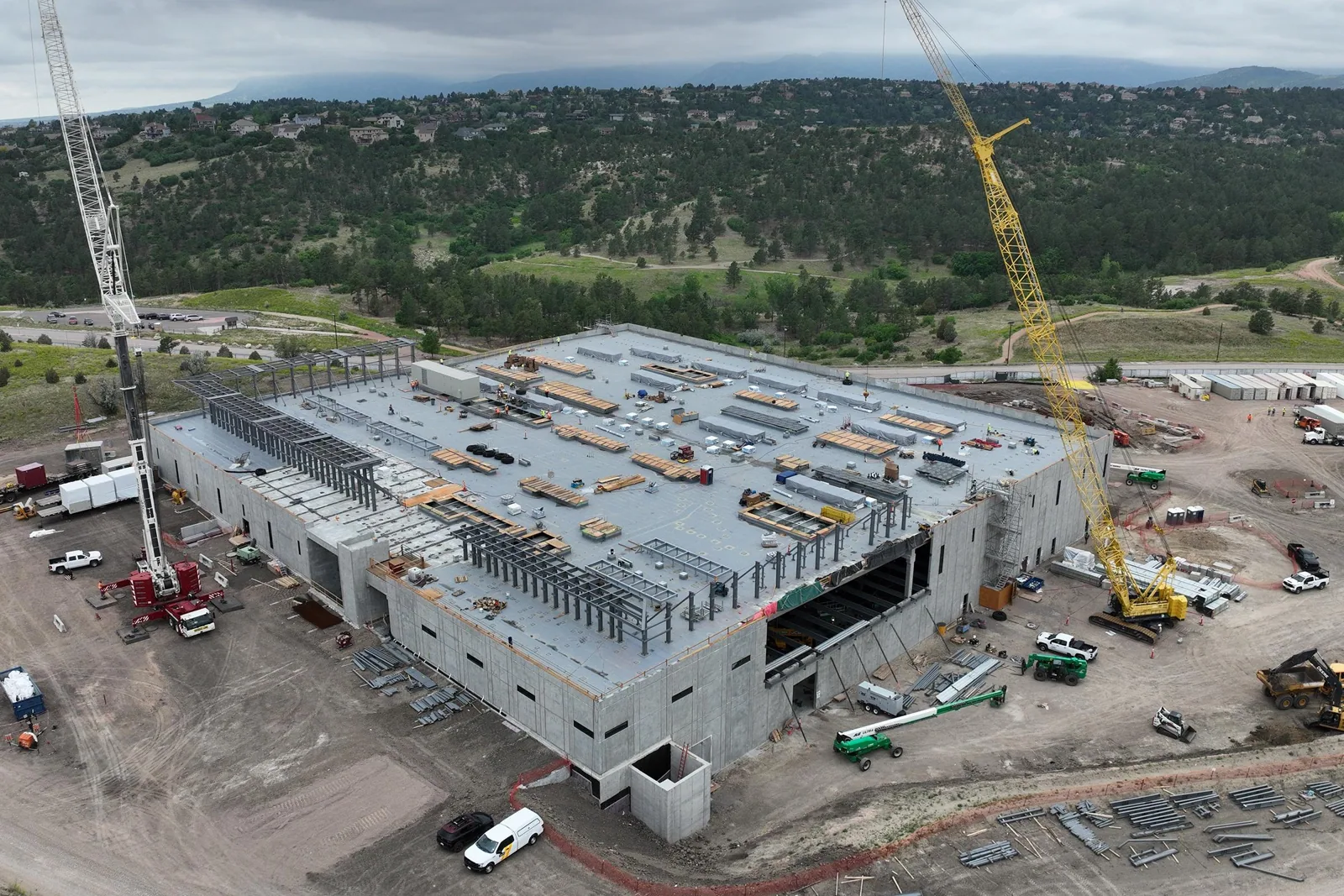
Commercial Roofing for Manufacturers in Dearborn, MI
A manufacturing roof carries more than weather. Exhaust stacks, make-up air units, process piping and conduit all pass through the membrane, and each penetration is a place where a production problem can become a roofing problem. We start a plant visit by tracing what is under each roof section and what comes through it, because that decides how water is most likely to reach a line, a pallet or a control panel.
The Dearborn, MI city plan lists manufacturing among its major industries and reports that manufacturing, education and health care, and professional services together account for over 70% of local jobs. The city names Ford, Carhartt, Hollingsworth and Shatila Food Products as headquarters employers and describes Ford's research-and-development complex as under reconstruction. A plant owner here plans roof work against both the production calendar and the Michigan winter.
Penetrations, Process Exhaust and Wear Zones
Plants differ from warehouses in what rises through the roof. Exhaust from ovens, paint booths, welding and dust collection can deposit residue or heat the membrane around the stack. Make-up air units and rooftop heaters add condensation and vibration. Conduit and piping runs cross the deck at points that were drilled for a specific purpose and often modified afterward.
We inventory those penetrations and note the condition of each flashing, the clearance around heat sources and the surface wear where staff walk to service equipment. A heated exhaust curb can cook a membrane over time, and a splash zone from chemical vents can attack some sheet materials. Where the process affects the roof, the recommended system and the details change with it, which a rooftop equipment curb and support review makes visible.
Roof Work Around Shifts and Production Lines
A production line has a start-up cost, and a roof crew that causes a stoppage creates a bill larger than the roofing contract. We ask when the line cannot be disturbed, which bays hold sensitive equipment and whether dust or vibration will affect quality. The crew's work areas are then set away from those zones, with interior protection where a hoist or tear-off sits above them.
Plant safety rules also apply to roof crews. Orientation, hot work permits, lockout of rooftop equipment and restricted-access areas are scheduled before arrival. We plan the work much as we would for occupied building reroofing, where the people inside continue to work, and we keep the plant's safety lead informed of each day's sequence.
Snow, Ponding and Drain Capacity on Wide Roofs
A wide roof drains toward a limited number of points. When one is blocked by debris from a nearby process, water stands on the membrane and the load rises. At the Dearborn station, snow adds up to 30.8 inches a year within a total of 35.05 inches of precipitation, and most months see measurable precipitation on roughly nine to twelve days. Snow and rain both rely on the drains staying open.
Ponding shortens membrane life by holding water against seams and exposing the sheet to repeated freezing. We measure the depth and extent of ponding, check the structural deflection that may be causing it, and look at the drains for blockage. A drain and scupper correction is often cheaper than the membrane damage that follows if the problem is left. In winter, ice at a scupper can back water under the edge flashing, so we check that the outlet is open before the first freeze and again after the first thaw.
Selecting a System for a Plant Roof
System choice follows the building's process. A reinforced thermoplastic membrane resists many oils and chemicals, and a TPO roof system has welded seams that repair cleanly. A fully adhered sheet reduces flutter in wind. Metal roofs, such as standing seam metal, suit long spans and shed snow quickly, though they need attention at penetrations and clips.
For roofs with moderate wear and dry insulation, a restoration coating can extend service and reduce heat load. If insulation is wet, coating hides the problem. We identify wet areas before recommending a coating, and we write the findings so the plant engineer can compare restoration, recover and replacement side by side. A plant that ships through logistics and 3PL operators also has dock areas where roof leaks reach finished goods, and we mark those zones for priority repair.
Replacement Timed to Shutdowns and Budget Cycles
Many plants schedule maintenance shutdowns, and a roof project can fit them. Tear-off and dry-in over a week-long shutdown means the roof is open when production is least affected. For a plant that runs without a break, the work is divided into small sections, each closed in the same day.
Plants in cities such as Livonia, where the Plymouth Road corridor includes manufacturing facilities such as Ford's Livonia Transmission Plant, and Warren, where the city lists manufacturers, metal-treatment firms and tooling companies among its employers, face similar tradeoffs. Equipment loads, structural capacity and insulation thickness shape each plan, and we price them as separate items so a controller can see how scope changes the cost. When a general contractor is managing a plant expansion, we coordinate with that general contractor so the new roof ties into the existing one with a detail both parties have approved before the first pallet of material arrives.
Keeping Plant Roofs Dry Between Projects
Debris from process exhaust and roof traffic gathers around curbs and drains. Our preventive roof maintenance visits clear those points, re-seal flashings and photograph any new penetration. A plant that adds a line or moves equipment should have the roof checked at that time, since a new stack or conduit changes where water can enter. We update the roof diagram at each visit, so a controller or plant engineer can see the roof as it is now, not as it was drawn when the building opened, and can compare the cost of a small repair today against a larger one next winter.
Commercial Roofing Questions
How do you avoid shutting down production during roof work?
We ask which areas are sensitive, then set work zones away from them and add interior protection under any tear-off. Hoisting and loud tasks are scheduled for low-impact hours. If a shutdown is planned, we align the heaviest work with it. The plant's safety lead reviews each day's plan.
Can exhaust from our process damage a roof membrane?
Yes, heat, oils and chemical vapors can degrade some membranes near a stack. We check the area around each exhaust for blistering, softening or staining, then recommend a membrane and detail suited to the exposure. Added curb height or a protective pad can also help.
What matters most when choosing between a coating and a replacement?
Moisture in the insulation and the condition of seams. A coating suits a dry, sound roof with surface wear. If the insulation is wet or seams are failing in many places, coating covers the problem. Moisture mapping settles the question before any commitment.
How do we handle roof access for contractors who service our rooftop units?
Walkway pads from the hatch or ladder to each unit protect the membrane from foot traffic. A roof access log helps track who goes up and when. After service visits, we check the area around the unit for damage, and repair it before water can enter.
Is a roof recover practical for a plant with heavy exhaust?
It can be, if the existing insulation is dry and the deck can carry the added weight. Heat and chemical exposure may limit the choice of new membrane. We test for moisture first and compare the recover to replacement in the written findings.
Plan Roof Work Around Your Production Schedule
Call Commercial Roofing Dearborn to schedule an inspection of your plant roof, or to request emergency response when water is reaching a line or storage area. We will document the membrane, penetrations, drains and moisture, and provide written findings that support a repair, replacement or maintenance decision.
