
Roof Documentation for Insurance Adjusters and Restoration Contractors in Dearborn, MI
After a severe storm, an adjuster needs a roof record that separates what the weather did from what the roof already had. A bruise on a membrane, a lifted edge and a worn seam can look alike from the ground, and each leads to a different scope. We write the record so the adjuster can read it without a site visit: a roof map, dated photographs, moisture readings and a description of each condition in terms of cause and extent.
Storms in September 2026 brought wind damage, large hail and tornadoes to Southeast Michigan, the NWS reports, with tornadoes rated EF-0 in Lincoln Park and EF-2 in Detroit. In the weeks after a storm like that, adjusters and restoration crews are on commercial roofs around Dearborn, MI that need quick protection and a careful scope, and each roof needs its own record.
Roof Records Built for the Adjuster
A storm record has to answer a set of practical questions. Where is the damage? How far does it extend? What is the roof made of, and how old is it? Was the roof sound before the storm? We cannot know the roof's history from a single visit, but we can describe its condition: seam tightness, flashing adhesion, surface wear, drainage and the state of repairs.
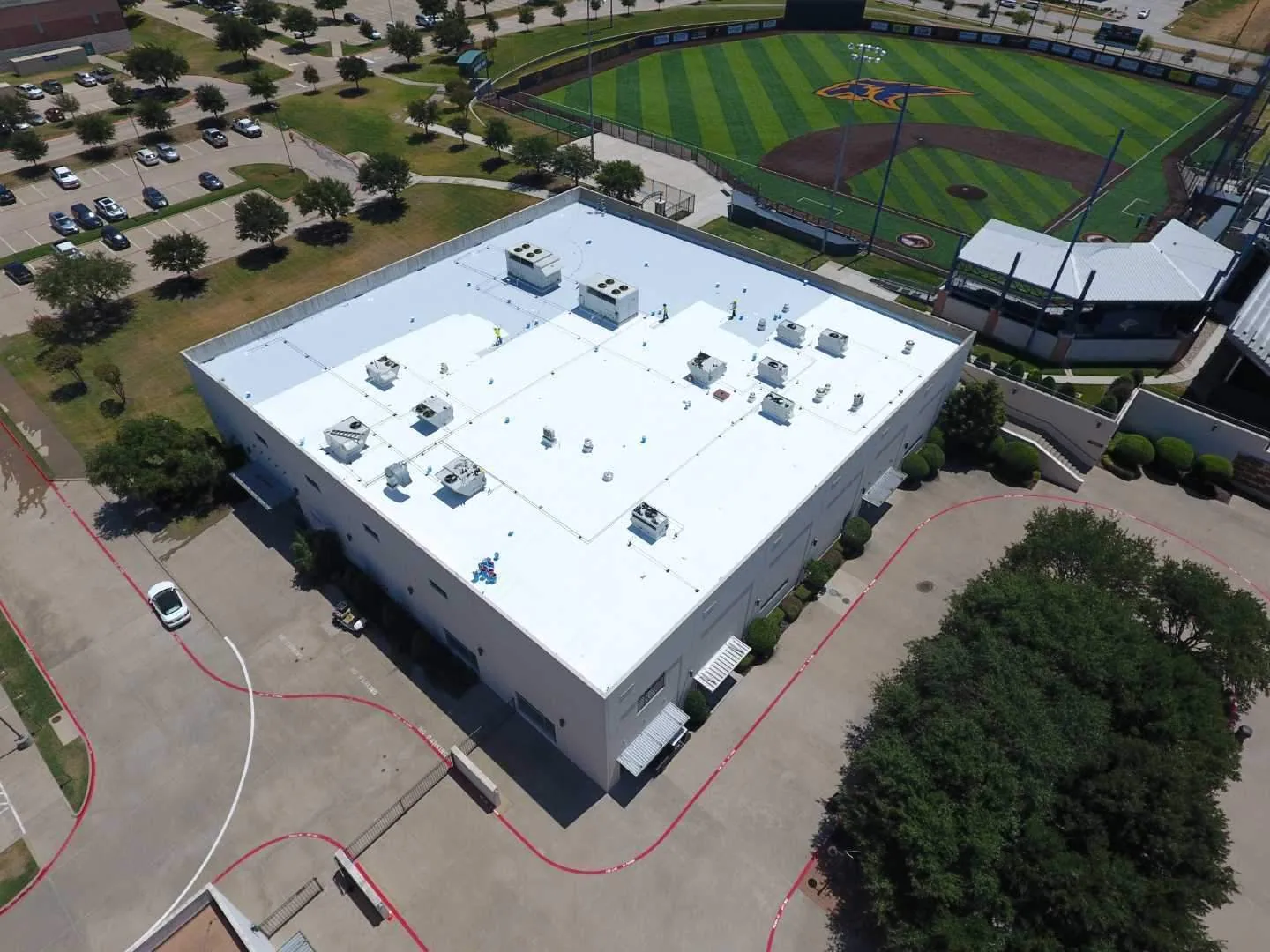
The photographs are dated and located on the roof plan. Moisture readings show whether water has entered the insulation, and infrared imaging can map the wet area. A drone pass surveys the whole surface quickly, which helps when a large roof has to be reviewed before the next rain. Close-up photographs then confirm what the aerial images suggest, and the two sets are labeled so the adjuster can match them. The report states what we observed, not what the policy covers.
Wind, Hail and Tornado Signatures on a Low-Slope Roof
Each type of storm leaves a different pattern. Wind lifts membrane at edges and corners, strips coping and shifts rooftop covers. Hail leaves round bruises, punctures and granule loss on surfaced sheets, often concentrated on the side facing the storm. A tornado can tear off sections and leave debris impact marks across the deck.
We look for the pattern, then check whether the damage extends beyond the visible area. Wind damage often continues under the membrane where the attachment has failed, so we probe and test suspect areas. A hail damage repair scope depends on the density and depth of the impacts, while a tornado damage repair scope may involve deck and structure that a roofer reports to the engineer. We also photograph debris that struck the roof, since impact marks, scrapes and punctures show the direction and force of the event and help separate storm damage from older wear.
Emergency Protection Before the Scope Is Settled
The first job after damage is to stop further loss. Temporary protection includes tarps, temporary patches, drain clearing and removal of debris that could cause more damage. We document the condition before and after the protection goes on, so the adjuster sees what was there. Emergency response runs around the clock, holidays included.
Protection is not the repair, and we keep the two separate in the record. The temporary work is described with its materials, location and expected life, so the permanent repair can be scoped and priced separately. Our storm damage roof repair follows the sequence: protect, document, dry, repair or replace. Restoration crews working on the interior can rely on the roof being stable before they start. We pass along the wet areas we found, the drains we cleared and the sections that remain open, so the interior drying plan starts from the roof's actual condition.
Repair or Replace After a Loss
The decision depends on how much of the roof is affected and whether the remainder can be matched. A localized wind lift on a sound membrane may be repaired with a patch and re-attachment. Widespread hail bruising or wet insulation across large areas leans toward section replacement. A mixed condition needs a careful boundary.
We lay out each option with scope, cost drivers and timeline, and describe how the repair ties into the remaining roof. Precipitation falls in most months at the Dearborn station, at about 35 inches a year, so a delayed scope can allow further water entry. We note any condition that worsens if the work waits, such as an open edge or exposed insulation, and we say how long the temporary protection is expected to hold through a freeze-thaw cycle, because a tarp that survives a rainstorm may not survive repeated ice and wind.
Scoping a Full Replacement for a Claim
When a replacement is the right answer, the scope must be complete. It lists tear-off, insulation, cover board, membrane, flashing, edge metal and drainage, along with disposal and permits. Local code and energy requirements may add items, and the 2021 Michigan Commercial Energy Code is the one now in effect. We confirm the enforcing authority's requirements. Insulation added to meet the energy code is a line the adjuster will want itemized, so we separate code-driven items from like-for-like items in the scope.
A roof insurance claim file also benefits from a written comparison of repair and replacement costs. The comparison shows the adjuster why one path is recommended, and it gives the owner a basis for discussion. When a general contractor manages the rebuild, we coordinate with the general contractor on schedule and closeout documents.
After the Claim, Keeping the Roof Documented
Once the roof is repaired, a follow-up visit confirms the work and records the new baseline. A property management company can add the repaired roof to its routine schedule. Visits in early November, ahead of the usual first snow, and in April, after the last one, keep the record current, and a clean, dated file answers the first question an adjuster asks after the next storm: what the roof looked like before it.
Commercial Roofing Questions
What does your roof report give an adjuster?
A roof map, dated photographs, moisture and infrared findings, a description of each condition and a note of the likely cause. It states what we observed and does not address coverage. The adjuster can use the record to evaluate scope and cost without repeating the walk.
How quickly can you protect a roof after a storm?
Emergency response is available around the clock, holidays included. The first visit focuses on stopping water entry with temporary protection and documenting conditions. Timing depends on weather and site access, and we confirm arrival windows when the call is placed.
Can you tell hail damage from age-related wear?
Often yes. Hail leaves round, fresh impacts in a pattern, while wear shows uniform surface loss and cracking at seams and flashings. When the signs mix, we describe both and note where they overlap. The adjuster decides how to apply that information.
Should a restoration contractor wait for the roof repair to begin interior work?
Interior drying can begin once water entry is stopped, which temporary protection often accomplishes. We tell the restoration contractor when the roof is stable and which areas remain wet. Coordinating the two crews reduces the risk of new water damage.
What happens if a storm damages only part of a roof?
We map the damaged section and test the area around it. If the rest of the roof is sound, a section repair may be enough. If the surrounding membrane is aged or wet, the scope may need to expand. The report explains the boundary and the reasoning.
Request a Storm Roof Inspection or Emergency Response
Call Commercial Roofing Dearborn for emergency protection after a storm, or to schedule a documented roof inspection for an open claim. We will record conditions with photographs, moisture findings and a roof map, and provide written findings that support the repair or replacement decision.