
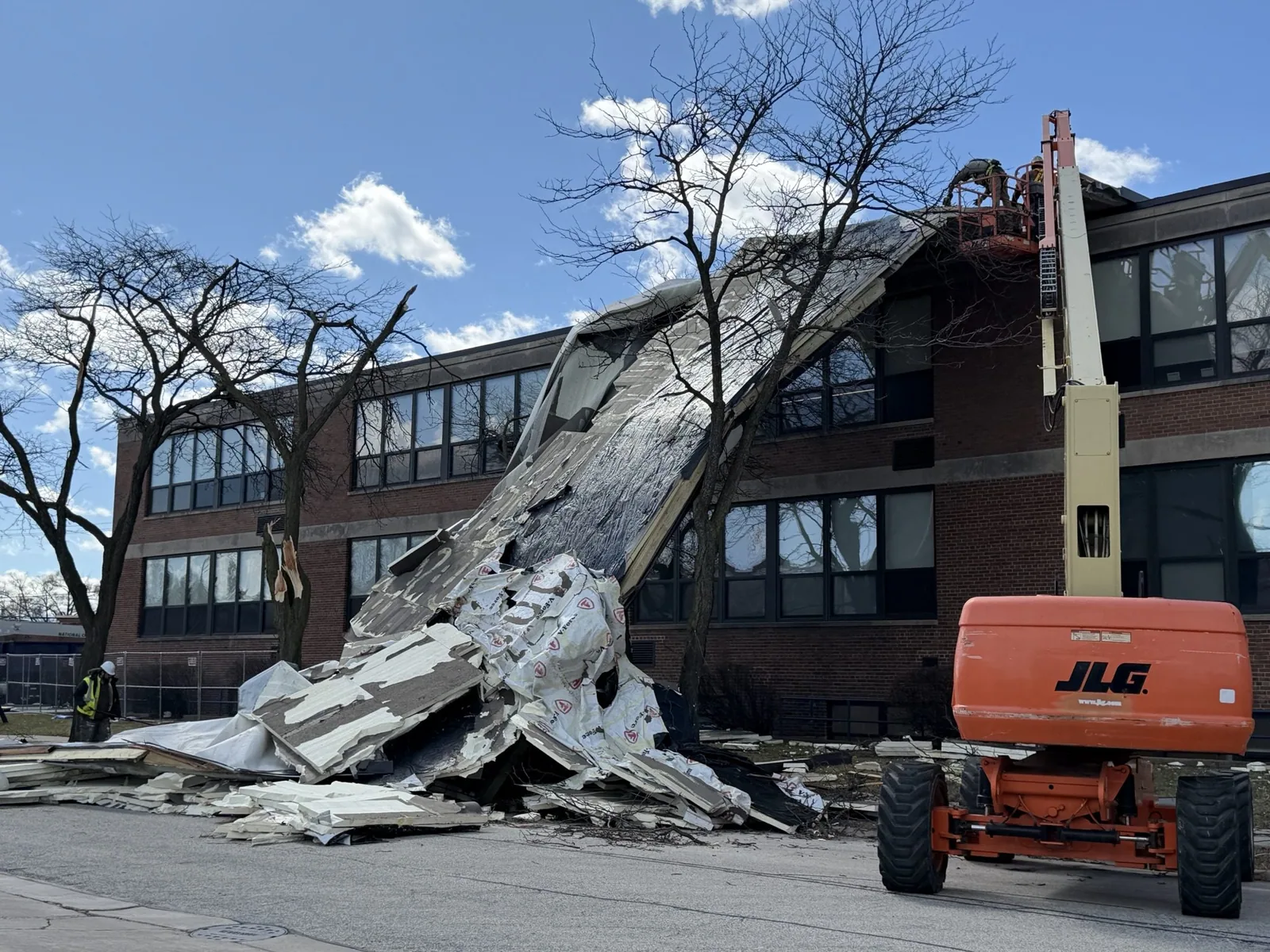
Tornado Damage Roof Repair in Dearborn, MI
A tornado leaves a roof in one of three conditions: intact, partly opened, or gone, and the work that follows begins with the building and not with the membrane. After a tornado, a commercial building in or near Dearborn, MI may have missing deck, hanging metal, broken parapets, and debris embedded in what remains of the roof. The first check is safety: whether the structure under the roof is sound enough to put a crew on it, and whether anything overhead is ready to fall. Written findings follow, in sequence, and they begin with the structure.
We keep the regional record in its place. It tells us when to inspect; the roof tells us what happened.
What the Storm Record Names
The weather service's September 2026 review of Southeast Michigan lists wind damage, big hail, and tornadoes, including a weak EF-0 in Lincoln Park and a stronger EF-2 in Detroit. Dearborn borders Detroit to the east, and the record places those two events in those two cities.
The use of the record is practical. When tornadoes are documented in neighboring communities, owners in the metropolitan area have reason to inspect after the event, to check for debris impact and displaced metal, and to keep dated photographs. An owner in Lincoln Park or Detroit has a more direct reason, and the inspection method is the same.
Structural Clearance and Safe Access
A roof damaged by a tornado may have lost its deck, its supports, or its connection to the walls. Before anyone walks it, an engineer or the building official clears the structure, and the access plan records who cleared it and when. Overhead hazards, such as loose metal, partly detached parapets, and leaning screen walls, are removed or braced first. Utilities, gas lines, and electrical equipment on the roof are made safe by the right trade.
Only then does the roof inspection start. The written findings list what could be assessed, what could not, and why. A section that is unsafe to walk is documented from a safe position, with a drone if useful, and the file states that no foot inspection was made there.
Emergency Dry-In
An opened roof exposes the building to rain and snow, and the first repair is protection. Temporary coverings, such as tarps with ballast, temporary membrane, or panels over open deck, are installed to the extent the structure allows, and each is photographed in place. Emergency roof repair is available at any hour. The covering is fastened to sound structure, not to damaged edges, because a temporary cover that blows off adds to the loss.
The Dearborn station averages about 35 inches of precipitation and 30.8 inches of snow a year, most of the snow between November and April, so each day of delay in dry-in adds to the damage. The record shows the date the opening was found and the date it was covered.
Building Types and What a Tornado Leaves
Building type shapes the damage. A tall, narrow building may lose rooftop equipment, screens, and parapet caps while the sheet stays down. A wide, low building with a light roof deck may lose sections of deck and membrane together. A masonry storefront may keep its roof but lose its parapet, which opens the edge of the roof to rain. A campus building with a mix of roof levels may lose the highest roof and leave the lower ones to collect the debris.
We inspect each building by its own type. In the business districts along Michigan Avenue and on corridors such as Warren Avenue and Ford Road, shop buildings sit close together, and debris from one lands on another, so a roof inspection includes the neighbor's side of any shared wall. For industrial and campus buildings, we check the roof level by level, starting with the highest and working down, since falling material damages what lies below.
Rooftop equipment needs its own pass. Units that have shifted on their curbs can break electrical and refrigerant lines, and their flashings are likely torn. We tag them for the mechanical and electrical trades and photograph each base, so that the roof repair happens in the right order and no one cuts a new hole for a unit that will be replaced.
Debris, Impact, and Embedded Material
Wind-borne debris can puncture a membrane, tear a flashing, or leave fragments embedded in the insulation. We remove loose debris, then examine the impact points: punctures, cuts, crushed insulation, bent metal. Each is located on the plan and photographed with a scale. A puncture is repaired as described in membrane puncture repair, but only after moisture scans show whether the insulation under it is wet.
Debris from the neighbors can also arrive. Material that came from another building needs to be removed and recorded, because it may have caused damage and because its source is relevant for the insurers. The photographs identify what was found and where, without speculation about origin.
Assessing What Remains of the Roof Assembly
In partly opened roofs, the decision is whether what remains can be saved. Edge metal, flashings, and curb transitions are checked for displacement. Sheets that lifted and fell back are checked for fractured welds and torn attachment. Insulation that was exposed to rain is scanned. Where the deck has been torn or distorted, the roofing repair waits for structural repair. The repair boundary is drawn only after those checks, and it is shown on the plan with the evidence for each segment.
For a large roof, the sensible outcome is often a phased scope: dry-in and temporary repairs now, permanent repair of the sound sections when the structure and the weather allow, and replacement of the sections beyond saving. The wind damage inspection method applies to the edges and the intact sections.
Records for Insurers and Contractors
A tornado loss usually involves several parties: the owner, the insurer, the structural engineer, and the restoration contractor. Our file serves as the roof record. It includes the safety clearance, the dry-in dates, the numbered plan, photographs, moisture results, and the proposed scope. Claim documentation support helps assemble it. The coverage decision belongs to the insurer.
The Michigan Building Code, 2021 edition, is listed as current effective April 9, 2025, and permits and plan review follow the local enforcing authority. The roof scope is priced after the permit requirements are confirmed.
Commercial Roofing Questions
What happens before a roof is inspected after a tornado?
The structure is cleared as safe, overhead hazards are removed or braced, and utilities are made safe. The roof inspection begins only after that, and the findings record who cleared the site.
Did a tornado hit Dearborn?
The record we rely on names tornadoes in two other cities, Lincoln Park and Detroit, from September 2026. For any individual building, the roof's own damage is the evidence, and we document it.
How is an opened roof protected?
With temporary coverings fixed to sound structure and photographed in place. Each has a follow-up date, since temporary covers need checking after wind.
Can a roof with a damaged deck be repaired?
Not until the deck is addressed by a structural repair. The roofing scope waits for that, and the findings state the boundary between structural and roofing work.
Who coordinates with the insurer?
The owner does. We supply the roof record: clearance, dry-in dates, photographs, moisture results, and the scope, in dated and numbered form.
What if debris came from another building?
It is removed, photographed, and recorded as found. The findings describe what was seen and where, without guessing at its source.
Send the event date and the clearance status
Send the building address, the date of the event, the structural clearance status, and any photographs, along with the access window. We will return a protection plan, written findings by roof section, and the tests needed before a repair boundary is set.