Solar-Ready Roofing in Dearborn, MI
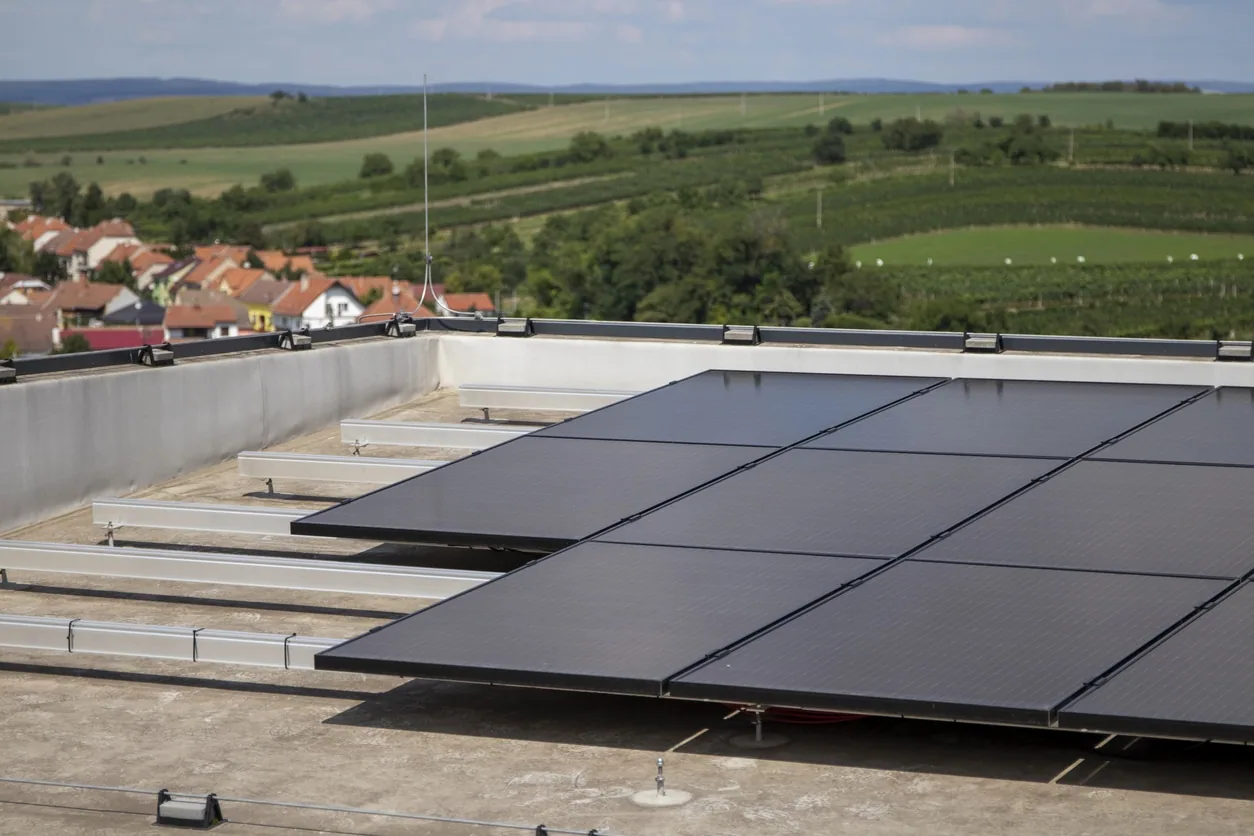
A large low-slope roof over a warehouse, school wing or fieldhouse is an obvious place for solar panels, and the first thing to settle is whether the roof underneath will outlast them. In Dearborn, MI, an array installed on a membrane with five years left will have to be lifted, stored and reset before the roof is replaced, and that move is a cost worth avoiding. A roof that is ready for solar is one with enough remaining service life, a dry assembly, working drainage and a plan for how the array will be attached and serviced.
We start with the roof assembly and its remaining service life, and only then discuss racking.
Remaining Service Life Before Any Racking
The membrane, insulation and deck under a solar array are covered, hard to inspect and expensive to expose. We therefore inspect them before installation: seam condition, flashing, drain function, moisture state of insulation and the general age and wear of the surface. A moisture survey across the whole roof, not just the area for panels, identifies wet insulation that would be locked beneath the array.
The written findings state remaining service life in plain terms. If the roof has many years left and tests dry, it can be a good host. If it has a few years left, the sensible path is to replace or recover the roof first, then install the array on a new membrane with a warranty that allows it. Our moisture survey and roof inspection work produce that record.
Snow Load, Drifting and Shedding
Snow arrives in Dearborn at about 30.8 inches a year, nearly all between November and April, and the Detroit-area climate record puts the average first measurable snow near mid-November and the last near early April. Panels add dead load, interrupt wind flow and create drifts on their leeward sides, and snow sliding off tilted panels can land in a heavy strip on the roof below. The structural review of the snow load belongs to the engineer of record.
What we contribute is a read of the roof as it exists: where drifts already form against parapets and equipment, where ice builds at drains and where the membrane shows wear from earlier snow. We note these on the roof plan so racking layout and walkway placement can account for them, and we recommend protecting membrane in the paths where shed snow will land.
Attachment Method and Penetrations
Arrays are held down by ballast, by mechanical attachment through the roof, or by a combination. Ballast adds weight and spreads load across the membrane, which needs a cover board or protection layer beneath it. Mechanical attachment adds penetrations, each of which needs a flashing detail that matches the roof system and a warranty path.
We review the options with the membrane manufacturer's requirements in mind and with the roofer's responsibility for flashing at each penetration. Pipe supports, conduit runs and combiner boxes also cross the roof, and each needs a pad, a stand or a curb. The scope lists every penetration with its location, so the roof record stays accurate after the array is in place. Our curb and support work uses the same checks.
Drainage, Walkways and Service Access
Panels shade parts of the roof, hold snow longer in those areas and can block access to drains. The layout has to leave clear paths to every drain bowl and scupper, and drain strainers must be reachable without moving panels. Walkway pads protect the membrane along service routes, and clearances at parapets keep edge metal inspectable.
For roofs with ponding, we recommend correcting slope or adding drains before the array goes in, since water standing under a panel row is hard to see and hard to fix. The roof plan after installation should show panel rows, walk routes, drains and the penetrations, so a roof inspector arriving years later can work from an accurate drawing.
Working Around an Existing Array
Many roofs already carry an array, and roof repairs then happen around it. A leak beneath a panel row may require removing a section, repairing the membrane and resetting the racking. We coordinate with the solar contractor so the electrical shutdown, panel removal and reset are sequenced, and the roofer's repair is documented before the array goes back.
On any roof where arrays were added in stages, we record each addition and the work needed to keep the membrane dry beneath it. A parking-structure roof, a fieldhouse or a research building has its own access and load limits, and the array layout has to respect them.
Closeout Record That Survives the Installation
A solar installation changes how a roof is read for the rest of its life, so the record has to change with it. Before the first rack goes down, we photograph the whole surface, mark the seams, drains and repaired areas on the roof plan and note the moisture readings that show the insulation was dry. After the array is in, the plan is updated with panel rows, walk routes, penetrations and the clear paths to every drain.
That pair of documents is what a future inspector, buyer or roofer will use. If a leak appears beneath a row in a later winter, the baseline shows what the surface looked like before it was covered, and the updated plan shows which penetration or seam to check first. Any repair put off stays on the list with a location and a review date, and the facility director receives the warranty paperwork for both the roof and the array in one folder, so the question of who answers for a leak under a panel has a written answer.
Roof First, Array Second, or Both Together
Three sequences are common. A roof that tests dry and has years left can host an array as it stands. A roof near the end of its life can be replaced first, with the array following on the new membrane. Or both can be scheduled as one project, with the roofer and solar contractor sharing a work area. Each has cost and warranty implications, and the findings sheet lays them side by side. A replacement done with solar in mind can include extra insulation, a cover board and a plan for penetrations.
Owners in Dearborn Heights, Melvindale and Taylor follow the same order of questions.
Commercial Roofing Questions
How much roof life should remain before a solar array is installed?
Enough to outlast the array, or a plan to lift and reset it at replacement. We state remaining service life in the findings. A roof with a few years left should usually be replaced or recovered first.
Can a moisture problem be hidden under panels?
Yes, which is why we survey the whole roof before installation. Wet insulation under an array is expensive to find and fix later, and the survey identifies it while access is easy.
Does snow load limit panel placement?
Project snow loads need code-specific checks by the engineer of record. We add what we see on the roof: existing drift zones, drain locations and wear, so the layout can account for them.
What happens to the warranty when penetrations are added?
It depends on the manufacturer's rules. We review them first and flash each penetration to match the roof system. The scope lists every penetration so the record is complete.
Who coordinates a roof repair beneath an array?
We sequence the shutdown, panel removal, membrane repair and reset with the solar contractor, and the repair is photographed before panels go back.
Schedule a solar-readiness inspection
We will document the roof's condition, moisture state and remaining service life, and give you written findings that support the decision to install, replace first or wait.