
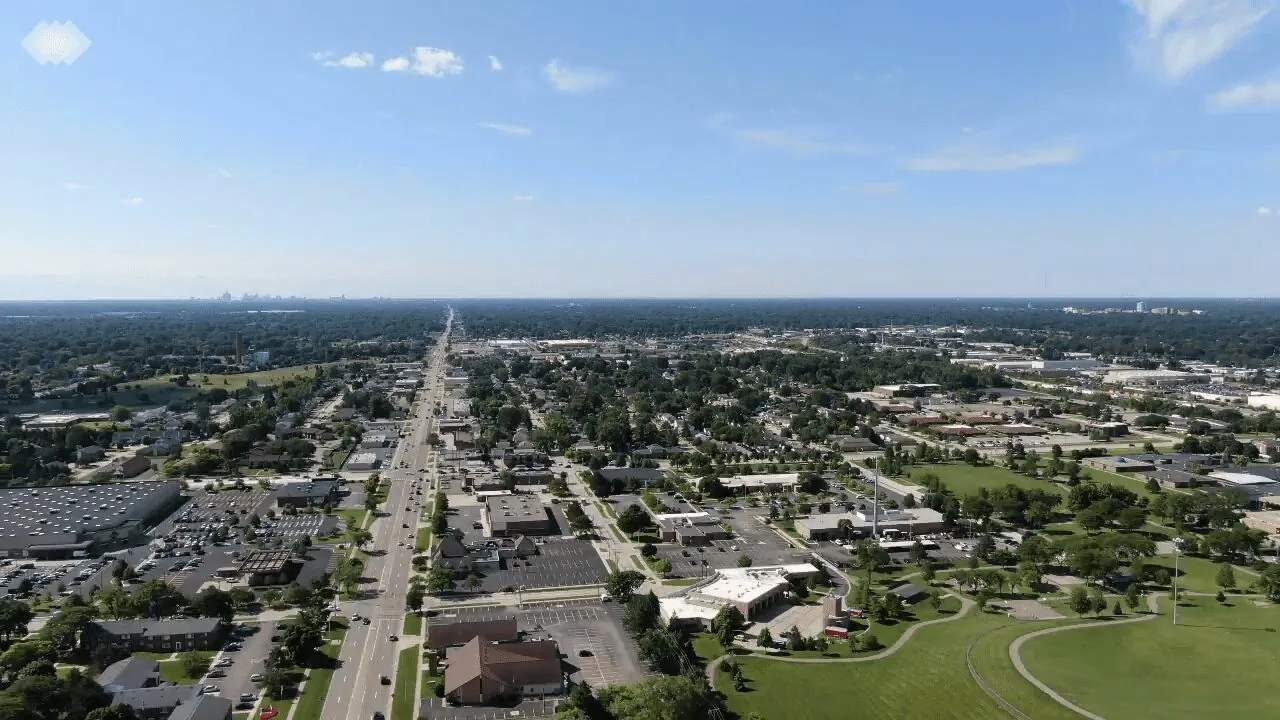
Commercial Roofing in Garden City, MI
Garden City's 2015 master-plan update describes many commercial properties as small, older buildings along its established corridors and calls for upgrading sites as redevelopment occurs. A small building with an older roof raises one question before any other: how many layers are on the deck. Layers decide whether a recover is possible, what a tear-off costs and how much weight the structure carries, and a small roof can hide three or four of them.
The walk covers drains, field, seams, curbs and edges in that order, and cores through the roof give the layer count and the insulation's moisture. The written findings give the layer count, the remaining service life and a priced path for each option, so a small-building owner sees the numbers a larger owner would get.
Small Older Buildings on the Corridors
The city's master plan identifies Ford Road and Middle Belt Road as its principal commercial corridors, with neighborhood commercial uses scattered along Cherry Hill, Warren, Inkster, Merriman and Venoy roads. A building on any of them may be a single tenant or a small group, and the roof is often the owner's largest deferred cost. The plan describes small, older buildings, and the roof itself is read directly: membrane, layers, seams, flashing and drainage.
Small roofs have their own failure pattern. They have fewer drains, so one blocked outlet matters more. They have parapets on two or three sides that hold water against the wall. Rooftop units are usually few but heavy for the structure. We check each curb, the walkway to the unit and the sealant around every pipe or vent. Where a unit sits close to a parapet, we also look at whether snow drifting against the wall buries the curb in winter, because buried flashing is hard to inspect and quick to fail. A modest repair now can avoid a ceiling and insulation replacement later, and the report puts both prices side by side. A commercial roof repair scope lists each item and its cost.
Counting Layers Before a Recover
A recover installs new roofing over the old and saves tear-off and disposal. It works only when the existing roof is dry, flat enough and light enough for the structure. On an older small building, the roof may already carry more than one layer, and building codes commonly limit the number of layers that can be left in place. We confirm the rule with the local enforcing authority before recommending anything.
The test is straightforward. We cut small cores at several locations, record the layers and check each for moisture. The rest of the roof is scanned with a moisture survey. Where the layers are dry and the count allows, a recover joins repair and replacement in the comparison. If the insulation is wet, a new layer would trap the water and shorten its own life, so the report recommends replacing the wet section or the whole roof. Either way, the owner sees why, with the core photographs and the moisture map attached to the written findings, and the cost of each path laid beside them.
Industrial Land North of Ford Road
Garden City's main industrial land-use area, per the city plan, lies north of Ford Road between Venoy and Moeller roads. An industrial roof differs from a corridor storefront in scale and in what happens beneath it. Production, storage and loading all sit under the membrane, and a leak is a business interruption. Rooftop exhaust, makeup air and conduit supports add penetrations, and they accumulate over time.
We map the roof on a plan and number each drain, curb and unit, and every small roof gets the same ordered walk, so findings from two different corridors read the same way. The inspection looks for ponding, open seams, split flashing and fasteners that have backed out. Where the work area sits over a line or storage, the plan names the protection and the quiet hours. A manufacturing plant roof and a warehouse roof need different access plans, and the schedule shows which one applies. We keep docks open and set the lift clear of truck lanes.
Snow, Thaw and Roof Edges
Snow arrives near November 16 and leaves near April 7 in NWS Detroit's record, with 14 inches in the average January and 12.5 inches in February. On a small building, snow drifts against the parapet and slides toward the one or two drains. When the thaw comes, the drain has to carry everything at once. If it is partly blocked, the water backs up and finds an opening at the parapet or the seam.
Roof edges take the brunt of winter. Coping joints open, edge metal loosens and the first row of fasteners can back out. We check the edge metal and coping before the first snow and again after the last thaw. Gutters and downspouts, where present, are cleared and tested with water. A short list of low-cost fixes in autumn often prevents the leaks that appear in January, and the autumn visit doubles as a photographic baseline for the spring comparison. If the building has gutters, we flush them to confirm that the downspouts carry water away from the foundation and not toward it.
Upgrading Sites as They Change
The master plan calls for upgrading sites as redevelopment occurs. When an owner renovates a front, adds a canopy or changes tenants, the roof should be part of the plan. Permitted work falls under the 2021 Michigan Building Code (April 9, 2025) and the 2021 Michigan Commercial Energy Code (April 22, 2025), and a roof replacement can trigger insulation requirements, so the local rule is confirmed before pricing.
A capital plan helps an owner with more than one building, listing each roof's condition and the year work is likely. Owners near Westland and Livonia use the same format, so reports can be compared across properties.
Commercial Roofing Questions
How do I know whether my small building can take a recover?
It depends on three things: the number of existing layers, whether the insulation is dry and whether the structure can carry another layer. We core the roof to count layers, scan it for moisture and confirm the code limit with the local authority. If all three pass, a recover is priced.
What is the best time of year to repair a small roof?
Late spring through early fall, when surfaces are dry and temperatures allow adhesives to cure. Leaks found in winter get temporary protection first, and the permanent repair is scheduled for the next workable window.
A parapet wall is leaking. Where does the water come from?
Usually from the coping, the wall flashing or the sealant at the top of the membrane. Water enters behind the flashing and runs down the wall. We probe each termination, test the coping joints and rebuild the failed detail rather than caulk over it.
Is a small roof worth coating?
If the membrane is sound and the insulation dry, a coating can add service life at a modest cost. We repair seams and penetrations first. A coating over wet insulation or a failed seam does not hold, so the moisture survey comes before the coating price.
How should an owner of several small buildings plan roof spending?
With a capital plan that ranks the roofs by condition and gives each an expected year of work. Spending then follows urgency, and the owner avoids paying for emergency work on a roof that could have been repaired on schedule.
Request a roof inspection
Tell us the building, where you have seen water and how long the roof has been in place. We will core and scan the roof, record the layers and moisture in writing, and give you repair, recover and replacement paths to price.
