
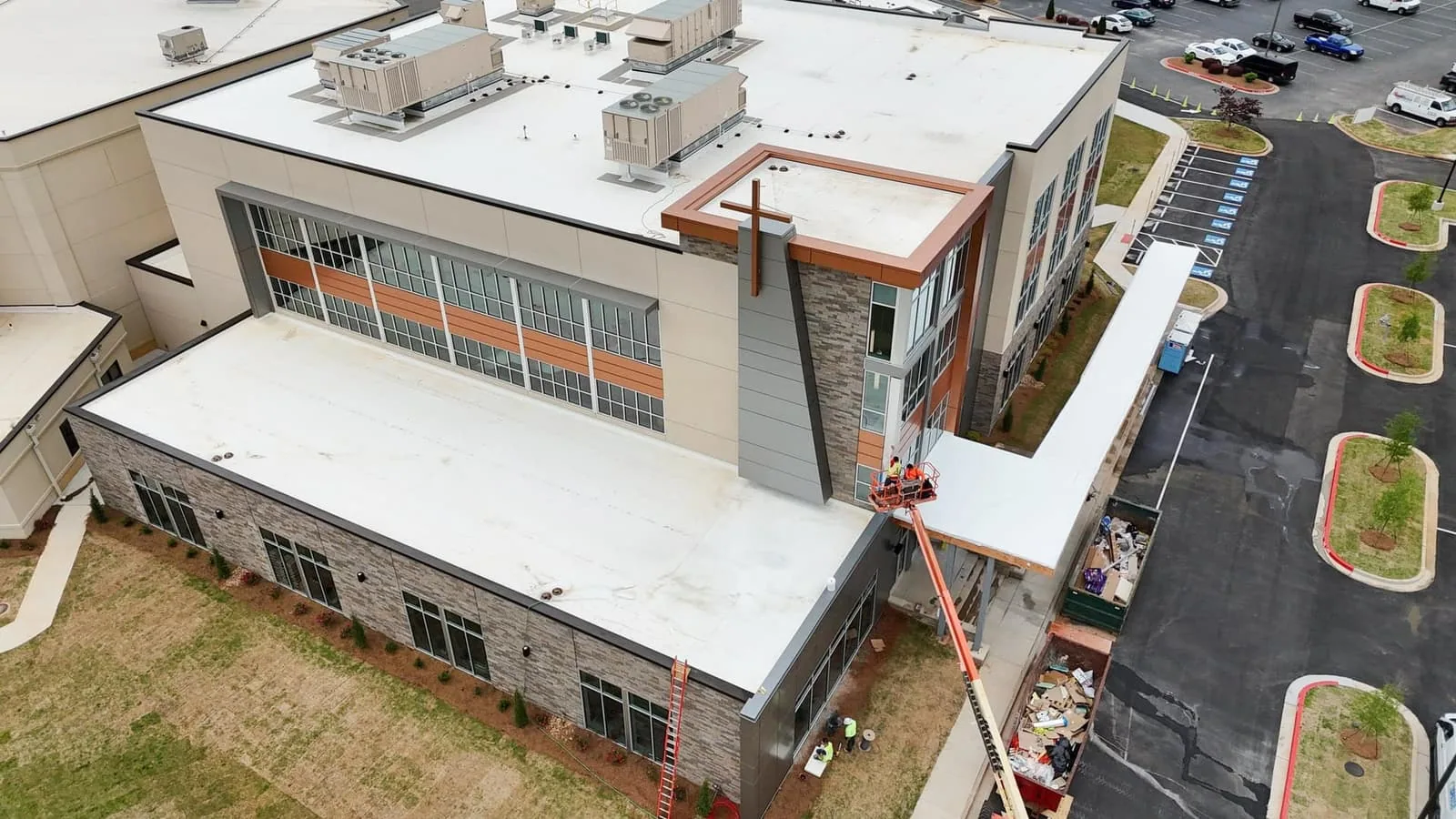
GAF Commercial Roofing Systems in Dearborn, MI
A multi-tenant commercial building can carry one roof covering over its original space and another over a later addition. Before any repair is priced, we need to know which covering sits over the leak. GAF makes commercial roofing in several categories, among them thermoplastic single-ply sheets, modified bitumen and liquid-applied coatings, so a building that has a GAF-made covering may still need a different method in each section. In Dearborn, MI, each of those categories gets its own preparation and its own repair sequence.
The decision that controls the repair is the identity of the assembly. A weld, a torch-applied lap and a coating need different preparation, and the wrong choice can look finished on the day and fail by the first thaw. So the first entry in our written findings is the system type for each roof section, with the evidence that supports it.
Three Categories on One Property
A thermoplastic sheet such as TPO is joined at its seams with hot air, which fuses the overlap into one piece. A modified bitumen roof is made of asphalt-based sheets, set in layers and joined at the laps. A liquid-applied coating forms a continuous film over a prepared surface. Each category has its own typical failure: a weld opened by dirt, a lap lifted by movement, a coating worn thin by traffic.
We check the failure that belongs to the category, then record the section, the condition and the date. If the evidence points to two categories on one roof, each section is rated and repaired by its own method, and the plan shows where one ends and the next begins.
Surface condition is read last, not first. A chalked or dirty surface can look worse than it is, and a clean surface can hide a soft spot. We press on the sheet at several points, check for soft areas that suggest wet insulation, and photograph each reading. The rating for a section reflects the whole assembly, not its color.
Identifying the Assembly
The roof plan and warranty papers come first, when they exist. We compare them to the roof surface, seam pattern and fastening, then confirm with a small core cut where the evidence is thin. The cut shows layers, insulation type and thickness, and whether the sheets have been wet. A photograph of the cut, marked on the plan, goes into the file.
This matters because materials of different families do not always bond to each other. Asphalt-based products can damage some thermoplastic sheets on contact, so a repair that mixes them needs a separation layer. The findings state what the assembly is, how that was confirmed, and what remains uncertain. A repair is specified against that statement.
Roofs that have been recovered once may hold two assemblies stacked. A core shows both assemblies, and the findings add up their thickness, because extra layers change the weight on the structure and the height at curbs and walls.
Snow, Thaw and Drainage in Dearborn
Winter is when a roof here is tested hardest. Dearborn takes 30.8 inches of snow between November and April inside a yearly 35.05 inches of precipitation, snow settles against parapets, a thaw sends water to the drains, and a partly blocked drain turns the field into a pond.
On a thermoplastic roof, the check is seams at low points and flashing at walls. On modified bitumen, it is laps and the cap sheet surface near drains. On a coated roof, it is film thickness where water stands. The autumn walk looks at those places before snow, and the spring walk looks at what the thaw changed.
Repair Preparation and Testing
Each repair has a preparation step that decides whether it bonds. A thermoplastic patch needs a clean surface and a probe check on its edge after welding. A modified bitumen repair needs a dry substrate, a clear lap and the compatible adhesive or heat method. A coating repair needs a test patch to show that the product adheres to the aged surface, and the patch is photographed and its location marked so the result can be checked again in spring.
Details get the most attention, because water finds a failed skylight or penetration flashing before it finds a sound field. The work order names the flashing type, the termination height and the sealant, and a photograph is taken before the detail is covered. If a test fails, the findings say so and the repair is changed.
Roofs Over Business Districts
East Downtown, West Downtown, Warren Avenue and Dix-Vernor are the districts Dearborn recognizes, each with its own mix of shops, restaurants and offices. A roof over a row of shops can serve several tenants, and a leak in one unit may start above another. The plan numbers each roof section and ties it to the units beneath, so the repair boundary follows the roof, not the lease lines.
For owners in West Downtown Dearborn, where the city describes historic architecture beside retail and restaurants, the access window and the work area are agreed before material is staged. The same sequence applies to neighbors such as Dearborn Heights and Allen Park.
Parapets and wall terminations in a downtown row are checked at every roof level. Where a flat roof meets a taller wall, the flashing carries the whole water load from the wall face, and it is the detail that controls the repair. The wall itself is checked from the street side for cracked mortar before the flashing is judged.
Warranty Records and Related Systems
A GAF warranty, where one exists, lives in the paperwork issued for that roof, and what it asks of the owner is worth reading before a repair, a coating or a new penetration touches the roof. The closeout file holds the maintenance visits the terms call for and the installation evidence, and the owner hears before work starts when a change could matter to coverage, so the approach can be confirmed with the manufacturer.
The same file serves a replacement comparison, setting the existing assembly beside Carlisle SynTec or Johns Manville alternatives, with moisture results and photographs showing what the roof needs.
Commercial Roofing Questions
How do I find out which system is on a roof with no paperwork?
Ask for an inspection that includes a core cut. The surface, seam pattern and fastening usually narrow the field, and the cut confirms the layers. Keep the photograph of the cut with the roof plan for the next repair.
Can one roof carry more than one system?
Yes, a roof that was extended over time can. Treat each section by its own system and keep the repair boundaries on the plan. A single price for the whole roof hides differences that change method and cost.
What should I do before approving a coating over an aged membrane?
Require a moisture survey and an adhesion test patch first. Approve the coating only if the insulation is dry and the patch holds. Ask for film thickness readings in the closeout file.
Does a repair affect the manufacturer's warranty?
Terms differ by roof, so read the document issued for yours. Confirm the planned method with the manufacturer where the terms are unclear, and record the answer in the file before work starts.
When is the best time to check a roof before winter?
Early autumn, with enough daylight to reach seams, drains and flashings. Plan a second walk after the thaw, and compare photographs from the same positions.
Schedule an inspection and send what you have on file
Send the roof plan, any warranty papers and photographs of seams or flashing. We will identify the system on each section, document the condition in written findings, and state which repair, coating or replacement the record supports.