
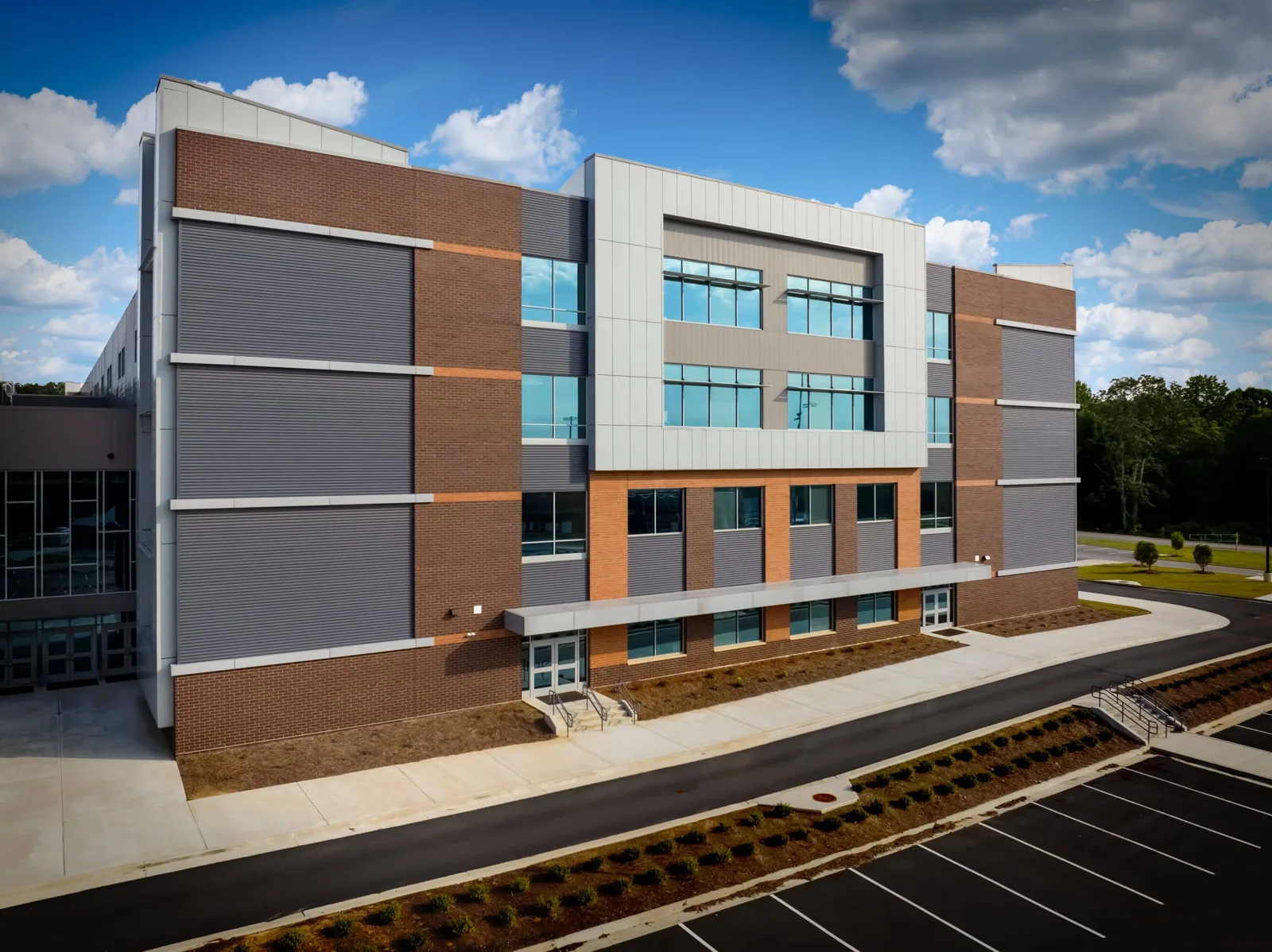
Commercial Roofing for School Districts in Dearborn, MI
A school district roof plan runs on the academic calendar. Most large work has to finish between the last day of classes and the first day back, while leaks arrive in January, when the roof is wet, frozen and hardest to repair. We design the plan so the winter response is a temporary stop that protects classrooms, and the permanent repair waits for the summer window with materials ordered in advance.
Dearborn, MI lists education and health care among its major industries, and the city's campus maps show institutional building types that include the University of Michigan-Dearborn engineering and fieldhouse buildings and Henry Ford College's Athletic Memorial Building. A district's gymnasiums, cafeterias, shop wings and classrooms involve the same mix of tall, wide and low roofs, which is why one rating system should cover all of them.
Gyms, Cafeterias and Classroom Wings
A school building is several roofs in one. A gymnasium has a tall, wide span with a few penetrations. A cafeteria or kitchen has exhaust fans and grease-laden vents. Classroom wings are lower, with rooftop units and a series of drains. Each roof has a different failure pattern and different consequences when it leaks.
We record each roof level separately, with its own age, membrane and drainage. A leak over a gym floor can ruin a finished surface, while a leak over a corridor stains a ceiling tile. The written roof condition report lets the facilities office assign a repair level to each area, instead of treating the building as a single roof with a single age. A school that grew through additions can have three or four roof ages under one name, and the report keeps them apart. Rooftop units on classroom wings also deserve attention, since curbs and condensate lines are common sources of repeat leaks over rooms that cannot be taken out of service.
Student Safety and the Work Zone
Roofing near children demands fences, signage and controlled delivery routes. Crane picks and material drops are scheduled when students are not outside, and the work zone is separated from play areas and pickup lanes. Noise and fumes are managed so that summer programs can continue in the rest of the building.
Background-check and badge requirements vary by district, and the crew list is submitted in advance. We also plan for tear-off debris, which must be bagged and removed without crossing a student path. For a roof that stays in use, the method is the same as occupied building reroofing, with extra attention to who may be on the grounds and when.
Winter Leaks and Summer Repairs
In the NWS Detroit record, measurable snow usually begins in mid-November and ends in early April, and the Dearborn station sees 30.8 inches of it in a year. That is nearly five months in which a roof can freeze and thaw above classrooms. Ice at a drain or scupper backs water under flashing, and the first sign may be a wet ceiling on a Monday morning.
A repair attempted on a frozen roof is temporary at best. Adhesives and sealants do not cure properly in cold, and wet membrane will not bond. We install a protective patch to stop water, mark the spot and return in warm weather to make the permanent repair. Documenting the winter patch location lets the summer crew find and correct the source. We also note which ceiling tiles were wet, since the stain location and the roof opening are rarely directly above one another.
Repair, Recover or Replace for Aging Buildings
District buildings often span many eras, and a roof may have been patched by several crews over time. Our first task is to separate roofs that can be repaired from roofs that have reached the end of their service. Seams, flashings and drains can usually be corrected on a sound membrane. A roof with wet insulation across a broad area needs section replacement or full tear-off.
Where insulation is dry and the deck is sound, a roof recover adds a new membrane over the existing assembly at lower cost and with less debris on the grounds. A fully adhered EPDM roof is one familiar option for school buildings, though the right choice depends on the existing assembly, rooftop equipment and budget. Decisions about adding insulation matter here as well, since the 2021 Michigan Commercial Energy Code is now in effect and can change insulation requirements on a replacement, depending on scope.
Capital Plans That Match Bond and Budget Cycles
Boards want a plan that shows what must be done now, what can wait and what each choice costs. We rank roofs by remaining service life, leak consequence and moisture extent, then group them into phases that fit a funding cycle. The plan lists cost drivers, not just totals, so the board can see how insulation, drainage and edge metal affect the price.
A well-built roof capital plan also helps when funding is uncertain. If a bond is delayed, the plan shows which repairs keep the highest-consequence roofs dry until money arrives. A district with buildings in Dearborn and in nearby cities such as Dearborn Heights can compare roof conditions across all of them using the same scale. When a building project already has a general contractor on site for an addition or renovation, we coordinate the roof tie-in so the new work and the old roof meet at a detail that both trades have approved.
Maintenance Visits Tied to the School Year
We schedule visits for late fall, after leaves have fallen, and for spring, after the thaw. Drains, scuppers and gutters are cleared, flashing is checked and rooftop units are inspected for damage. A summer visit before students return confirms that the repairs are intact. A district that shares facility staff with other public agencies can use the same records for both. Each visit ends with a short summary that the facilities director can attach to a board packet, showing what was cleared, what was sealed and which roof is next in line for funding.
Commercial Roofing Questions
How do you protect students during roof replacement?
The work zone is fenced and signed, deliveries are scheduled outside student movement, and crane picks avoid occupied areas. Summer programs continue in the rest of the building. A district contact approves the crew list and the daily plan, and we keep the school office informed of any change.
Can a gym roof be repaired during the school year?
Small repairs can be done on dry, mild days with a quiet crew. Larger work is better in summer. If a leak threatens the gym floor, we place a temporary patch and drain protection first, then schedule the permanent repair for a break in the calendar.
What does a roof condition report give a school board?
A ranked list of roofs with photographs, moisture findings and remaining service life. It also gives cost drivers for repair, recover and replacement. Board members can see why one building comes before another and what delay would cost.
How do you handle asbestos or older materials found during tear-off?
The district's environmental consultant tests suspect materials before work begins, and the plan reflects the results. We stop work and notify the district if an unexpected material appears. Abatement, if needed, is handled by licensed specialists before roofing resumes.
Is summer the only time to replace a school roof?
It is the best time, because buildings are empty and weather is reliable. Some districts also use spring break or fall weekends for smaller sections. Cold weather limits adhesives and sealants, so winter is generally used for temporary protection and moisture mapping.
Plan Your Next Summer Roof Season Early
Call Commercial Roofing Dearborn to schedule inspections for your school buildings, or to request emergency response when a roof is leaking into a classroom or gym. We will document each roof, rank the findings and give you written records for repair and capital planning.
