
Membrane Puncture Repair in Dearborn, MI
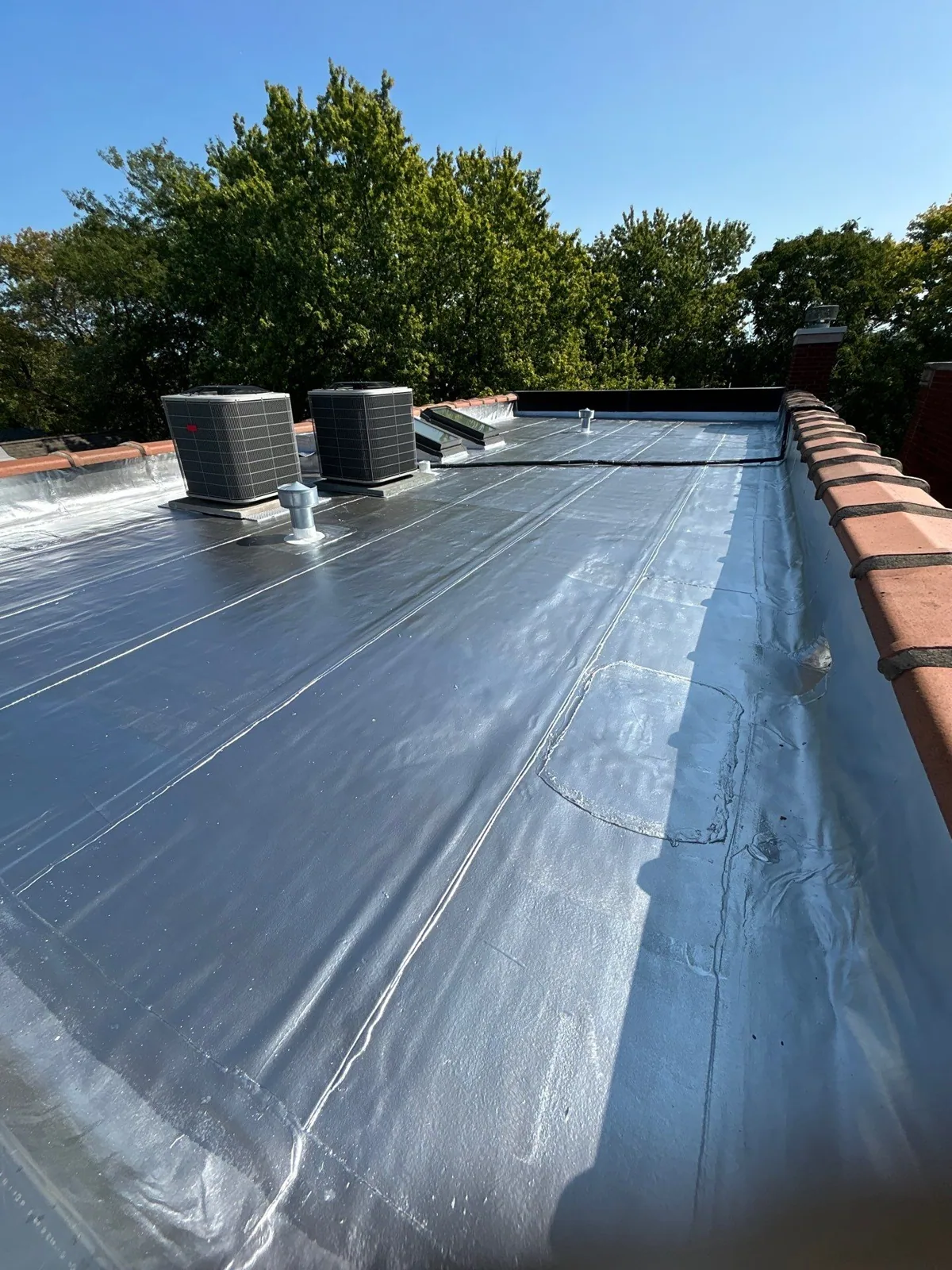
A university fieldhouse, a lab building, and a library each have a different relationship to their roofs, but on all three the damage that costs the least to prevent is the damage done by people who walk on them. A membrane field that carries rooftop units gets service traffic along fixed routes, and the routes wear first. Puncture repair in Dearborn, MI begins by tracing those routes, because a patch laid over a hole in a worn path will be reopened by the next visit.
The next check is the insulation under the hole. Water that enters a puncture does not stay at the puncture, and a patch over wet board holds the moisture against the deck.
Sources of Damage
Most punctures come from a short list of causes. Dropped tools and fasteners are the usual ones. Wind-carried debris can cut a sheet when it drags across the surface. Ladder feet and cart wheels press into a membrane at the same spot, visit after visit. Contractors adding conduit, cable, or antennas sometimes cut the sheet and leave the opening unclosed. Hail and heavy impact bruise or split the surface, and equipment legs can wear through when they shift on their supports, which is why a unit's feet are checked on every walk.
We record each defect by location, size, and probable cause, with a photograph at arm's length for scale and a wider frame that shows where it sits against the nearest curb, drain, or wall. An isolated cut beside a hatch suggests traffic. A cluster of small holes in one area suggests a repeated activity, such as a cable run. A hole with a bruised ring around it suggests impact. The cause decides the repair and the protection that follows, and it tells the owner whether to spend on a patch, a pad, a rule for contractors, or all three.
Walk Routes and Service Traffic
A rooftop unit needs service several times a year, and the technician's route from the hatch to the unit is nearly always the same. We map that route and look for wear: dirt tracks, scuffed surface, thinned sheet, and cracked coating. Where the route is established, a walkway pad set along it takes the traffic that would otherwise fall on the membrane field. The pad is bonded or loose-laid according to the system, and wide enough to keep boots off the seams.
Where traffic crosses a lap or a flashing, the pad covers it. A curb transition that invites a trip may be raised or marked. The aim is a roof people can service without damaging it. On a campus like Henry Ford College's main campus, with its Athletic Memorial Building, facility staff know which way technicians actually approach each unit, and the pad is placed to match that habit, not the drawing.
Wet Insulation Under the Hole
A puncture lets water into the roof assembly, and wet insulation holds it long after the hole is closed. A moisture scan around the puncture comes first, with a core if the scan suggests water. A dry core means a simple patch will do. A wet core means the wet board is removed and replaced before the patch goes over it, or the patch traps moisture and fails.
Crushed insulation matters as well. A heavy impact can leave a soft spot that dips under foot traffic, and a cover board over the insulation resists that kind of damage. Where punctures recur in one area, adding cover board under the new sheet is part of the repair. The written findings state the board type, thickness, and location of each replaced piece.
Patch Methods by Membrane
The patch matches the sheet. On heat-welded single plies, a patch with rounded corners is welded over the cleaned hole and extends beyond the damage on all sides. On a rubber sheet, a patch is bonded with the maker's adhesive or tape after the surface is cleaned and primed. On modified bitumen, a patch of the same material is set in adhesive or applied with controlled heat, with the granule surface removed where it bonds. On built-up roofs, damaged plies are cut out and replaced in sequence, with the surfacing renewed.
After the patch is on, the edges are probed and the bond is tested. A photograph with a scale marks the finished repair, and the location goes on the plan. A seam failure beside the puncture is repaired in the same visit, and an area nearby marked by hail damage is recorded separately so the causes stay apart.
Open Penetrations From Other Trades
Other trades cause a share of roof punctures simply by working up there. A cable installer drills through the sheet, a mechanical contractor sets a unit and leaves a corner unsealed, a sign company bolts a bracket to the surface. Each opening is small and each leaks. After any such work, we recommend a walk with the contractor and a photograph of every opening before the crew leaves the roof.
Along Warren Avenue and business corridors such as Dix-Vernor, where the city supports streetscape and business recruitment, tenant changes can bring new equipment and new penetrations. The record lists them by date so a leak can be traced to the work that caused it. Open penetrations are closed the same day they are found; a temporary closure holds overnight with a follow-up date for the permanent flashing.
Preventing the Next One
A maintenance visit finds small cuts before water does, and the visits are timed for the Dearborn calendar: once before the first snow, which NWS Detroit places around mid-November, and once after the last thaw in early April, when new damage from ice and shovels shows. We check walk routes, inspect pads, probe patches, and clear debris that can scratch the surface. Each visit is photographed from the same positions as before, so wear shows as a change between sets. Any new penetration since the last visit is flashed and logged. Contractors who work on the roof are asked to register their visits, so the owner knows who opened what and when, and a pad that has worn through is replaced before the sheet beneath it shows the wear.
Commercial Roofing Questions
How do you find a small puncture on a large roof?
By walking the service routes, probing the surface, and scanning for moisture. Most punctures sit near hatches, units, and penetrations, so the search starts there.
Is a patch enough after a puncture?
If the insulation beneath is dry, yes. If it is wet, the board must be replaced first, or the patch will trap moisture against the deck.
What is a walkway pad?
A protective strip of sheet or pad material laid along a service route. It takes the foot traffic so the membrane field does not.
Can hail cause the same marks as foot traffic?
They leave different patterns. Impact leaves bruised or split spots scattered across the surface, while traffic leaves worn paths.
How do you keep other trades from damaging the roof?
With a roof access log and walk pads on service routes. The owner then knows who was on the roof and the pads take the wear.
Does a puncture affect a manufacturer warranty?
It can, depending on the terms. The warranty should be read, and the dated record of the damage and repair supports the owner's position.
Send the damage locations and the service routes
Send photographs of the damaged area, the equipment locations, contractor access records, and the access window. We will return written findings with a numbered inspection record, the repair method for each puncture, and a walkway plan that fits the service routes.