
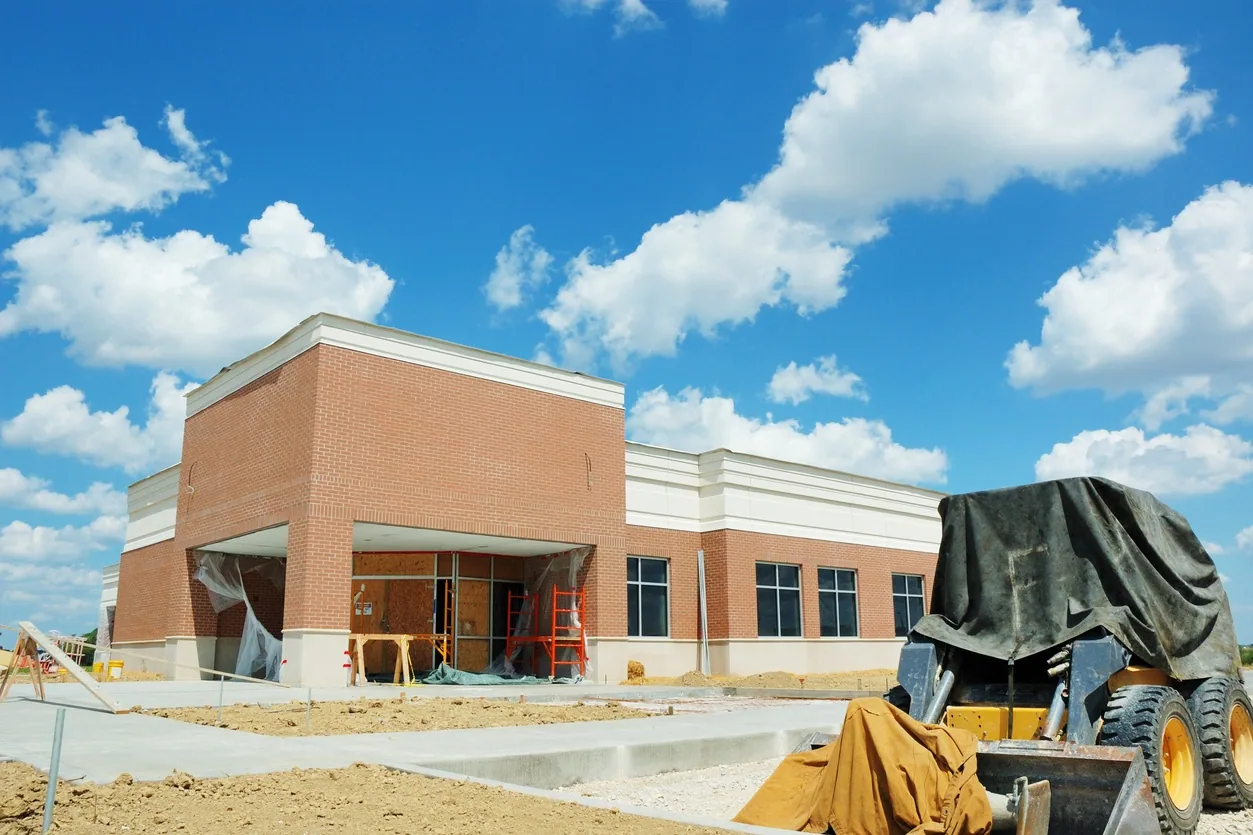
Auto Dealership Roofing in Dearborn, MI
On a dealership, the roof protects two things that are easy to forget: the glass showroom where deals are made and the lot where unsold inventory sits outdoors. Water over the showroom spoils a floor and a first impression. Hail over the lot is a different problem, because the same storm that dents a roof dents the cars beside it. After a storm in Dearborn, MI a dealer checks both, and the National Weather Service documented large hail across Southeast Michigan in September 2026.
The roof plan starts with the buildings. A showroom with tall glass, a service wing with large doors, a parts department with a flat roof and a covered delivery lane or wash canopy each have their own details, and the inspection takes them one at a time.
Showroom Glass and Parapets
A glass showroom wall leaves little room for flashing. The roof meets the curtain wall at a narrow upstand, and the counterflashing there depends on a sealant joint that dries and splits in sun. Water that gets behind it runs down inside the mullions and shows up on the sill, often far from the roof edge. We open the joint, check the membrane termination under it and photograph both before closing it with a new termination bar and a compatible sealant.
Parapet caps and edge metal and coping face the street, so they are inspected for loose fasteners, open joints and bent sections. A coping that lifts at a corner points to the edge attachment, and the photographs show the corner before and after repair.
Interior protection in a showroom is specific. Display vehicles, sales desks, carpet and glass shelving are covered or moved, and a catch goes under any active drip. We ask the sales manager which cars and areas matter most, and the dry-in goes over those first. If the ceiling is opened to follow water, the opening is photographed, sealed after the roof repair and restored on a separate line item.
Service Bays and Exhaust
The service wing generates its own roof wear. Exhaust fans, make-up air units and tailpipe extraction equipment sit on curbs, and exhaust carries heat, oil mist and solvent vapor. The membrane downwind of each discharge may blister, soften or discolor. Where the change begins and ends is recorded next to the membrane type. A PVC membrane is often priced for the service section because it resists oil and many solvents better than TPO or EPDM.
Overhead door lines are the other point to check. The wall that carries large doors flexes, and the roof edge above it moves with the wall, so the flashing and edge metal there are inspected for gaps and split sealant. A downspout beside the door track should discharge away from it, since ice at a door is a service-delay problem.
Rooftop units over a service wing can end up heavier than the roof was designed to carry once equipment has been swapped a few times. A unit replaced with a larger model weighs more and may stand higher on its curb. We note the model plates where visible, check the curb condition under each unit and flag any that look overloaded. A structural question goes to an engineer, and the roof plan holds its place until the answer arrives.
Hail and the Roof Beside the Lot
The same hailstorm that reaches the lot reaches the roof. Large hail can bruise single-ply membrane, dent metal panels and crack skylights, and the damage may not leak at once. After a storm we walk the roof, count impact marks in a test area, probe the bruised spots and photograph them with a scale reference. The hail damage record separates bruising that needs repair from cosmetic marks.
The dealer's insurer will look at both the vehicles and the building, and the roof record helps with the second. It gives dated photographs, a count and a repair scope, so the claim for the building does not wait on the claim for the lot.
Sales Days and Work Windows
A dealership runs on open hours and event weekends, so roof work is planned around them. Loud steps go into the hours the general manager names, lifts and trucks stay away from the customer entrance and the front lot, and the work starts at the back of the building where the service and parts wings sit. The showroom, the part the public notices, is scheduled last or in a quiet window.
Inventory is part of the plan. Cars parked under the work path are moved, and the staging area is marked so that carriers can still deliver. If a delivery is scheduled, the lift moves or stops until the carrier has left. The plan lists these decisions with the name of the person who approved each.
Weather windows matter for the finish. Cold, damp mornings stall adhesives and welds, and the Dearborn station records 4,027 heating degree days, with snow possible into April. Permanent work waits for dry days, and temporary measures are labeled and dated. The dealer sees the temporary period as a stated interval with a return date.
Dealerships Along the Corridors
The city's audited report notes commercial redevelopment on Ford Road between M-39 and Mercury Drive, Livonia calls Plymouth Road a major commercial and industrial corridor, and Southgate's downtown authority counts automobile sales among the businesses on its board. A dealership on Southgate's streets, on Ford Road in Dearborn or on Livonia's Plymouth Road corridor gets the same inspection, and the question of how long the roof must last is answered from that dealer's own plans.
The same inspection method applies at each site. Neighbors such as a shopping center roof or a big box retail roof share drainage and equipment patterns.
Repair, Recover or Replace
The moisture survey and cores decide the path. A dry deck with a sound field points to repair or recover, while wet insulation points to replacing that section. Added insulation may be required under the energy code effective April 22, 2025, and the local authority is asked before pricing. The written findings list each path with price and remaining service life.
For a dealer group with several rooftops, the same format works at each. A single condition record can rank sites by remaining service life, and replacement dollars go first to the sections that leak over showrooms. Brand facility reviews, where a manufacturer asks for building condition information, can draw on the same record, which lists sections, ages, defects and photographs.
Commercial Roofing Questions
Why do showroom walls leak after a reroof?
The termination at a glass wall is narrow, and its sealant fails before the membrane does. We reopen and reflash the joint as part of the scope, with photographs of the substrate and the finished detail.
Which membrane suits a service wing?
PVC tolerates oil mist and many solvents better than most single-ply options. The observed condition near each exhaust discharge guides the choice, and the findings record why we recommend it.
How is hail damage to the roof documented?
We count impact marks in a test area, probe suspected bruises and photograph each with a scale reference. The record separates repairs from cosmetic marks and supports the building claim apart from the vehicle claim.
Can roofing continue during event weekends?
Yes, with planning. Sections open on a Friday are dried in and photographed before the crew leaves, and loud work moves to quiet hours the manager names. Lifts stay off the customer entrance.
What protects inventory during a reroof?
Vehicles under the work path are moved before the crew arrives, and the staging area is marked so carrier deliveries still reach the lot. Interior protection covers showroom floors and furniture.
Schedule a dealership roof inspection
Send the building layout, the event calendar and the location of the service and parts wings. We will inspect each roof section, record the findings in writing with photographs and give the general manager repair and replacement paths.
