
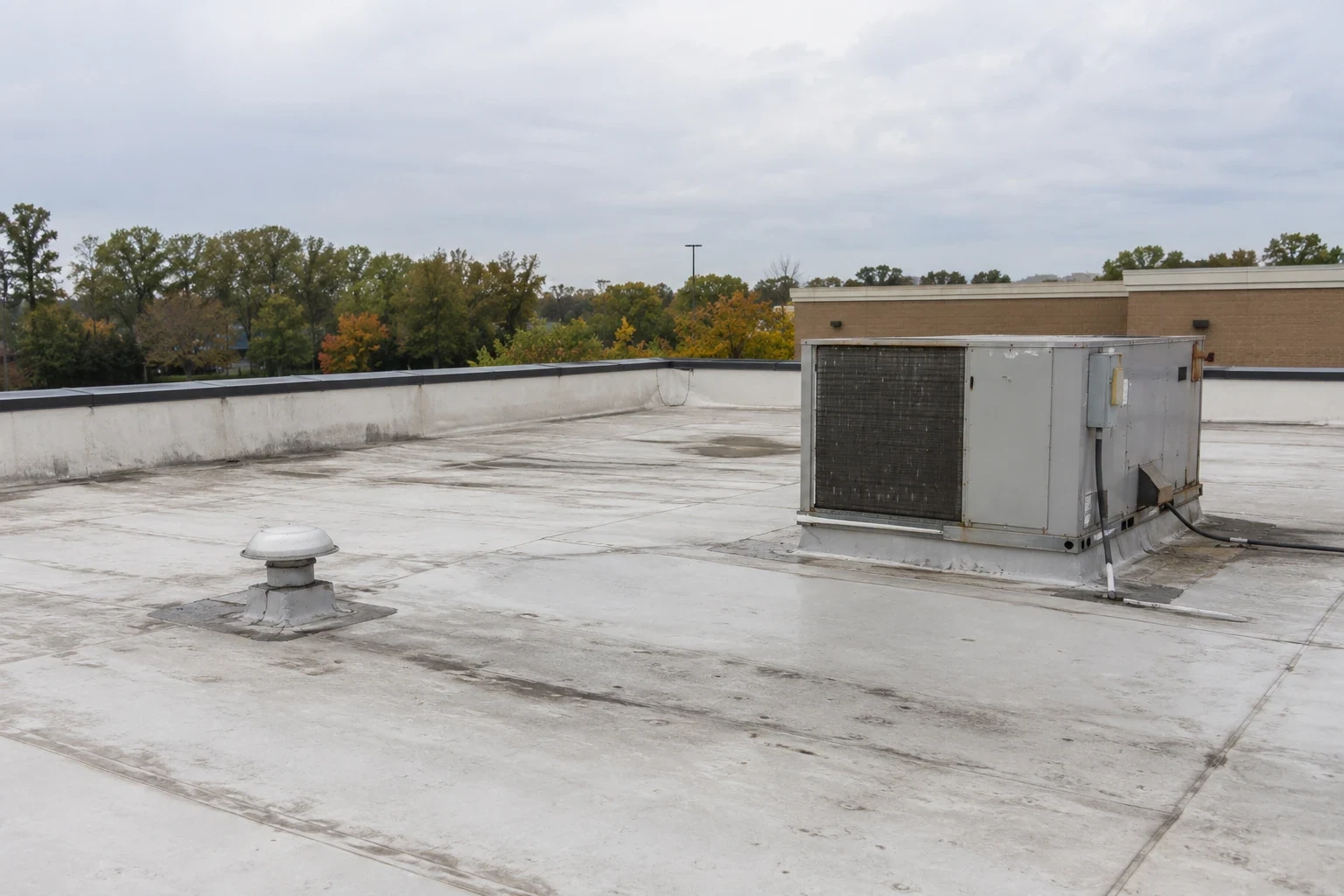
Commercial Roofing for Retail and Restaurant Chains in Dearborn, MI
A restaurant roof and a retail roof can look alike from the parking lot and behave very differently from the top. The restaurant has kitchen exhaust, grease, heat and constant rooftop traffic; the retail unit has a larger sales floor, cooling equipment and a long parapet. We inspect each format with its own checklist and then keep the findings on one scale, so a regional manager can compare stores that were built years apart.
Dearborn, MI offers both formats in close quarters. The city lists boutiques, groceries and national retailers in West Downtown along Michigan Avenue, and cafes, grocery stores, bakeries and pharmacies along Warren Avenue. A chain with locations in several of these districts faces different roof ages and landlord arrangements under the same winter, which a multi-site roof program brings into one schedule.
Kitchen Exhaust, Grease and the Restaurant Roof
A restaurant roof takes abuse that a store roof does not. Exhaust fans discharge grease that settles on the membrane, and heat from the stack can soften some sheets nearby. Staff walk the roof to clean hoods and service refrigeration, wearing down the surface along the path. Grease can also clog drains and degrade sealants.
We check the area around every exhaust, look for grease pooling in low spots and verify that walkway pads protect the traffic path. A grease containment system and a membrane designed for grease exposure often make sense on a restaurant roof. Curb and fan flashing deserves close attention too, and a review of rooftop equipment curbs and supports pairs well with the membrane check. A retail unit has its own concerns, mainly rooftop cooling equipment that sits close to parapets and a long run of coping that moves with temperature. We check the coping joints and the curb sealant at each visit, since both open slowly and leak only in heavy rain.
Trading Hours, Deliveries and the Customer Entrance
Roof work at a store or restaurant has to protect the customer first. Entrances, drive-through lanes and patio seating are kept clear, and crane picks or ladders are placed where customers do not pass. Dust and odor are managed so that food service and sales floors are not affected. Loud tasks are scheduled before opening or after closing.
Deliveries matter too. A grocery truck or a restaurant supply truck needs a path, and a roofing hoist can block it. We coordinate with store managers on delivery windows. This is similar to occupied building reroofing, where the business stays open throughout, and we confirm the plan in writing with each location.
Parapets, Scuppers and Winter Leaks Over Sales Floors
Retail buildings often have long, low roofs with parapets that trap snow and water. Winter snow reaches 30.8 inches a year at the Dearborn station, with January and February the deepest months in the Detroit normals. Meltwater runs to scuppers and drains, and when one is blocked the water finds a seam, a flashing or a wall joint.
The result is a drip over merchandise, a wet ceiling tile over a dining room or a closed register. We trace each leak to its source, which may be a parapet cap, a transition between two roof levels or a wall flashing. For storm-related opening of a membrane, emergency roof repair is available at any hour so a store can reopen quickly. After the opening is covered, we dry the area, check the insulation below and decide whether the membrane can be repaired or the section must be replaced, while the manager restocks and the sales floor returns to normal.
Repairs That Match the Lease and the Brand Calendar
Many chain locations are leased, so the first question is who owns the roof repair. We document condition and cause so the tenant and landlord can apply the lease without argument. For a quick turn, a durable detail repair restores the leak point and holds through the next season.
When a landlord delays replacement, the tenant needs an interim plan that protects inventory and customers. We present a list of repairs and watch items with expected life for each. A commercial roof leak repair that reaches the true source avoids repeat closures. In districts such as West Downtown Dearborn, where the city notes historic architecture alongside retail, we check how older parapets and mixed roof levels affect the repair.
Standardizing Roof Programs Across Locations
A chain wants roofs it can compare. We rate each location for remaining service life, leak consequence and moisture, then group stores into replacement waves. Stores in strip centers, freestanding buildings and downtown storefronts show different cost drivers, so the plan lists each with its own scope and access conditions. Where a landlord's property management company controls roof access, we send the schedule to that contact as well as the store manager, so a ladder or hatch key is never the reason a crew waits.
Planning around the retail calendar is critical. Replacement before a holiday rush is a risk, and a spring or late summer window is often better. Our roof capital plan sets each location's window and states what an interim repair costs if a store has to wait. In Novi, a proposed mixed-use district on Grand River includes planned hotel, residential, grocery and restaurant uses, and Livonia's Plymouth Road corridor includes shopping centers. A chain with locations in both would compare a roof on new construction with one on an established building, and the plan keeps those two kinds apart.
A Seasonal Cycle for Every Store
A fall visit clears drains and checks flashing before the first snow of the season. A spring visit looks for winter damage. Records are filed by location, so a facilities manager can see which stores are stable and which need attention. Chains that also depend on a logistics and 3PL operator for replenishment can share the same record format with that partner, which means a store and its warehouse are rated on the same scale and a leak at either can be traced through the same history.
Commercial Roofing Questions
How do you protect customers during roof work at an open restaurant?
Entrances and patios stay clear, and work zones sit away from seating. We schedule loud tasks outside service hours, manage odor and dust, and keep hood and exhaust systems running when possible. The manager approves each day's plan, and we adjust if the dining room is unexpectedly busy.
Can a grease-damaged membrane be repaired?
Small areas can be cleaned and patched with compatible materials. Larger areas usually need replacement, since grease weakens the bond of adhesives and can soften the sheet. After repair, a containment system at the exhaust prevents the problem from returning.
What does a store need to document for a landlord roof claim?
Photographs of the leak and its effects, a note of the date and weather, and a roof inspection that identifies the entry point. Our findings state the condition and cause. A clear record helps landlord and tenant decide who handles the repair.
How can a chain compare roofs across store formats?
We use one rating scale for all locations, then add notes for format-specific issues such as exhaust or loading areas. A summary table ranks stores by urgency and remaining service life. Managers can use it to plan budgets and set maintenance priorities.
Is winter a bad time for a flat roof repair at a store?
Cold limits adhesives and sealants, so repairs are often temporary until warmer weather. Heat-welded patches and mechanical fastening work better in cold. We stop the leak, document the spot and return for the permanent repair when conditions allow.
Book Roof Inspections Across Your Locations
Call Commercial Roofing Dearborn to schedule inspections for retail or restaurant locations, or to request emergency response when a roof is leaking into a store or dining room. We will document each roof, rank the findings and give you written records that support repair, replacement and budget decisions.