Due Diligence Roof Surveys in Dearborn, MI
A buyer looking at an office building, a retail strip, or a light industrial property in Dearborn, MI has a contingency period measured in days and a roof measured in acres, and the roof reserve in the model is a guess until someone tests it. A due diligence roof survey replaces the guess with a finding set: which roof sections are dry and serviceable, which carry wet insulation, which have deferred repairs, and what remaining service life each can claim. The survey is built backward from the deadline so the walk, the tests, and the written findings all land before the date that matters.
The report describes the roof. It does not judge the deal. The buyer decides how to price what it shows.
Scope Set by the Deadline and the Access
The first call establishes the contingency or loan date, the lender's roof requirements, the seller's position on test cuts, and the access window. Some sellers allow moisture scans and small cuts; others limit the buyer to a visual walk. The survey is scoped to what access allows, and the report says which findings are measured and which are visual. Documents the seller provides, including roof drawings, warranties, repair invoices, and earlier reports, are read first so the walk can target known problems.
When access is limited, the report lists the open items and the test that would close each, with an allowance for the buyer's model. A buyer who knows an item is open can negotiate a credit or a post-closing test, instead of finding the gap after the deadline has passed.
The Walk and the Tests
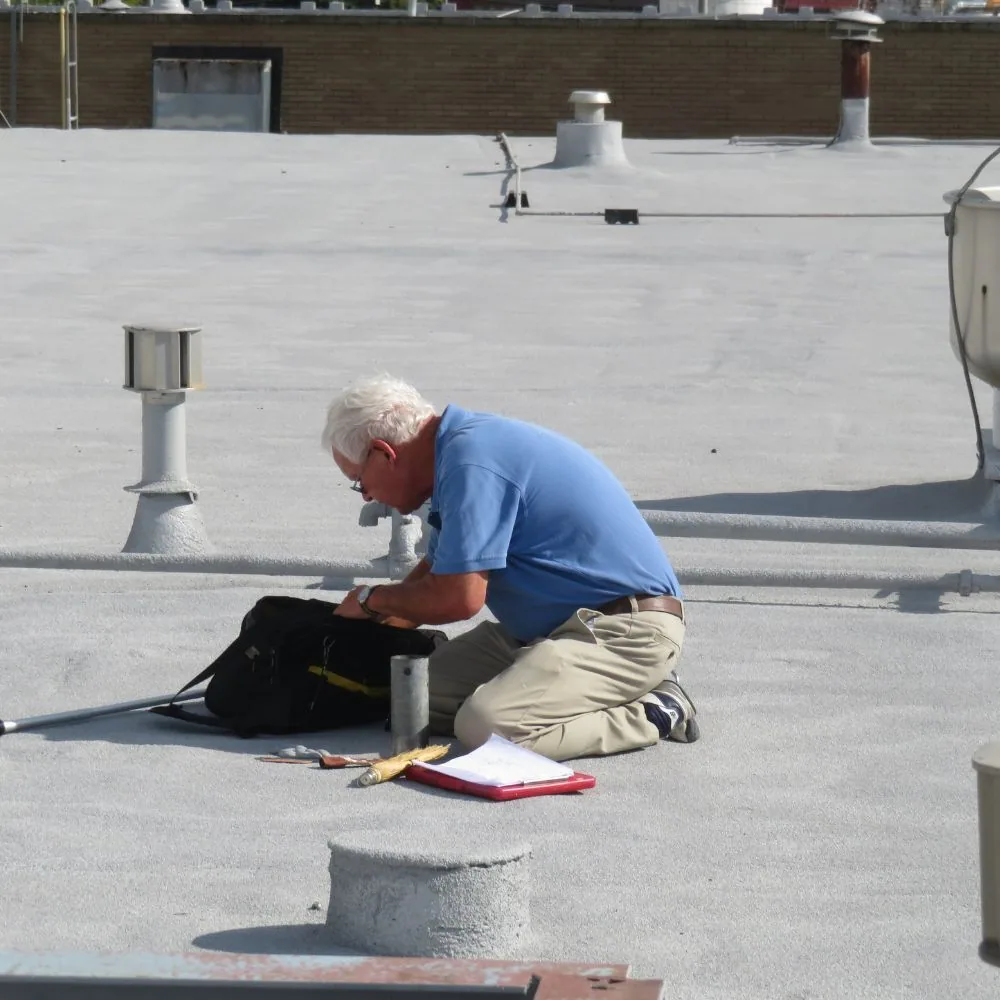
We divide the roof into numbered sections and walk each in sequence, recording the membrane type, layers, attachment, laps, flashings, drains, penetrations, equipment, and patches. Photographs are taken from fixed positions. Where the surface, the interior, or the building's age points toward trapped water, we run a moisture scan and confirm with cores if the seller permits. An infrared moisture survey is efficient on large roofs, and a drone flight documents areas that cannot be reached on foot.
The test result matters in money. Where the core is dry beneath a weathered sheet, a recover or a coating may be possible. A wet core adds insulation replacement and turns the scope from recover to replacement. Finding that out before closing moves the roof line in the model from an unknown to a number with a range.
What the Market Brings
Dearborn is an employment center in the Detroit metropolitan area, and the city names Ford Motor Company as its major employer, with a research-and-development complex that is being reconstructed. The city's reports also describe office and mixed-use projects in West Dearborn and the Fairlane and Midtown area, and an assessment of the former Fairlane Town Center property. A buyer in that setting may be looking at buildings whose futures are tied to neighboring projects, which affects how much to spend on a roof and how long it needs to last.
The survey records the roof as found, notes where redevelopment may change the building's use, and sets the reserve accordingly. Properties near Fairlane and Midtown and along the Michigan Avenue downtown districts are surveyed the same way as properties on Warren Avenue, with the setting noted but not assumed to determine the roof.
Surveys Across the Metro Area
Buyers often look at several suburbs at once. Livonia's city plan describes Plymouth Road as a major commercial and industrial corridor running north to I-96, with shopping centers and manufacturing facilities. Romulus lists over 5,000 acres of vacant land and points to its rail lines and interstate access. Warren offers industrial-facility incentives for renovating and expanding aging plants. Southfield counts more than 27 million square feet of office floor area.
What the survey does is give each building the same report format, so a buyer comparing a Livonia building and a Southfield building sees condition, remaining service life, and cost on common terms.
What the Survey Cannot Settle
A survey inside a contingency period has limits, and a good report names them. Concealed conditions, such as deck corrosion under a wet core in a section that could not be cut, remain unknown until tear-off. A roof under snow cannot be fully assessed, and a winter survey lists those sections as unverified; with first measurable snow arriving around mid-November and the last departing in early April, that applies to much of the cold half of the year. Areas under rooftop equipment and behind screens are noted the same way. The report assigns each unknown a reserve allowance and a post-closing test, so the buyer carries a number instead of a gap.
Interior evidence helps in every season. Ceiling stains, patched tiles, dehumidifiers running in a corner, and tenant leak reports are matched to the roof above and logged by section. A cluster of interior signs under one roof section can justify a closer look there even when the surface seems sound, and the report ties each interior sign to its section so the buyer can see why an area is flagged.
When the contingency period is short and the weather is bad, we say so on the first call and propose the best available combination of access, scanning, and records, with a follow-up visit once the roof is clear. A buyer who has agreed to a follow-up test in the purchase contract is better protected than one who has relied on a rating given in a hurry.
Delivering Findings a Buyer and Lender Can Use
The report opens with a one-page summary: overall condition, sections ranked by urgency, remaining service life for each, immediate repairs, and a reserve schedule across the hold period. Behind it are the section entries with photographs, measurements, and moisture findings. Cost ranges carry allowances where a test is open. If the lender requires a particular format, we fit the summary to it while keeping the evidence the same.
The report also identifies warranties and their terms where documents exist, since coverage that survives a sale has value in the reserve and coverage that does not transfer should not be counted. The practice is described in warranty management. Buyers who hold the building afterward fold the survey into their asset records, and the numbers carry into a capital plan.
Commercial Roofing Questions
How soon can a survey be done once a contingency period starts?
A walk can usually be scheduled within days, with tests added as access allows and the findings returned ahead of the deadline. Share the date and the seller's access terms on the first call so the work is sequenced backward from it.
What if the seller will not allow test cuts?
The survey proceeds with visual observation and any non-invasive scan the seller permits. The report lists the unverified items, the test that would close each, and a reserve allowance, so the buyer can negotiate a credit or a post-closing test.
Should a lender's roof requirement change the survey?
It can change the format and minimum content. We fit the summary to the lender's request and keep the evidence the same, so the report works for the buyer and the lender both.
Is a survey a substitute for a structural review?
No. It reports the roof, including signs that suggest deck or structure concerns, and refers those to an engineer. It does not judge structural capacity.
How far ahead does the reserve schedule look?
Across the hold period the buyer expects, typically in annual steps. Each section carries a window for repair, recover, or replacement, with the evidence for it.
Can the survey be reused after closing?
Yes. The numbered sections and photographs become the baseline for later inspections, so the first year's maintenance can be compared against the day-of-purchase condition.
Send the contingency date and the seller's access terms
Send the property address, the contingency or loan date, any roof documents from the seller, and the access window the seller allows. We will propose a survey scope that separates repair, recover, and replacement, and tell you which findings will be measured and which will remain open at closing.